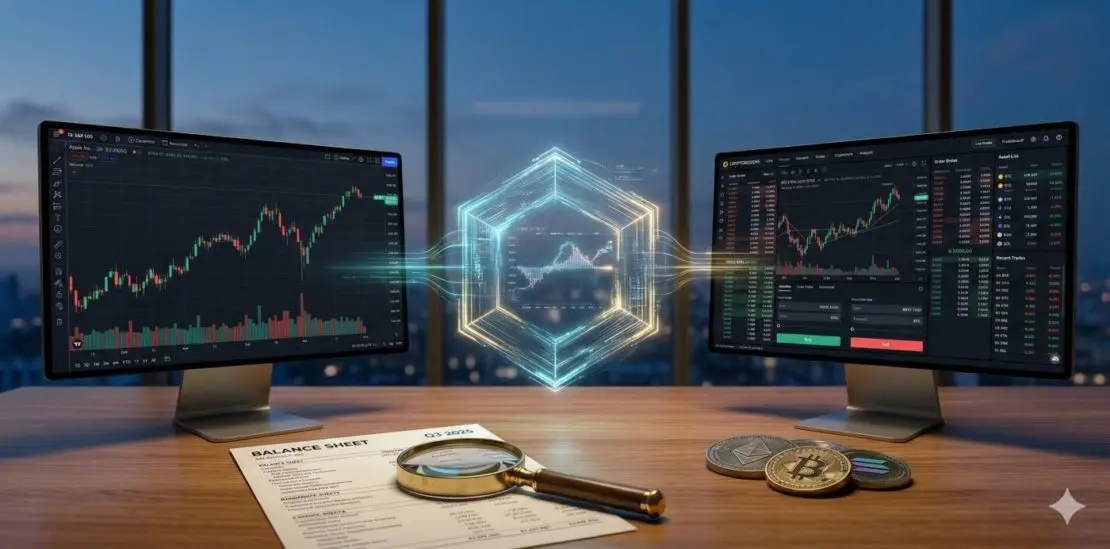

For most people, the crypto market boils down to buying some digital coin and waiting for its price to go up. Many people ask the perfectly legitimate question: Okay, fine, but what are cryptocurrency and blockchain technology good for besides speculation? Is there any real value behind it?
This article will discuss exactly that. Simply put, blockchain technology is nothing more than the foundation of a new, decentralized internet (Web3).
🪙Bitcoin and Blockchain Basics – What is it all about?
Bitcoin is a network of computers that all run the same software (called Bitcoin). You and I can install it on our computers, and our computers will be part of this network just like every other computer in the world. Bitcoin was the first, but now all other networks like it work the same way.
Bitcoin is really nothing more than a database. Every machine on the network stores the same database. The one thing that blockchain technology has made possible that was previously impossible is that this database can operate completely decentralized.
- What does this mean in practice? That you can be sure that when the network confirms "how many bitcoins X has", no one will be able to overwrite or "take" it.
- Your traditional bank has your money stored correctly in its database, but you have to trust that they won't go bankrupt and freeze your account. Blockchain eliminates this trust by having a global network verify it.
🔗Ethereum and the “Smart Contract” revolution
Blockchain has long been used for other purposes than just transferring money. These limitations led to the creation of Ethereum in 2015, which opened the door for the technology to be used in an infinite number of places.

Ethereum's main innovation over Bitcoin is the concept of a "smart contract." But what is a smart contract?
It's basically a computer program that runs on this decentralized network. And we, the users, can interact with these programs.
To better understand, think about this analogy:
- 💻The network (the operating system): Think of Ethereum (or any other network) as being like Windows on your computer. A bare operating system on its own isn't good for much.
- (I.e.Smart contracts (the programs): These are the software (e.g. the game Worms Armageddon 🙂 or Word) that you install on Windows. When a developer uploads a smart contract to the network, they are essentially making a program available.
⛓️What Web3 means in practice: 4 real-world use cases
Where are we now? What programs are people running on this “world computer”? Here are four specific categories that can help you understand how it all works.
1. 🏛️DeFi (Decentralized Finance)
Understanding DeFi basics is the most important step. These are financial applications that eliminate banks and brokers:
- (I.e.Decentralized exchanges (DEX – e.g. Uniswap): Anyone can trade crypto tokens without an intermediary.
- 💰Lending: Anyone can borrow or earn interest on their money through smart contracts.
- 〽️Derivatives markets (e.g. GMX, Synthetix): Futures trading, tracking the price of stocks or other assets.
- 🪙Stablecoins (e.g. USDC): Crypto dollars that are always worth $1.
Here, returns and services are available to anyone that are only the privilege of the largest institutional players in the "traditional world", as you yourself can be the bank and broker serving the users.
💡We presented the DeFi sector in detail in another article: What is DeFi? A guide to the future of finance
2. 🏙️DePIN (Decentralized Physical Infrastructure)
These applications replicate the services provided by networks that exist in the physical world, using crowdfunding:
- 📦File storage (Filecoin): Google cloud storage, Microsoft cloud storage, etc.
- 🖥️Computing capacity (Render): You can rent machine time globally for video rendering or running artificial intelligence (AI) – or even rent out your own machine.
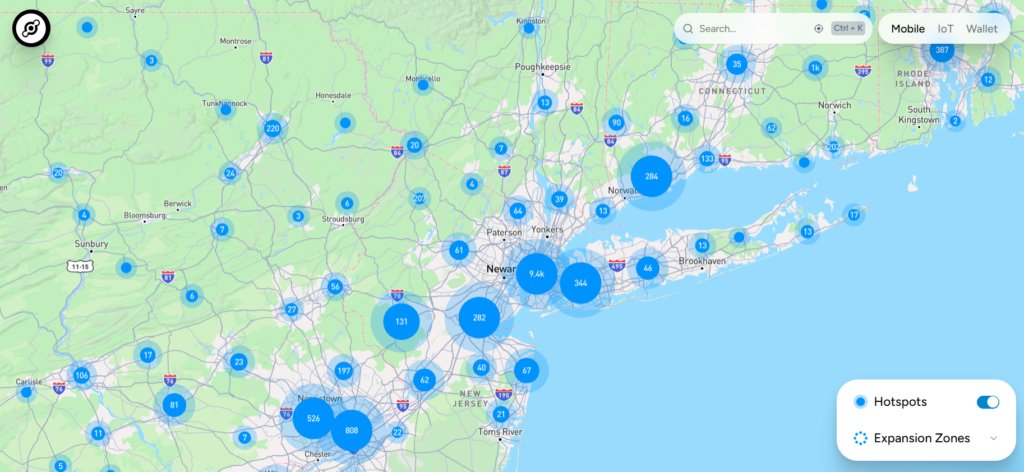
- 📲Mobile networks (Helium): Anyone can operate a mobile base station on their rooftop, and Helium can serve mobile users, competing with large telecom companies.
- 🔀VPN (Sentinel): Anyone can share their bandwidth and provide VPN service.
3. 🎮Web3 gaming and online casinos
You can play online casinos, poker, and sports betting directly with smart contracts. But the most interesting is the computer games market (GameFi).
If you buy a legendary sword in a traditional game (e.g. World of Warcraft), it is on the game publisher’s server. It can be taken away at any time, and your “money” is lost when the game is closed. In Web3 games, items and money (tokens, NFTs) are held in players’ own crypto wallets. If the game is successful, the digital assets you acquire can be exchanged for real money on the open market.
4. 1️⃣NFTs (Non-Fungible Tokens)
Although NFTs are often associated with images of overpriced monkeys, in reality, an NFT can represent any unique digital asset.
But what does NFT mean? There is only one of each NFT, each piece is unique. Not like, for example, bitcoin, where it doesn't matter whose 1 bitcoin is, it's worth the same. Just like your 100 USD and mine are worth the same (fungible), but your house and my house are not (non-fungible), even if they look the same, because mine is at least in a different place than yours, so they have different values and every house is unique in this respect. So are all NFTs.
An NFT can be anything, it can be a license, it can be a jpeg monkey that is "digital art" and you can speculate on it, it can be the ownership of my house itself, a small area in the latest crypto strategy game, it can be my crypto loan wrapped, anything. An NFT is also a smart contract, so you program it however you want.

❔What is the value? Why is a token worth money?
The question is legitimate: where is the value, what is behind all this crypto?
Anyone who uses the above services (DeFi, DePIN, etc.) pays at least a transaction fee to the nodes operating the given blockchain. So the greater the demand for using a network, the more fees people will pay, which drives up the value of the network's own token (e.g. ETH).
In addition, various applications (DeFi protocols) also issue their own tokens. In many cases, the revenues generated from the use of the protocol are distributed among token holders – very similar to dividends in the traditional stock market.
Important detour: Of course, not all tokens have a real economic model behind them. Memecoins (joke tokens with dogs and frogs) have no function behind them, they are purely driven by attention and speculation. Also, let's not forget that the crypto market is still very young, so the price of fundamental projects is extremely volatile and is often driven solely by narratives.
💡If you would like to read more about this and learn about other categories, we can recommend our article that analyzes the business process of these projects, which may be useful primarily for investors: Crypto fundamental analysis: value-based investing on the blockchain
🛒Summary
So, to summarize the above, networks based on blockchain technology will in many cases provide services that are currently dominated by centralized actors more efficiently, cheaper and globally.
Large institutional players have also started using these systems in many cases instead of the current expensive systems, for example, cross-border transfers can be done much cheaper than using the outdated SWIFT system, to name just one example.
Networks based on blockchain technology and the applications running on them will replace our current financial and other services in many areas, without the end user necessarily knowing or ever knowing about it.
💡If you really want to understand this world, at some point you have to venture out of the comfortable but closed system of centralized exchanges (Binance, Coinbase, Kraken), because you won't be able to access 90% of the things presented here. We can recommend the following article as a start: What is a web3 wallet? A guide for beginners
An important warning at the end: “Becoming your own bank” is a huge responsibility. In the Web3 world, there is no customer service to call if you misdirect money, and you can experience code errors (hacks) in smart contracts firsthand.
Frequently Asked Questions about cryptocurrency and blockchain
Answers to the most common questions
Do you understand the Bitcoin price, but not what's behind it? Here you'll find concise answers to the most frequently asked questions: how is a blockchain different from your bank's database, what is a smart contract, are NFTs really just monkey pictures, what makes a token valuable, and why Binance isn't enough if you want to try out Web3.
Click on any question and the answer will open. These are intentionally brief summaries: if you're interested in the details — from DeFi to DePIN to Web3 gaming — we'll expand on them in the appropriate sections of the article above.
How is blockchain better than the database of traditional banks?
The main difference is trust and control. Your traditional bank's database runs on a central server: they decide when to perform maintenance, whose account to freeze, or who to authorize a transaction for. Blockchain is a decentralized database operated by thousands of computers (nodes) around the world. There is no CEO or central server, so the network is unmanageable, censorship-resistant, and operates 24/0.
What exactly are smart contracts?
Think of a smart contract as a simple computer program that runs on the blockchain (like the Ethereum network) rather than on your laptop. Just as you can install a game or a word processor on your Windows operating system, developers can upload code to the blockchain that performs tasks (like paying interest or exchanging tokens) automatically, without human intervention.
Does NFT really just mean expensive, digital monkey-like images?
Definitely not. While the media has been vocal about overpriced profile pictures during the recent bull market, NFT technology simply serves to prove unique digital ownership. While bitcoins are fungible, an NFT is completely non-fungible. This technology could in the future be a digital concert ticket, a software license, your in-game character’s sword, or even a tokenized title deed to a real-world property.
What makes a cryptocurrency valuable if anyone can create their own token?
A token with a real economic model derives its value mostly from its use of the network or protocol. When someone uses the blockchain (e.g., makes a transfer or uses a DeFi application), they pay a transaction fee. This fee is often distributed among token holders (similar to dividends on traditional stocks), or a portion of the tokens are “burned” to reduce the supply. However, it is important to note that memecoins (dog, frog tokens) have no such economic value; they are driven purely by speculation and attention.
Can I try these DeFi and Web3 apps if my crypto is on Binance?
Not directly. Centralized exchanges (CEX) like Binance or Coinbase are closed systems. To use DeFi protocols like Uniswap, you need to step into the Web3 world. To do this, you need to create a self-custody crypto wallet – like MetaMask or Phantom – and transfer your tokens there. With these wallets, you can connect to decentralized applications.
Legal and liability statement (aka. disclaimer): My articles contain personal opinions, I write them solely for my own entertainment and that of my readers. The articles published here do NOT in any way exhaust the scope of investment advice. I have never intended, do not intend, and am unlikely to provide such in the future. What is written here is for informational purposes only and should NOT be construed as an offer. The expression of opinion is NOT in any way considered a guarantee to sell or buy financial instruments. You are SOLELY responsible for the decisions you make, and no one else, including me, assumes the risk.