

Car investing: myth or reality? Every year, there is a lot of news about car investing, for example: “A 1960s Ferrari sold for $38.5 million” or “the price of a thirty-year-old F50 multiplies in a few years”, perhaps “the garages of famous collectors rival museums”, and so on.
Stories like these sound tempting: the car you want to buy anyway will add to your wealth, and you can even drive it. However, the picture is based on the rules of survival bias: Records make the news, while sports coupes sold quietly at a loss and “investments” rusting in the garage don’t; while the average new car loses roughly 40 percent of its value in five years.
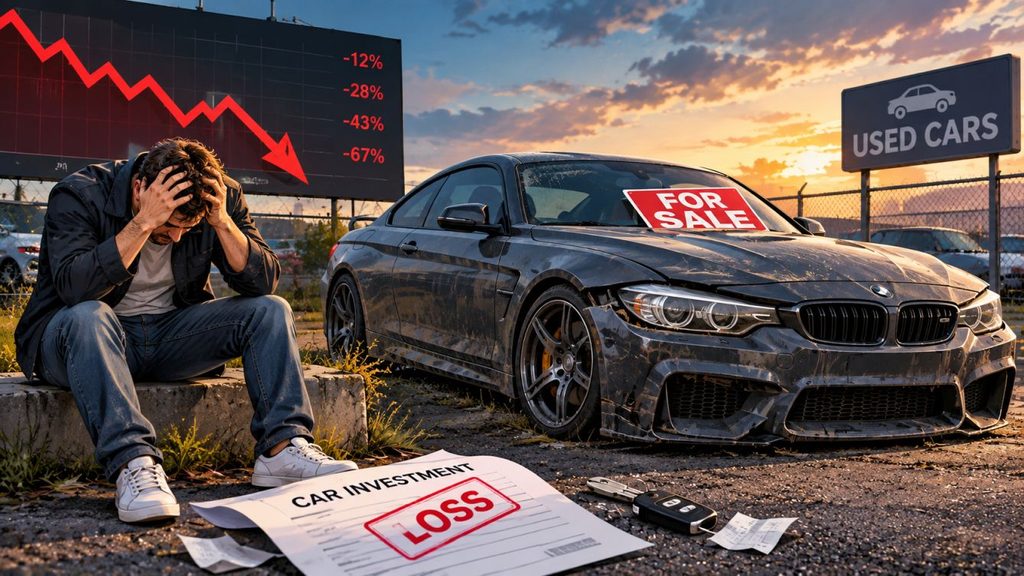
This article therefore does not attempt to explore whether it is possible to make money on a car: it is possible. It raises the question of whether an average investor, with a few million or a few tens of million forints, without their own collection and professional service connections, can repeat what the top lists show, even after deducting costs.
To answer this, we'll look at what the data says about depreciation, rarity, costs and fan demand, how much it really costs to own a collector's car, and where the price of a model may turn around.

Car investing: big names, auctions, records
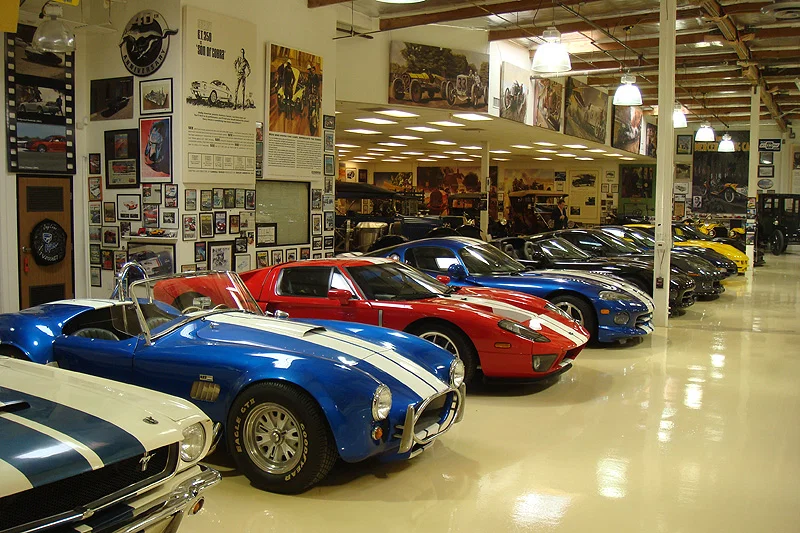
You can see the best in the table below, there is no better place to invest in a car. The 1955 Mercedes-Benz 300 SLR is an absolute record with its price of 135 million EUR, but these are outrageously high selling prices. However, it's worth knowing what wealthy collectors, like Jay Leno, are looking for.
| # | Car | Knockdown price | Auction | Comment |
|---|---|---|---|---|
| 1 | 1955 Mercedes-Benz 300 SLR Uhlenhaut Coupe | EUR 135 millionapprox. 143 million USD | RM Sotheby's, Stuttgart, 2022 | Absolute world record, sold by the Mercedes-Benz Museum |
| 2 | 1954 Mercedes-Benz W196R Streamliner | EUR 51.2 millionapprox. 53.9 million USD | RM Sotheby's, Stuttgart, 2025 | The most expensive Formula 1 car |
| 3 | 1962 Ferrari 330 LM / 250 GTO | 51.7 million USD | RM Sotheby's, New York, 2023 | Ferrari brand record |
| 4 | 1962 Ferrari 250GTO | 48.4 million USD | RM Sotheby's, Monterey, 2018 | This was the world record until 2022 |
| 5 | 1964 Shelby Cobra Daytona Coupe | 42.9 million USD | Gooding Christie's, Pebble Beach, 2026 | The most expensive American car, Carroll Shelby's own copy |
| 6 | 2026 Ferrari Luce “Tailor Made”charitable | 40 million USD | RM Sotheby's, Monterey, 2026 | The most expensive new car, not the market price |
| 7 | 1962 Ferrari 250 GTO 'Bianco Speciale' | 38.5 million USD | Mecum, Kissimmee, 2026 | The only white 250 GTO |
| 8 | 1962 Ferrari 250GTO | 38.1 million USD | Bonhams, Carmel, 2014 | 250 GTOs dominate the top list |
The most expensive cars ever sold at public auction, at nominal value, including buyer's commission. Cars sold privately are not included in the list. Source: classic-car-auctions.info, Wikipedia, October 2026. Not investment advice.
Even more telling than the record list is the price increase of a Ferrari model that is not included in the above compilation, this is the limited edition Ferrari Enzo F60, of which only 400 were made. Its auction price roughly tripled in early 2026, to a model record of nearly 18 million USD, and in the same year the F50 (14.6 million USD) and the 288 GTO (9.1 million EUR) also set model records. This is not a market for “classic cars,” but for hypercars with a few hundred units, where the buyers are billionaires.
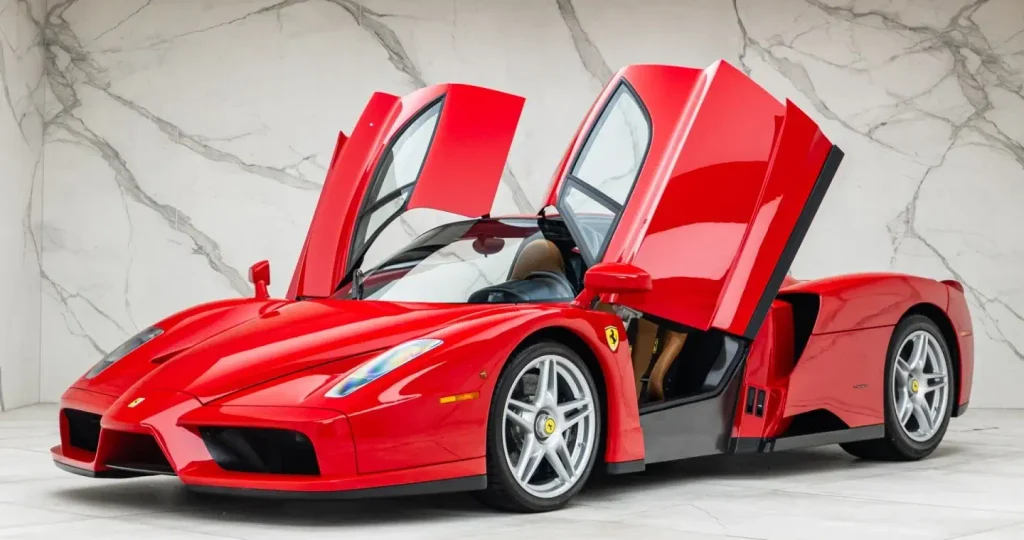
The stories of famous collectors (Jay Leno, Ralph Lauren, Jerry Seinfeld) carry a similar lesson: for them, cars are a passion and status, a negligible part of their capital, and moreover, they have a lot of cars in their collection, so they actually diversify by buying another one. A bad purchase does not decide their fortune, but for the average person, a significant portion of their savings can be in a car.

Car investment: where to find information?
The average price and standard deviation of motor vehicles are quite difficult to calculate because relatively little structured data is available. True, this is not such a big task in the age of AI, as data from most car portals can be pulled in with the help of artificial intelligence, and you can eventually build a database from them. Good examples of this are mobile.de, AutoScout24 or hasznaltauto.hu, where you can find large-scale cars. You have to put together data for limited-edition, vintage cars, and small-numbered vehicles primarily from auction house data, which is a tough nut to crack, plus the prices of really expensive vehicles can vary greatly due to the low number of units. But Bring a Trailer, Collecting Cars or Classic Valuer can provide some guidance. The best-known source is perhaps Hagerty, but it mainly contains American data, but there is also a British version.
| # | Source | Type | What does it measure? | What is it good for? |
|---|---|---|---|---|
| 1 | Hagerty Market Rating, Blue Chip Index, Hagerty Hundred | Market indexmonthly | Collector prices, auctions, insurance values | Introducing the split market |
| 2 | Laurs – Renneboog (Tilburg University) | Study2019 | 29 thousand auction sales, 1998–2017, hedonic index | Academic return and risk ratio |
| 3 | Knight Frank Luxury Investment Index | Luxury indexannually | 10 luxury items, including cars (based on HAGI) | Comparison with an art object, a watch, a wine |
| 4 | iSeeCars impairment study | Studyannually | 950 five-year-old cars sold, USA | The first section of the depreciation curve |
| 5 | Hagerty Valuation Tools | Price watcher | Price history by model, in four condition categories | Value curve of specific types |
| 6 | Hagerty Bull Market List | Forecastannually | Types expected to increase in price, Collectability Index | Examples of turning curve |
| 7 | HAGI Top Index | Market index | Investment-grade classics | Top-of-the-line long-term yield |
| 8 | Carfax | Impairment data | Impairment of the first month and the first year | The “door slamming” effect |
| 9 | classic.com, Bring a Trailer, Collecting Carsto be checked | Auction databasecontinuous | Closed online auctions, price history by model | Building your own value curve |
| 10 | Deutscher Oldtimer Index, Classic Analyticsto be checked | Market index | German oldtimer and youngtimer prices | A comparison closer to the European, Hungarian market |
| 11 | Hasznaltauto.hu, Eurotax/Autovistato be checked | Domestic market data | Advertising prices, residual values | Forint, Hungarian examples |
Orange numbers: main sources of the article's figures. The methodology and availability of sources marked "to be verified" have not been verified at the time of writing. Not investment advice.
There are some problems with the above list. You can only access Hagerty resources from Europe with a VPN. Since the car market is divided, the prices of expensive, collector's items are incomprehensible to the average reader. There will be no meaningful data on the average Ford Focus, unless you use the usual used car search sites, such as the aforementioned mobile.de or AutoScout24.
💡What's important is that there are live ads here that you have to aggregate and you only see the offer price, while in the case of auction houses you only see the selling price.
I recommend YouTube videos to find ideas, and it's worth collecting cars by category - e.g. by period, model, etc. - that you might consider investing in.

Car investment based on studies
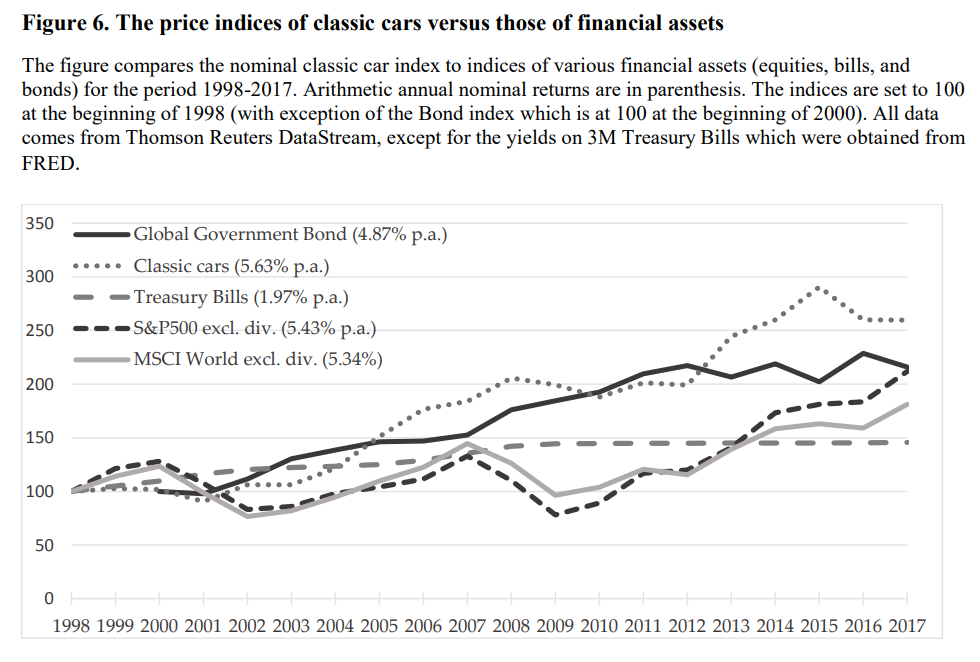
The most thorough academic study found that classic cars returned an annual nominal return of 5.63 percent (3.37 percent real) between 1998 and 2017, before transaction costs. The “blue chip” category returned 12.5 percent, and Italian classics 11.28 percent. So the best cars returned roughly the 10 percent annual return used as a rule of thumb for the S&P 500 index, or slightly outperformed it, but the majority of them brutally underperformed.
A few articles on car investing that you might want to read, there are many more that are paid, I left these out:
- Laurs & Renneboog, Tilburg University: My kingdom for a horse (or a classic car),
- CXO Advisory: Classic Cars as an Alternative Investment,
Of course, there are countless other research sources available, but it's quite a time-consuming task if you put your mind to it. But if you can find data available in so many places, why can't cars provide meaningful returns to their owners for decades?
The yield killers of car investing
From the above, it turns out that you can make quite a lot of money on some models, but it is very difficult to predict which one it will be. About as much as deciding which stock will be successful on the stock market. Therefore, you don't necessarily need to focus on which type will be the unicorn of car investment, but on what factors kill the returns of average types in the long term and how to protect against them.
👆You can't make a significant profit on most cars by buying and selling them - more scientifically: auto flipping - because the costs eat into your profits.
There are countless costs that can be listed, but the most well-known are those I have listed below.
Depreciation
Depreciation is one of the biggest invisible costs you can incur with a car. The average car is not an investment. According to a 2026 study by iSeeCars analyzing 950000 five-year-old cars, the average five-year depreciation is 41.8 percent, but the variance is huge: The Porsche Cayman only loses 9.6 percent of its value, while the worst models lose 63 percent. Electric cars lose an average of 57.2 percent. The lesson: Sports cars, SUVs and pickups hold their value the most, luxury sedans the least, and models around 5 years old are roughly 40% cheaper than when they were new.
| Category | 2019 | 2023 | 2025 | 2026 |
|---|---|---|---|---|
| Hybrids | 56.7 % | 37.4 % | 40.7 % | 35.4 % |
| Electric cars | 67.1 % | 49.1 % | 58.8 % | 57.2 % |
| SUVs | 51.6 % | 41.2 % | 48.9 % | 44.9 % |
| Pickups | 42.7 % | 34.8 % | 40.4 % | 34.2 % |
| Altogether | 49.6 % | 38.8 % | 45.6 % | 41.8 % |
Average five-year depreciation by category in the US used car market, compared to inflation-adjusted list price. Source: iSeeCars, 2026. Not investment advice.
However, depreciation has a low point, which usually falls within a 15-25 year range. This means that most models will hit rock bottom during this time window, after which their prices will virtually stop falling. This is one of the sweet spots of car investing: The price of some types is starting to rise.
In fact, the sooner this happens, the better. The biggest enemy of used cars is rust. It doesn't matter whether you buy it at the age of 15 or 25, because with the introduction of water-based paints in the early 2000s, many models have become much more rotten than before. An example of this is Mercedes, the E-Mercs with round headlights can die brutally.
| # | Model | Category | Average 5-year impairment | Average deviation from list price |
|---|---|---|---|---|
| 1 | Porsche 718 cayman | Sports car | 9.6 % | 6 988 USD |
| 2 | Porsche 911 | Sports car | 11.1 % | 15 533 USD |
| 3 | Chevrolet Corvette | Sports car | 18.7 % | 13 365 USD |
| 4 | Toyota Tacoma | Pickup | 19.9 % | 6 426 USD |
| 5 | Toyota Tundra | Pickup | 21.2 % | 8 746 USD |
| 6 | Honda Civic | Sedan/hatchback | 22.9 % | 5 828 USD |
| 7 | Subaru BRZ | Sports car | 23.7 % | 8 489 USD |
| 8 | Toyota GR Supra | Sports car | 24.0 % | 13 963 USD |
| 9 | Toyota RAV4 / RAV4 Hybrid | SUV/hybrid | 25.2 % | 7 731 USD |
| 10 | Toyota Corolla Hatchback | Ferdehátú | 25.5 % | 6 220 USD |
| 11 | toyota 4runner | SUV/hybrid | 25.5 % | 10 697 USD |
| 12 | Lexus RC 300 / 350 | Coupé | 26.6 % | 12 674 USD |
| 13 | Ford Mustang | Sports car | 26.8 % | 9 205 USD |
| 14 | Toyota Corolla | Sedan/hatchback | 27.6 % | 6 328 USD |
| 15 | Toyota Sienna | Hibrid | 28.5 % | 11 530 USD |
| 16 | Honda HR-V | SUV | 28.8 % | 7 645 USD |
| 17 | Honda CR-V | SUV | 28.9 % | 8 946 USD |
| 18 | Subaru Crosstrek | SUV | 29.1 % | 7 867 USD |
| 19 | Subaru Impreza | Combo | 29.2 % | 7 759 USD |
| 20 | Subaru wrx | Sedan | 29.8 % | 10 146 USD |
| 21 | Toyota CorollaHybrid | Hibrid | 30.1 % | 7 464 USD |
| 22 | Ford Ranger | Pickup | 30.2 % | 10 078 USD |
| 23 | H | Sedan | 30.5 % | 8 654 USD |
| 24 | Mazda MX-5 Miata / MX-5 Miata RF | Sports car | 31.5 % | 11 157 USD |
| 25 | Toyota Prius | Hibrid | 32.1 % | 9 179 USD |
| Ø | Average of all models | 41.8 % | 16 571 USD |
Models with the lowest five-year depreciation in the US used car market, compared to inflation-adjusted list price. Source: iSeeCars, 2026. Not investment advice.
There are also models whose prices are barely decreasing, such as the Porsche Cayman, which is both durable and reliable, and over time has earned the admiration of car enthusiasts - even cult car status.
Maintenance cost
Cars need to be maintained. They are full of all kinds of fluids, they have lots of bearings and rubber mounts, but it's not a disadvantage if the inside is not very worn out. There are mandatory maintenance periods that can be planned in advance, but for example, "unexpected" failures cannot.
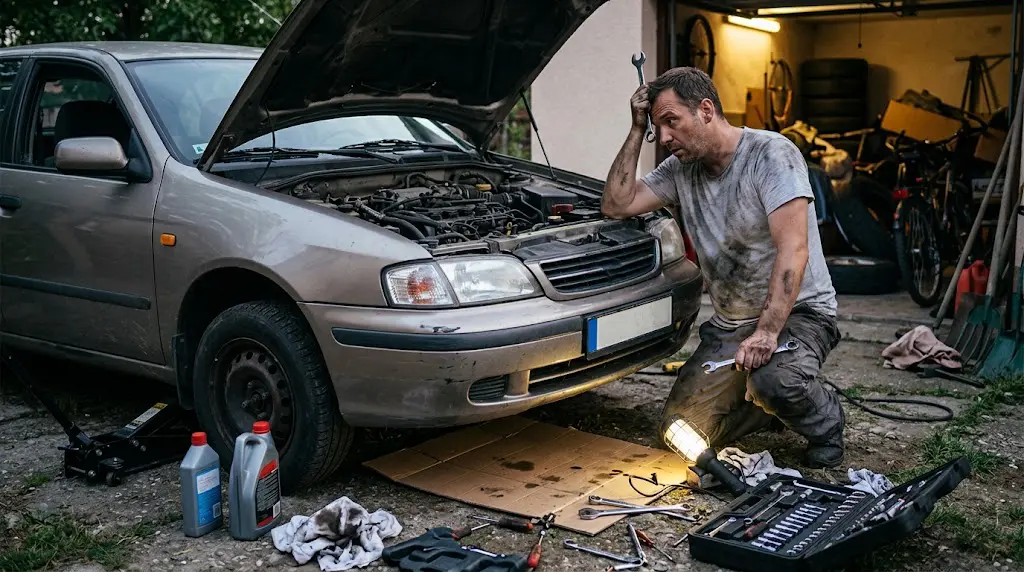
Therefore, models that are notoriously unreliable are usually sold at a reduced price, a good example of this is the Alfa Romeo brand, but I can also mention some models from Peugeot, Renault or Fiat. The brain-extracted German premiums – BMW, Audi, Mercedes – over time start to suffer very badly from electronic failures, as they provided a lot of premium services in their younger years.
According to statistics, the following maintenance costs can be very expensive:
- 🛠️ Locking due to rust: Rust is the biggest enemy, and the risk of this constantly increases over time. And when metal turns into iron oxide, everything else is useless if you have nothing to hold it in. Rare, small-scale cars often have no repair shop and the bodywork components are not even in stock at the scrapyard.
- ⚡ electronics errors: less of a problem than rust, but more annoying and can render the car inoperable. The problem with electronic problems is that it is often not clear what causes them, as one bad component can bring down the entire system – Jaguar owners could tell you a lot about this – and solving the problem can turn into an endless research.
- ⚙️ mechanical errors: One of the biggest expenses can be the replacement of engine faults and auxiliary equipment. Repairing these is extremely expensive and there are few brand specialist services.
- 💥 Repair damaged items: Damage is often not repaired properly, which can later lead to defects from the three groups already mentioned. The most typical is perhaps rust. If a car has been damaged, corrosion will start first at the site of the damage.
- ✅ what's not in the car doesn't get damaged: Turbo, all-wheel drive, automatic transmission, these are all quite expensive elements that increase maintenance costs and reduce reliability. Naturally, cars like the Porsche Cayman/Boxster, which are considered particularly reliable, are free of these.
You also need to factor in the cost of maintenance, which includes the cost of consumable parts for a given model. The same part is cheaper for a Ford than for a Volvo, even if it's the same component. The chassis components of a Ferrari obviously cost more than those of a Suzuki, and so on.
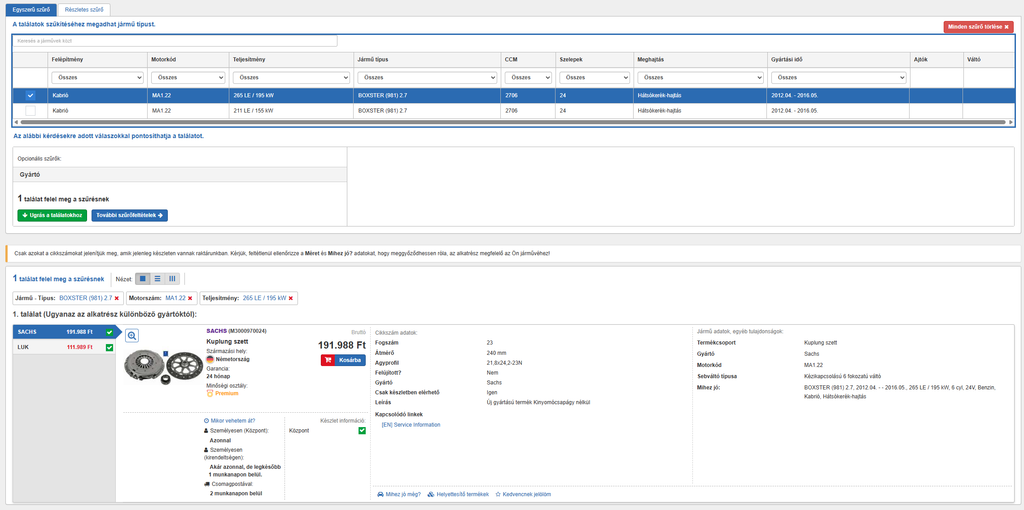
It is worth checking the prices of parts at retailers in advance, which will reveal two things: Are there any parts for that type at all, and where are they priced? Electric cars are much better than internal combustion engine vehicles in this respect, but they are plagued by technological obsolescence.
Technological obsolescence
Technological obsolescence is a form of depreciation and primarily affects electric cars. On the one hand, due to intense competition, manufacturers are quickly reducing the price of their older models - there was a year when Tesla cut the price tag by 25% - and on the other hand, due to the rapid development of technology, newer models simply do much more, which pushes the price of earlier ones down.
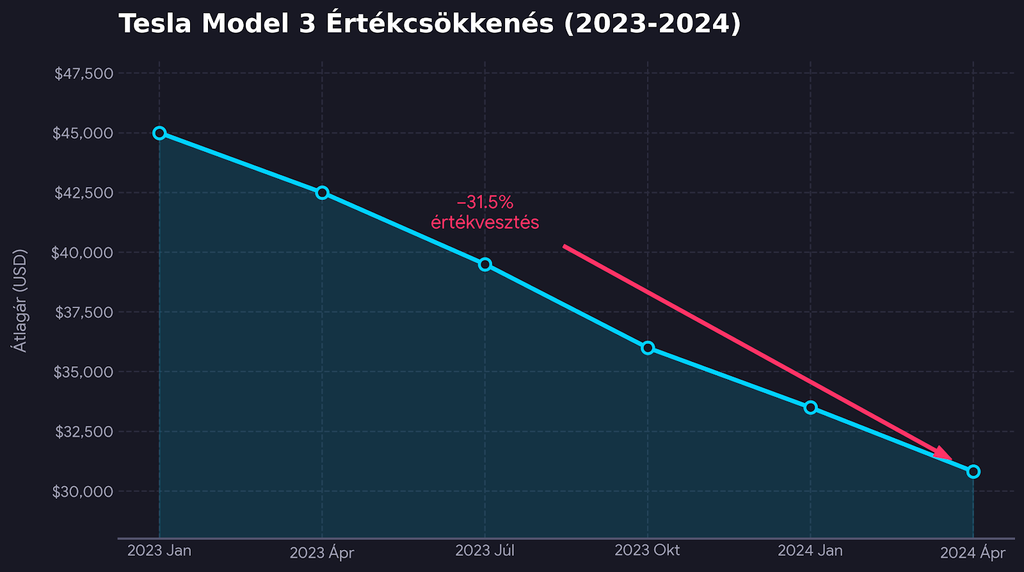
At the time of writing, it is practically not worth investing in an electric car, except for one or two extreme examples. There is no nostalgia factor, the depreciation is brutal, the competition is extremely high, all of these factors drive the price down.
Conservation
By maintenance, we mean all the activities that are necessary to keep the car in good condition. These can include walking it, cavity protection, UV protection film, other storage-related costs such as garage storage, and so on.
Walking tour
Cars are designed to get from A to B, that's the essence of how they work. When they're parked for long periods of time, they deteriorate, even if the miles aren't actually ticking on the odometer.
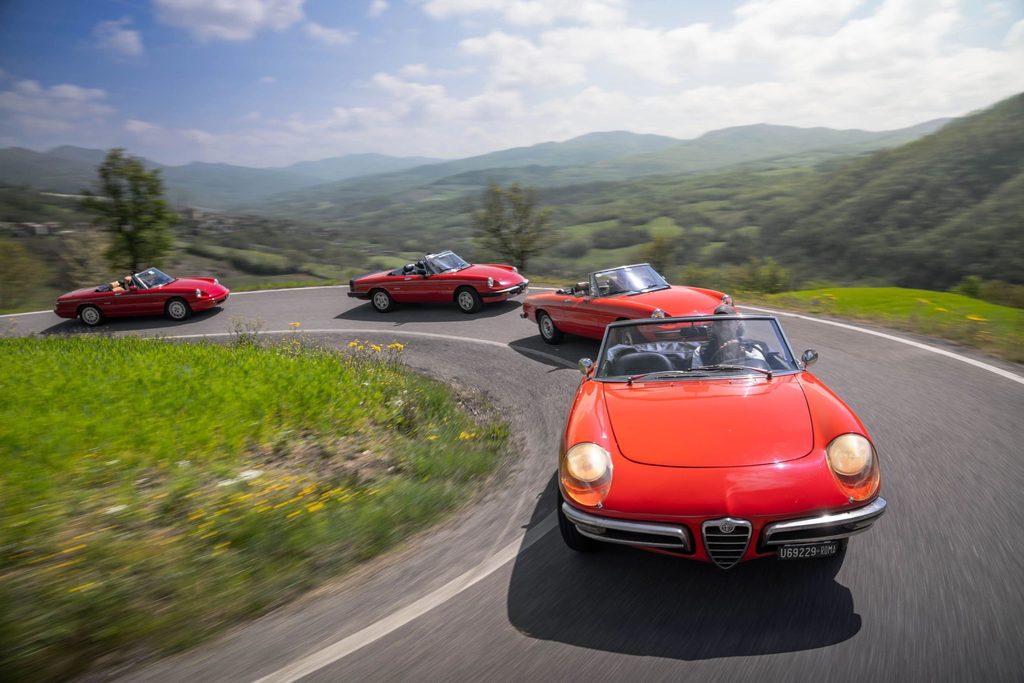
Even with proper storage, they need to be driven at certain intervals, otherwise the tires, fluids, bearings, etc. will deteriorate. Anyone who has ever been to the Kaáli Car Museum in Dörgicse, where hundreds of working, restored vintage cars and motorcycles can be found, knows that these vehicles are also driven from time to time.
Cost of storage
Investment vehicles need to be stored in appropriate conditions, which means a dry, heated garage. So it's worth considering the cost of renting a garage. Here's a little perspective: it doesn't matter what value the car is in that garage space, since they occupy the same 10 square meters, but the specific cost of renting or owning a garage will naturally be lower in the case of a more expensive vehicle.
Many sports cars and convertibles are winterized, which means the car is given a thorough wash and cleaning, the battery is put on a trickle charger, the body is covered with a car cover, the tires are slightly over-inflated, the handbrake is released, etc. The factory car cover, as an accessory, usually increases the value of the car.
Most of these vehicles never see rain or snow under normal conditions, for example, and are therefore not affected by the corrosion effects of salt on the bodywork, which is why they are often mentioned in advertisements.
Other costs
Many people think that taxes are the biggest cost of owning a car, which is partly true. However, if you only count direct taxes and fees, and not indirect taxes on fuel, for example, then this is not such a large amount. Nevertheless, there are quite a few such items, I have collected the most typical ones.
Taxes and duties
Public charges and mandatory fees:
- 🧾 capital gains tax that you pay when buying, colloquially known as the "transfer cost".
- 🔍 Cost of originality exam, periodic exams.
- 🏛️ OT exam and museum certification.
- 📄 administrative fees: new registration certificate, vehicle registration book, and, if applicable, new license plate.
- 🌍 registration tax: naturalization fee for cars purchased from abroad.
- 🚗 vehicle tax: vehicle tax during storage, unless the car is not being used.
- 💰 Personal income tax after exchange rate gains: if you sell it and there was an increase in value.
Insurance
What you will conclude regarding car damage incidents:
- 🛡️ KGFB, i.e. compulsory motor vehicle liability insurance.
- 🔧 Casco, which covers your own expenses in the event of an accident.
- 🖼️ Property insurance can also be purchased for high-value cars, which covers theft, break-ins, damage, destruction, and other damage events. In this case, the car is actually insured as an artifact.
Opportunity costs
If you had invested the same money instead of a car, but instead of it in real estate or stocks, how much return would you have achieved? As a rule of thumb, the S&P 500 stock index returns 10% per year, which you should be able to beat with the profit you make on your car investment.
Since we mainly deal with crypto and stock investments on iO Charts, you should also check out our other articles, where you can clearly see that almost any nominal and real return can be achieved. For example, you can buy shares of car manufacturers, which is actually a proxy for car investment.
Car investment: calculation based on a real example
The above theory sounds quite scientific, but it's still just a theory. Fortunately, I've been writing about the costs of my own car for over six years, so I have real data on what you can roughly expect for a cheap "small car". Of course, this doesn't mean that the same ratios would work out for a Ferrari, but it's not bad as a starting point. It's important to note that the example below is not an investment in a car, but an analysis of the costs of a utility item, but this is the more typical case.
The type: SEAT Ibiza MK IV. (6J) 2015, 1.4 petrol, moderately equipped model. I also know the original price: It was ~3.8-4 million HUF in 2015, I bought it in 2016 for 2.83 million HUF. Let's see how much it has cost to maintain it over the past 6 years, since I've only been writing the numbers since 2020.
Basic data
- 🚘 Segment: B, small car.
- 🏷️ Entry price: 2.83 million HUF (original price 3.8–4 million HUF).
- 💶 Current value: ~2.3 million HUF.
- ⚙️ Engine: 1.4 naturally aspirated petrol.
- 🚙 Body: hatchback.
- 🛣️ Mileage: 115000 km.
Annual operating costs of an average small car: SEAT Ibiza 1.4, 2020–2026
In thousand forints, per category. Based on own cost records, without depreciation.
*2026 data is up to October. The 2023 spike is due to a higher service cost. Total between 2020 and 2026: HUF 4,405,254.
Costs over 6 years (in brackets is the percentage of the total cost, minus the purchase price)
- 🧾 Taxes: 525754 HUF, 11.93%.
- 🔧 Service costs: 1783819 HUF, 40.49%.
- ⛽ Fuel: 1697401 HUF, 38.53%.
- 🛣️ Other (e.g. highway sticker): 398280 HUF, 9.04%.
Total: 4405254 HUF.
Including the price of the car: 7235254 HUF.
Depreciation: at a cost of 530000 HUF, ~1.5-1.7 million HUF, calculated based on the price of the new car (I did not calculate depreciation in the total cost).
I calculated the depreciation by searching for cars with the same equipment and mileage as my own car on hasznaltauto.hu, adjusting it with a 10% bargain, and then calculating the current value of the car based on this. The depreciation was the difference between the purchase price and the current value.
Value curve of an average small car: SEAT Ibiza 1.4, 2015–2026
Nominal value in HUF. Today's value is estimated based on hasznaltauto.hu ads, with a 10% bargaining margin.
In the first year, the car lost about a quarter of its new price, and since then, in nearly ten years, about 19% of its purchase price. The straight line between 2016 and 2026 only connects the two endpoints; during the increase in used car prices in 2021–2023, the value may have been temporarily higher.
The lesson from the above is that my car has not yet reached its bottom, so my depreciation costs will continue to rise, for another 10-15 years. However, due to the COVID impact, it has retained its value quite well, which is an egregious case, but this is not the norm.
Given the car's reputation, the very high production volume, the lack of fan base, and the fact that it is not a sporty version, the depreciation will probably never turn into an increase in value. Another interesting fact is that the biggest cost is not the purchase price of the car, nor taxes, nor depreciation, but rather its operation. That means service and fuel make up the lion's share of things.
The above also shows why the average new car is not a profitable investment. The costs are so high that by the time the vehicle reaches the depreciation point - if it ever does - it is simply impossible to come up with a positive number at the end of the day with the math.
Car investment: summary
From the above, you can see that an average car generates incredibly high costs, not only is it a terrible investment, but you will also be very far from breaking even. Moreover, you incur a huge opportunity cost by not putting your money in some other investment instrument. Your return is eroded by costs in advance, while you rely on a hunch that the price of the type you chose will eventually start to rise.
👆The above gives an incredibly poor risk-reward ratio, so it is not worth trying for an average car buyer.
Enjoy the car for the freedom, driving experience, or comfort it provides, and don't view it as an investment.
But then how is it that some people are able to achieve significant value increases with their car fleet, why is car investment an option for them, while it is not for others? This will be discussed in the second part!
🤑If you are interested in other investments and are looking for a broker for this, read our analyses on this topic:
🏛️Interactive Brokers Broker Account Analysis – Professional for Professionals
📈Lightyear Brokerage Account Analysis - Simplicity and Cheapness Go Hand in Hand
✅XTB broker analysis 2026: this is what the platform knows in 2026
Frequently Asked Questions about Car Investing
Answers to the most common questions
Have you ever thought about buying your next car as an investment? Here you'll find concise answers to the most frequently asked questions: how much do classic cars really bring in, how much does depreciation cost, when can a model's price turn around, what costs kill returns, and how much does an average car cost to maintain?
Click on any question and the answer will open. These are intentionally short summaries: if you are interested in the details, I will expand on them in more detail in the appropriate sections of the article. Important: prices, tax rules and market data reflect the time of writing of the article.
What is car investing and why does it seem so attractive?
Car investing is when someone buys a car with the intention of later earning more than they paid for it. Its appeal is driven by news of record sales: a 1955 Mercedes-Benz 300 SLR sold for EUR 135 million, a Ferrari Enzo auctioned for roughly three times as much in early 2026. But the picture is based on survival bias: records make the news, cars sold quietly at a loss do not. Moreover, this is a market for hypercars with a few hundred units, where buyers are billionaires.
Can a car really be a good investment?
Some models do, most don’t. According to researchers at Tilburg University, classic cars have yielded an annual nominal return of 5.63% and a real return of 3.37%, before transaction costs, between 1998 and 2017. The “blue chip” category has achieved 12.5% per year, and Italian classics 11.28%, which is roughly in line with the 10% annual return used as a rule of thumb for the S&P 500. Most cars, however, have significantly underperformed, and predicting which ones will be the exception is about as difficult as predicting which stock market winners.
How much does a new car lose in value in the first few years?
An iSeeCars study of 950,000 five-year-old cars in 2026 found that the average value of a car is 41.8% over five years. The range is huge: the Porsche Cayman lost just 9.6%, the worst models lost 63%, and electric cars lost an average of 57.2%. Sports cars, SUVs, and pickups hold their value the most, while luxury sedans lose the least.
When does a car reach its lowest point in depreciation?
Most models are between 15 and 25 years old. After that, their price practically does not decrease any further, and some models start to increase, which is one of the sweet spots of car investment. The earlier the turnaround occurs, the better, because the risk of rust, the biggest enemy of used cars, increases with time. This is especially true for models from the early 2000s, many of which became more prone to rust after the introduction of water-based paints.
What are the biggest costs of investing in a car?
In addition to depreciation, there is maintenance: lockouts due to rust, electronic and mechanical faults, poorly repaired damage, and the very different prices of parts depending on the model. Added to this are preservation (cavity protection, dry, heated garage, winterization), insurance, taxes and duties, and the opportunity cost: what the same money would have brought in, for example, a stock index. These items typically erode the return before the car's price starts to rise.
Why isn't it enough to just store an investment car?
Because prolonged standstill also worsens its condition, even if the odometer is not spinning. Tires, fluids and bearings deteriorate, so even with professional storage, it needs to be serviced from time to time. Sports cars and convertibles are usually winterized for the winter: a thorough wash, trickle charger for the battery, a car cover, slightly over-inflated tires and a released handbrake.
What taxes and fees are charged on a car in Hungary?
When buying, there is the property acquisition tax (in common language, the cost of transcription), the authenticity test and administrative fees (registration license, registry book, license plate), and for a car brought from abroad, the registration tax. During ownership, there is the vehicle tax, periodic technical inspections, and for a vintage car, the OT inspection and museum certification, as well as insurance. When selling, if there has been an increase in value, personal income tax must be paid on the profit.
Is it worth investing in an electric car?
At the time of writing, typically not, with a few extreme exceptions. Electric cars are plagued by technological obsolescence: manufacturers are rapidly reducing the price of older models due to intense competition (there was a year when Tesla cut prices by 25%), while newer models are much more capable. There is no nostalgia factor, and the depreciation is brutal: an average of 57.2% over five years.
How much does it actually cost to maintain an average small car?
Maintaining a 2015 SEAT Ibiza 1.4 (B-segment) between 2020 and 2026 cost HUF 4,405,254, excluding the purchase price. The largest item is not depreciation, but operation: service 40.49%, fuel 38.53%, taxes 11.93%, highway sticker 9.04%. The depreciation compared to the 2016 purchase price of HUF 2,830,000 is about HUF 530,000 so far. For such a mass-produced car without fan demand, the curve will probably never turn upwards, so it cannot work as an investment.
Legal and liability statement (aka. disclaimer): My articles contain personal opinions, I write them solely for my own entertainment and that of my readers. The articles published here do NOT in any way exhaust the topic of investment advice. What is written here is for informational purposes only and should NOT be construed as an offer. You are SOLELY responsible for the decisions you make.