

This is the best stock finder
Fiscal.ai is a stock screening service that is also supported by artificial intelligence, but this is really just an eye-candy feature. More importantly, it provides fundamental data going back 20 years, has a great charting feature, allows you to compare companies, knows almost all stocks in the world, not just American ones, and I could go on and on. It also has a few features that I haven't found in any other stock screening service, such as providing free Morningstar data, which would otherwise cost $35 per month, but I could also mention that you can also create custom metrics on the site. In addition, fiscal.ai also provides specific company data (KPI, Key Performance Indicator), which very few other providers provide. But let's see exactly what fiscal.ai has in its magic hat, since all of the stock analyses on iO Charts were also prepared with fiscal.ai data, which you can find here:
- 📈iO Charts stock analyses
- 〽️iO Charts short stock analyses (Market Impulse)
🧠IF YOU WOULD LIKE TO TRY FISAL.AI'S SERVICES, CLICK ON THE LINK BELOW: AVAILABLE HERE.
📒 Table of Contents 📒
- 🔍 What is Fiscal.AI?
- ⚙️ Main features: what is it really good for?
- 💰 Pricing: which package is worth it?
- 🏆 How do you compare to your competitors?
- ✅ Fiscal.AI: will you get used to it or will you run away?
- 📝 The summary
❓ What is Fiscal AI? ❓
Fiscal AI is an AI-based investment research platform designed specifically for fundamental analysts, not for day traders, not for technical analysts, but for those who take financial analysis of companies seriously. The platform was launched in April 2023 as an experimental side project of the financial data platform Stratosphere.io – later Finchat.io. In the first month, 100,000 users registered, which in itself indicates that there was a demand for something like this in the market.

The team behind it is remarkable: Braden Dennis, co-founder and CEO of The Canadian Investor Podcast, co-founded it with Ryan White, CTO Adrian Iwanicki, COO, and Kevin Bojan, CPO. Not software engineers trying to make a financial product, but investors looking for solutions to their own problems.
It now has over 300,000 active users and has received $1,5 million in seed funding from venture capital firm Social Leverage, which previously funded Robinhood and eToro. The platform is SOC2 Type II certified, indicating its seriousness about data security.
📌 In practice: I looked at a lot of stock filter platforms back then, and I didn't use fiscal.ai's interface alone when it was still running under the name stratosphere.io. I tried Gurufocus, TIKR Terminal, Stockanalysis, Stock Unlock, Finviz, and I could list more, but fiscal.ai beats them all in functionality. The other issue is always the price, it's no coincidence that I didn't subscribe to Gurufocus, I'll talk about that later, but in terms of price-performance ratio, I think fiscal.ai's service is the strongest on the market right now.
⚙️ Main features: what is fiscal.ai good for? ⚙️
🅰️Fiscal AI Copilot – the AI financial analyst
The heart of the platform is an AI assistant called Copilot, designed specifically for financial analysis. It is not a general-purpose chatbot, but an analytical assistant that understands financial terminology and refers to specific sources.. Copilot can:
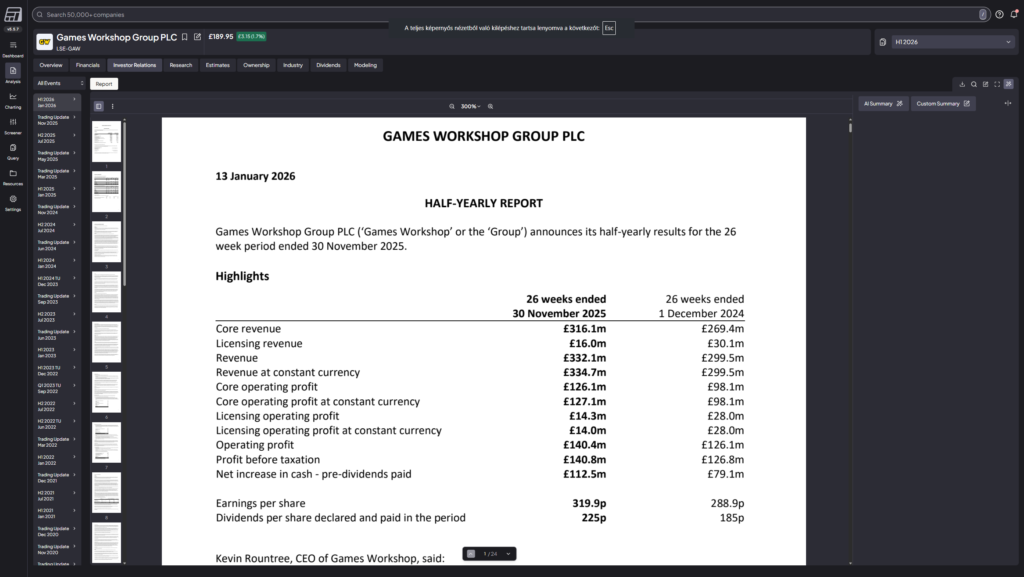
- ⏱️ summarize one-hour earnings calls into key points in minutes (this part works really well, I use it a lot)
- 📄 can answer your questions with direct quotes from financial reports (essentially extracts)
- 📊 generate custom reports and company comparisons (this works less well)
- 📈 create visualizations to highlight important trends (I think it's the best on the market right now)
The difference compared to a general AI is where the devil is in the details: when it comes to a financial question, it's not enough for the AI to say things that are roughly true; it has to answer numerically and with source attribution. Copilot is trying to solve this.
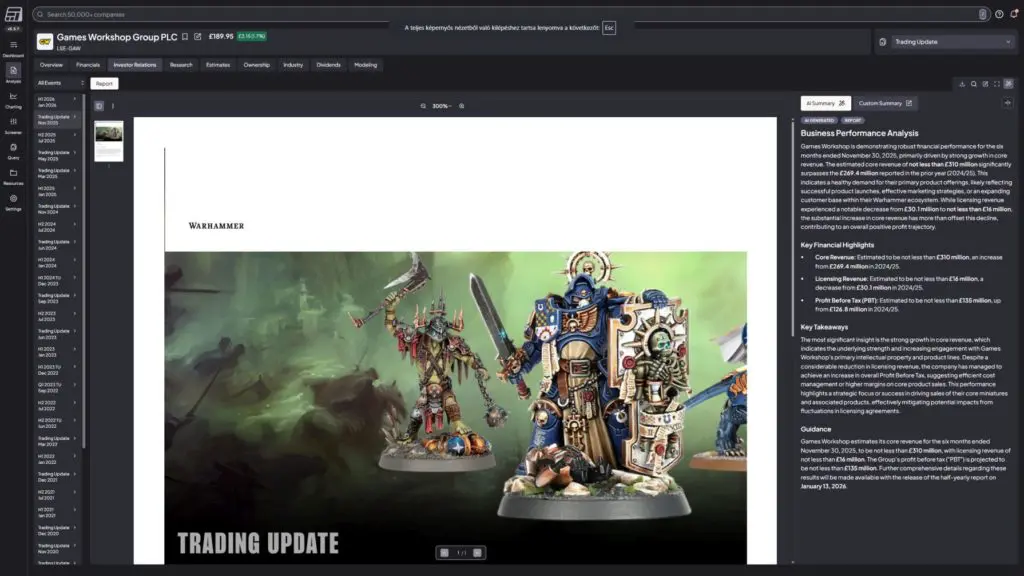
📌 In practice: the AI part is not fundamentally important because it can analyze instead of you, because it can't, and it doesn't replace thinking. However, what artificial intelligence is currently very good at in fiscal.ai is extraction and formatting. You don't have to read all the quarterly reports, it explains the gist in 1 minute, and since there is a normal data source behind it, the numbers ARE right. Unlike when you use public AIs like ChatGPT, Gemini, Claude, and I could list more.
🏢Institutional-level financial data
The service provides access to data on over 100000 global listed companies, ETFs and funds from S&P Market Intelligence. What really sets it apart from the competition is its proprietary dataset: 2000+ companies are available with a breakdown by business segment and KPI data, metrics that management emphasizes but that are traditionally difficult to track consistently from quarter to quarter.
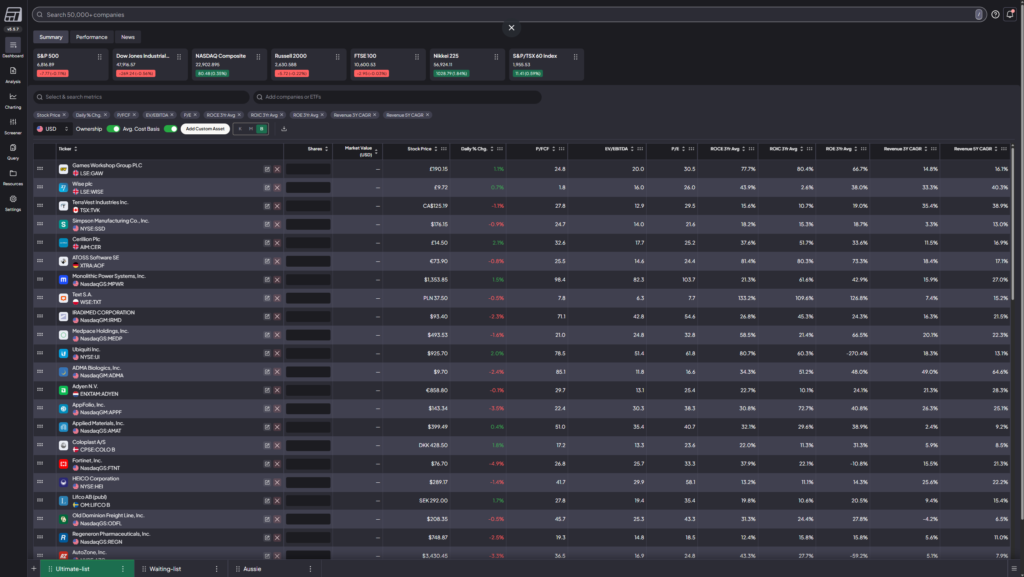
What fiscal.ai is very strong in is that it has access to almost all markets. Since a significant part of my stock portfolio is not tied to the US market, but to the Canadian, Australian, Swedish, Danish and other markets, it is very important what kind of data Fiscal AI provides. However, no one should expect that there will be KPI data for the last garage company, because there won't be. A huge advantage of fiscal.ai's data source is that it provides general data for almost all companies. Just a few examples that are quite difficult to achieve with other providers:
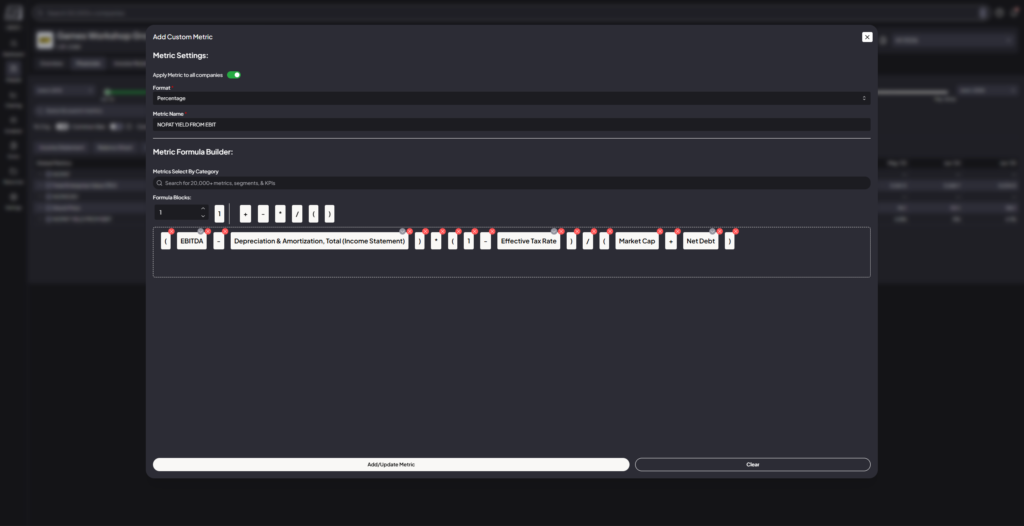
- 💰 NOPAT yield (but almost any metric can be created in their editor),
- (I.e. all margin indicators,
- 🏆 all value creation indicators: ROE, ROA, ROCE, ROIC (except WACC, which I miss),
- 🤝 insider trading,
- ???? ownership relations (does the management have a significant stake in the company),
- ️ comparator interface, where multiple stocks can be compared with each other,
- (I.e. you could also search for different fund compositions (e.g. Berkshire Hathaway, Fundsmith, etc.),
- (I.e. You will also access fund manager letters written to investors,
- 📦 also shows the composition of ETFs, you don't need to search for, say, JustETF.com.
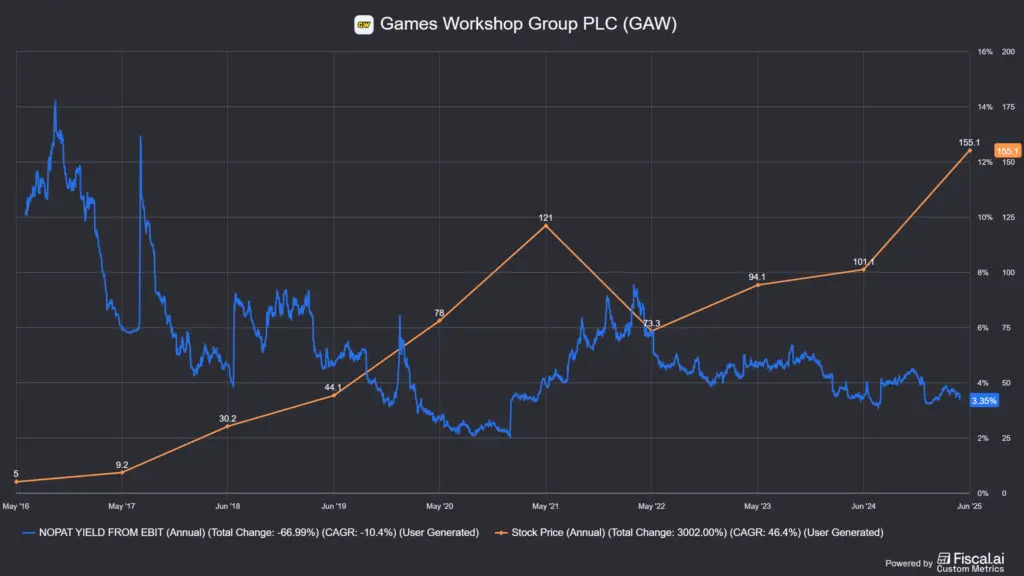
And the above is just the tip of the iceberg, there are a thousand other features gathered in one place, and what is very impressive is that they are expanding their features at a tremendous pace. I remember from the stratosphere.io days that some new important feature came out every month, and since then dozens of them have appeared, so there is real development on the platform.
🔎Research tools
In addition to fiscal.ai's interface, AI, and data, the platform also offers traditional research tools:
- Customizable dashboards: portfolio, watchlist and personal metrics tracking. The number and complexity of dashboards increases with each package, the plus one I use allows you to create 5 different watchlists.
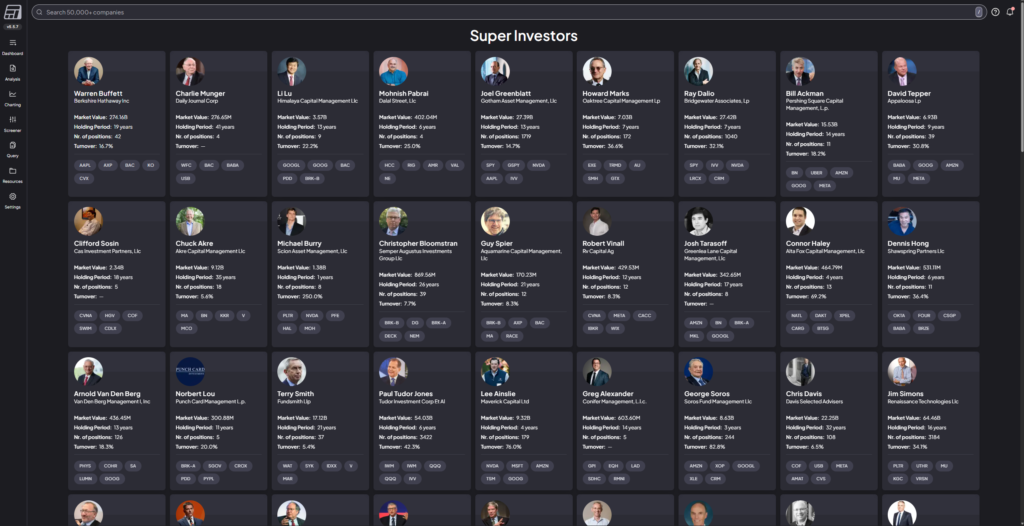
- Stock filter: It can be filtered by about 335 financial metrics, and the interesting part is that you can ask it in any language. For example: "Show me tech companies with low debt, paying dividends." and you'll get a meaningful answer.
- Comparison and DCF valuation: benchmarking competitors and building discounted cash flow models directly on the platform (I rarely use it because it's really a guessing game, but it's good to look at sometimes).
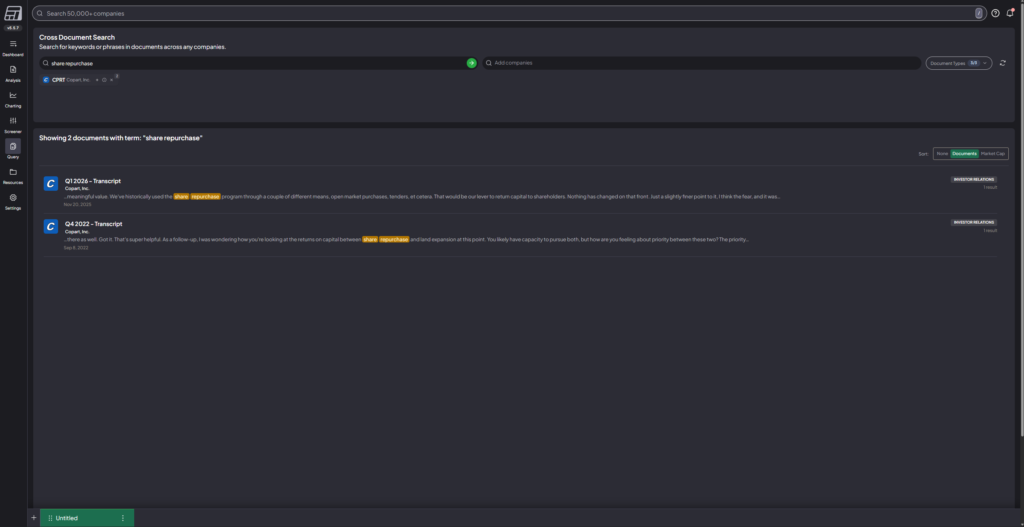
- Document library: Earnings call transcripts, presentations, press releases and regulatory filings in one place, with AI-based searchability.
- Expert tracking: Tracking portfolio changes of successful investors based on 13F filings, reading hedge fund letters.
📌In practice: fiscal.ai makes fundamental analysis very easy because everything is in one place. Many people underestimate the importance of this, but in the past I had to browse 20-30 websites if I needed any information. Reading and interpreting a quarterly report also takes at least 1 hour, so fiscal.ai's service is not only useful, but also convenient.
🧠IF YOU WOULD LIKE TO TRY FISAL.AI'S SERVICES, CLICK ON THE LINK BELOW: AVAILABLE HERE.

💰 Pricing: which package is worth it? 💰
Fiscal AI operates on a three-tier subscription model:
| PACKAGE* | Free | Pro ($33.15/month) | Max ($67.15/month) |
|---|---|---|---|
| Financial data history | 10 years annual, 6 quarters | 15 years annual, 20 quarters | 20+ years annual, 40+ quarterly |
| KPI data history | 2 years, 2 quarters | 10 years, 15 quarters | 15+ years, 20+ quarters |
| Dashboards | 1 (30 lines) | 10 (100 lines) | Unlimited |
| Events (calls, transcripts, slides) | 1 | 10 | Unlimited |
| Analyst estimates | 1 years / 1 quarters | 2 years / 4 quarters | 3 years / 5 quarters |
| History of adjusted indicators | ✕ | 3 years / 5 quarters | 5 years / 20 quarters |
| Equity Research | ✕ | ✓ | ✓ |
| Data auditability | ✕ | ✕ | ✓ |
| As Reported & Standardized Data | ✕ | ✕ | ✓ |
| Data export / download | ✕ | ✕ | ✓ |
| Free trial period | 2-week Pro trial |
* There is also an API & MCP package, which is a separate category: full data feed (financial statements, segments, KPIs, stock prices), and can be directly connected to Claude Connector and ChatGPT. Price is based on individual agreement (Contact Sales). varies, other data providers use it as a backend function, from the point of view of our analysis it is not relevant.
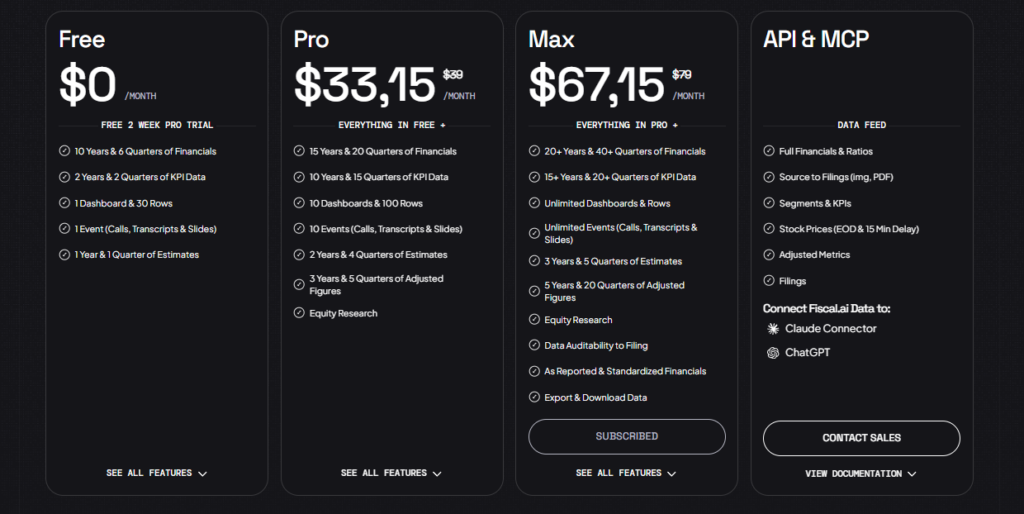
A few thoughts on Fiscal AI's packages based on my own experience:
- 🆓Free package: the version is more for testing purposes, 10 AI prompts per month is not much if you want to use it seriously, but anyway this is the feature that can be omitted. The main problem is that you will not have a long enough data series to be able to draw serious connections about crises, for example (2008 was 18 years ago, 2020 was 6 years ago).
- APlus plan ($20.4/month, Legacy): I subscribed to this in 2025, but it no longer exists, but it was increased from 244.8 USD to 288 USD along the way, but eventually the package was discontinued. There was a trial period for Plus subscribers, when they could upgrade to Pro and get the 15-year time interval. In the end, I didn't upgrade because the upgraded Plus package will also be 348 USD at the end of the next billing period (which in my case is the end of 2026.04).
- 🦾Pro package ($33.15/month when billed annually): for most private investors, 100 AI prompts, stock filters, DCF modeling, and 10 years of data history are enough. This is the level where the platform really works, I'm essentially using an older version of it.
- 💎The Max package ($67.15/month when billed annually): for financial professionals, content creators, or those who analyze many companies: 500 prompts, unlimited dashboards, estimate revisions, and premium support.
🧠IF YOU WOULD LIKE TO TRY FISAL.AI'S SERVICES, CLICK ON THE LINK BELOW: AVAILABLE HERE.
📌 In practice: I used to use the free plan for a long time, but you outgrow it over time, so I switched to Plus, which has since been discontinued. Two things are very noticeable: they have developed a lot of extra features in recent years, but they have also raised the price quite a bit. It doesn't matter whether you pay 244, 348 or 800 USD per year for some reason. It is true that this is the best service on the market, and it is much cheaper than Gurufocus's price of several thousand USD, but it is still not a penny. If I were you, I would stay with the Pro plan, it is a great choice in terms of price-performance ratio, and if you are a professional analyst, the company pays for your tools anyway.

🏆 How do you compare to your competitors? 🏆
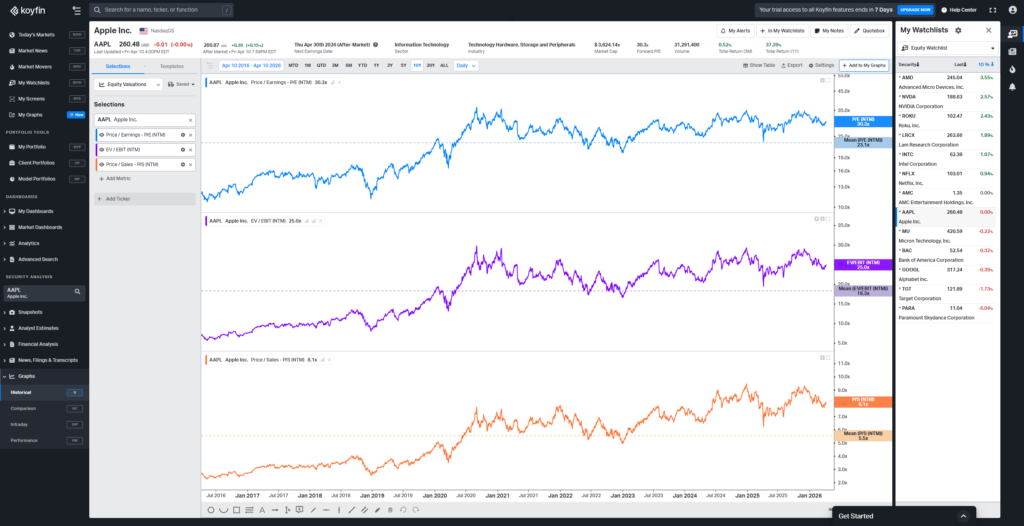
🆚Fiscal AI vs. Koyfin: the two platforms target a surprisingly similar audience, which makes their competition interesting, but Koyfin also has a section suitable for technical analysis. Both are strong in visualization, dashboards and fundamental data, and in fact Fiscal AI is not inferior to Koyfin in graphing either, in fact. The main difference is the AI layer and pricing: Koyfin's Plus package is $39/month, Pro is $79/month, which is $5-10 more expensive than Fiscal AI's equivalent packages ($33,15 and $67,15/month, respectively). For those who need both native Copilot AI and a proprietary KPI dataset, Fiscal AI offers better value in the same price range. Plus, for this money, Fiscal AI also provides Morningstar data, which as far as I know Koyfin does not, but the latter has an alert service, which the former does not.
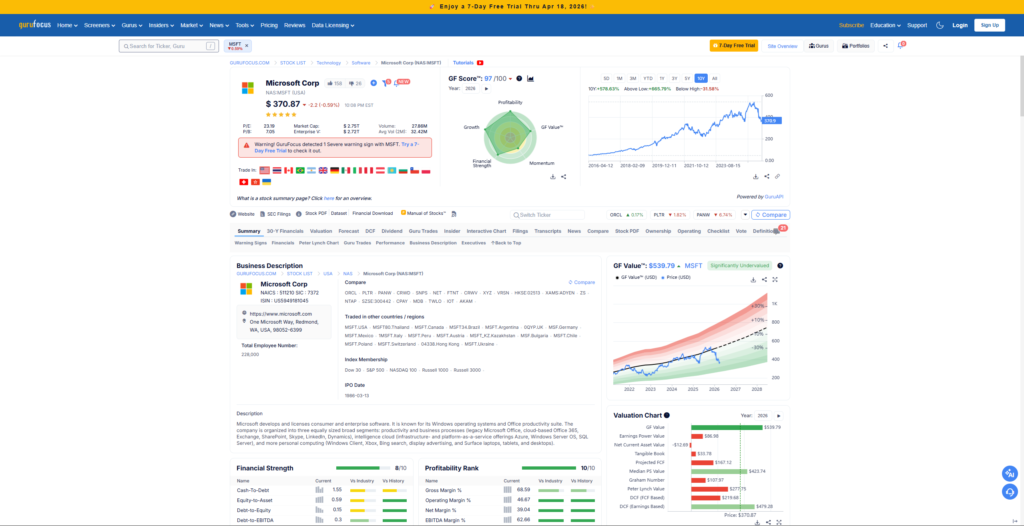
🆚Fiscal AI vs. GuruFocus: real opponents, especially among long-term, value-based investors. GuruFocus's unique strength is guru-following: you can track the movements of Warren Buffett, Mohnish Pabrai, Seth Klarman and more than 4000 institutional portfolio managers in real time, which is partly missing from Fiscal AI, but there is already a similar initiative there. In return, the price is a serious obstacle: GuruFocus Premium is 499 USD/year for a single market (US only), Premium Plus is nearly 900-1400 USD per year, and this can be increased to many thousands of USD, compared to the cost of Fiscal AI Pro at 398 USD/year. However, Fiscal AI wins the comparison in AI-based workflow and KPI data; GuruFocus' older, terminal-like interface and steeper learning curve are quite reminiscent of the 90s, quite old-school. However, GuruFocus provides the most data out of all the providers.
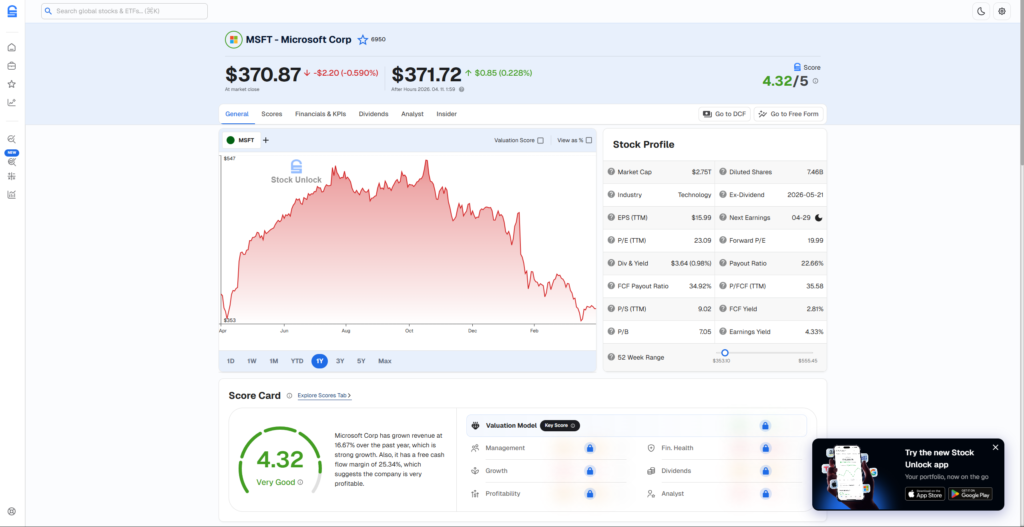
🆚Fiscal AI vs. Stock Unlock: here is the biggest overlap in price and target audience, and surprisingly, Stock Unlock itself uses Fiscal AI data as a KPI source. Stock Unlock Pro is only 7.50 USD /month, Unlimited is 20 USD /month, a fraction of the price of Fiscal AI. In return, AI Copilot, earnings call summaries and autonomous financial analysis are missing or much more limited in Stock Unlock. For those who mainly want portfolio or dividend tracking and basic filtering, Stock Unlock is an outstanding value for money; on the other hand, those who are looking for AI-driven research speed will choose Fiscal AI. Plus, a big problem with Stock Unlock is that there are actually better solutions designed for direct portfolio management than the portfolio management part. But for those on a small budget, Stock Unlock is a good choice.
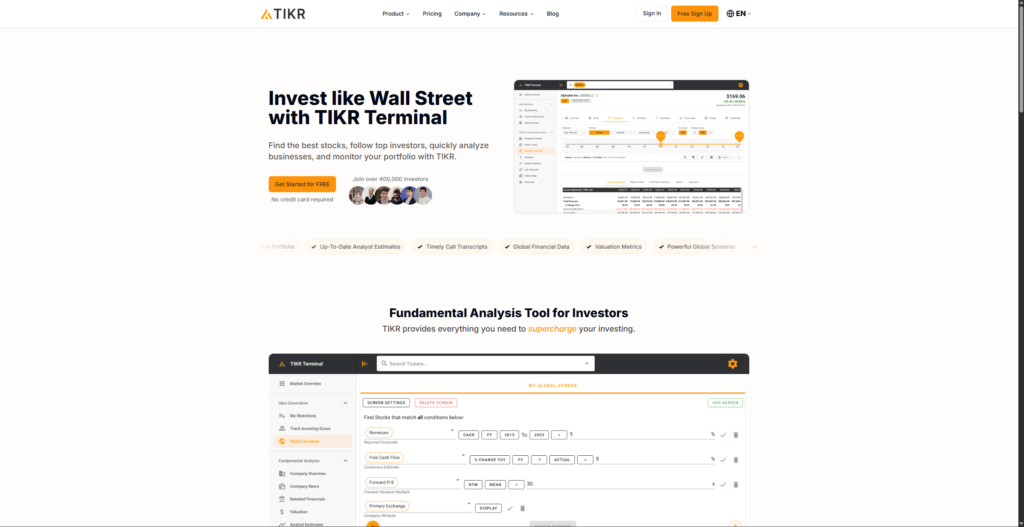
🆚Fiscal AI vs. TIKR Terminal: both platforms compete on the “democratization of institutional data” narrative, but with different emphases. TIKR uses the S&P Global CapitalIQ data source (the same one used by Bloomberg and FactSet), with 100,000+ global stocks and 20 years of data history at the Pro level ($54.95/month), and is particularly strong in super investor tracking and Excel export (Fiscal.ai doesn’t have this in the Plus/Pro plan, only in Max, but these days any AI will generate this for you based on a screenshot). You can also reduce the fees even further by paying for a year in advance, which will only cost you $17.95 and $37.95/month. Fiscal AI’s data source doesn’t have the same level of depth as TIKR Terminal’s, but AI Copilot, earnings call processing, and its own KPI dataset bring features that TIKR doesn’t offer. Those who think in a model-building, terminal-like workflow choose TIKR; those who prioritize AI-assisted research speed choose Fiscal AI, there is no big difference in price.
📌 In practice: I've tried basically every provider on the market, and Fiscal AI, besides being almost unbeatable, is unbelievably great at visualization, not very expensive, and is developing incredibly fast. It has one big flaw: you can't set alerts, so I solve this with the Investing.com app.

✅ Fiscal AI: will you get used to it or will you run away? ✅
What is in favor of the service 🟢
- ✅Time saving: What used to take 1-2 hours to process an earnings call can now be reduced to minutes with the help of AI. This is an advantage that is easily quantifiable in most investors' workflows, but AI doesn't think for you. So it's just a tool, but it's a very good one.
- ✅Access to institutional data: KPI data and segmented financial statements were previously achieved on expensive terminals or through manual spreadsheet work. The site now provides this knowledge for around 30 USD/month, so it has a very big cost advantage compared to other providers (but, I have found errors in their data several times, so it's good to be on the lookout).
- ✅Copilot really works in a financial context: a general AI chatbot will quickly start giving generalities when asked a DCF question and will not really help with the real analysis. Gemini and Claude both make a lot of mistakes in terms of data, and they also make specific errors of magnitude. Fiscal AI Copilot focuses on specific numbers, sources and context, as it also uses Fiscal AI's data source (or only that, so if there is a data error, it can be wrong, but it is much, much more accurate than traditional AI models).
- ✅Beautiful and well-maintained user interface: The quality of the UX of a complex financial tool determines whether it becomes a daily work tool or collects dust in the bookmarks. However, there are now so many features that I sometimes get lost in the interface, and a lot of new things are being implemented, so it is sometimes worth reviewing the interface again, because the range of products is expanding rapidly (unfortunately, so is the price).
🧠IF YOU WOULD LIKE TO TRY FISAL.AI'S SERVICES, CLICK ON THE LINK BELOW: AVAILABLE HERE.
What is against the service🔴
- ❌AI-generated text requires attention: Copilot is not infallible, it is worth manually checking the AI responses before making financial decisions. If you forget this, you may encounter unpleasant surprises, but you don't need to use this part of Fiscal AI, the interface is fully functional without it.
- ❌The price of the Max package is mind-blowing: $67/month with annual billing increases to ~$800 per year, which is a significant amount, especially when combined with other subscriptions. For most private investors, the Plus level is sufficient, or it can be supplemented with a Claude Pro.
- ❌Data coverage of smaller companies is uneven: the platform's strength is best seen in larger, closely followed stocks, with data depth decreasing for smaller mid-cap and especially small-cap companies. This is especially true for companies that are not American, such as Kelly Partners Group or Cerillion Plc. The analysis has taught us a lesson.
- ❌Learning curve in the first few weeks. The feature richness can make you get lost in the interface the first few times you log in. It takes a few weeks to get used to the dashboards, prompts, filters, and document library, but the whole system clicks together. It's worth working your way down and looking at the features one by one, which is what I did back then.
- ❌No price alerts and technical analysis interface: the first is a small but annoying shortcoming, because of which I have to use an extra unnecessary app (I recommend Yahoo Finance or Investing.com, the latter is better). However, the lack of technical analysis tools is not to be expected, Fiscal AI is a fundamental analysis tool, but the competitor Koyfin can do that too.
📌 In practice: Fiscal AI is almost the only data provider that I hardly need to use any additional tools. For alerts, install the aforementioned Investing.com app, and for data collection, formatting, and explanation of concepts, I recommend the Claude Pro subscription, which essentially covers everything you need. But, of course, as in all other cases, it is worth visiting the investor information subpage of the given company.
📝 Fiscal AI: summary 📝
Fiscal AI is an AI-based data collection and stock selection tool at a price point that is truly accessible to serious private investors and content creators. The combination of near-institutional quality KPI data, AI trained in a financial context, and a clean user interface is hard to break down: the individual elements together provide real value. Of course, this could be enhanced at a much higher price, as services from YCharts or GuruFocus offer more for much more money, but average people won't pay that.
It's not perfect: checking the outputs generated by artificial intelligence is essential, the price of the Pro package is not too high, but your time horizon is not so long that you can go back to several crises in the past. However, these are compromises that rarely arise in practice, as I have been using it to prepare my iO Charts analyses for 2 years and have already written 60+ articles with it and drawn hundreds of graphs (maybe thousands) with the service.
👌I think there is currently no better fundamental analysis service on the market than Fiscal AI, and I recommend it to everyone.👌
The following rule of thumb applies to who needs which package:
- 🐣 Beginner investor: Just be careful, start with the free one, because the platform is complex, you need to understand how it works first (but for those who have used more serious software, Fiscal AI is simple in comparison).
- 👔 Fundamental, value and growth investors: Highly recommended is the Plus (if you can still extend it) or Pro package.
- (I.e. Content creator, investment blogger: The Pro package is recommended.
- (I.e. Technical analyst: It's a limited-value, free package is enough because everyone uses TradingView for this kind of thing anyway.
! ️IF YOU LIKE THE FUNCTIONS OF FISCAL AI, YOU CAN TRY THE SERVICE AT THIS LINK: AVAILABLE HERE.! ️
Frequently Asked Questions about Fiscal AI
What is Fiscal AI and what is it for?
Fiscal AI (fiscal.ai) is an AI-powered investment research platform designed specifically for fundamental analysts and serious private investors. It helps you process quarterly reports, financial statements, and SEC filings in minutes that would take hours to manually process, all in an easy-to-use interface, powered by institutional-grade data.
Is the free version of Fiscal AI worth it, or do I have to upgrade to a paid plan?
The free plan is a good starting point to get to know the platform and includes a 2-week Pro trial to test out the paid features without any limitations. However, the free tier is severely limited in the long run: only 1 watchlist and a narrower data history are available, and the stock filter and DCF modeling are only available with a paid plan, without which Fiscal AI’s true value is hard to see. If you only need occasional, simpler research, Stock Unlock’s $7.50/month Pro plan could be a cheaper alternative; however, if AI-assisted workflow and KPI data are your priority, Fiscal AI Pro is recommended for $33.15/month.
Is my data safe on the fiscal.ai platform?
Fiscal AI is SOC2 Type II certified, which is one of the strictest industry standards for data security and privacy. It is important to note that Fiscal AI is a research platform, not a brokerage firm: it does not store your investment account data (it does not have a portfolio manager), does not execute transactions, and does not provide investment advice. It handles financial data necessary for analysis, which is otherwise publicly available.
Can Fiscal AI be connected to Claude or ChatGPT?
Yes, and this is one of the most interesting features that is rarely talked about. Fiscal AI offers an API & MCP package that allows you to connect your data feed directly to Claude Connector and ChatGPT, so you can essentially channel Fiscal AI’s institutional-grade financial data, KPIs, and other data into your own AI assistant. This means that instead of working within Fiscal AI’s own Copilot, you can query real financial data directly in your preferred AI environment. The API & MCP package is priced on a per-contract basis, so it’s primarily aimed at institutional users and developers, so I haven’t tried it, I’ve just read about it.
How is Fiscal AI different from GuruFocus or TIKR Terminal?
All three platforms target institutional-level fundamental analysis, but with different approaches. GuruFocus’ real strength is its investor tracking, with real-time tracking of Warren Buffett, Seth Klarman and thousands of institutional portfolio managers, but its price is a serious barrier to entry: the basic package is $499 per year for the US market only, while Fiscal AI Pro offers global data and AI Copilot for $398 per year. TIKR Terminal is based on the S&P Global CapitalIQ data source, is strong in Excel export and super investor tracking, but lacks AI-assisted workflow and earnings call summaries, but instead offers a technical analysis interface. Fiscal AI wins the comparison where the other two are weak: its own developed KPI dataset and financial-trained Copilot offer a research speed that neither GuruFocus’ older, “terminal-like “DOS” interface nor TIKR’s data-centric approach can provide.
Legal and liability statement (aka. disclaimer): My articles contain personal opinions, I write them solely for my own entertainment and that of my readers. The articles published here do NOT in any way exhaust the scope of investment advice. I have never intended, do not intend, and am unlikely to provide such in the future. What is written here is for informational purposes only and should NOT be construed as an offer. The expression of opinion is NOT in any way considered a guarantee to sell or buy financial instruments. You are SOLELY responsible for the decisions you make, and no one else, including me, assumes the risk.