
Introduction: The Power of Pricing Power
In a world of fluctuating inflation and economic uncertainty, luxury stocks offer a rare trait: Pricing Power. Unlike traditional retailers, which must lower their prices to compete, true luxury brands can raise prices without losing customers. In fact, in many cases, a higher price actually increases desirability.
Investing in the luxury sector is a bet on the resilience of the global affluent. These companies typically boast gross margins that would be the envy of tech startups, moats that new competitors cannot replicate, and customer bases that are largely immune to economic downturns.
👑Luxury market subsegments
The luxury market is a very specific segment that consists of several sub-segments. Basically, luxury products can be classified into the following groups:
- 👜soft luxury products – constant, recurring consumption, but characterized by lower prices, therefore naturally fluctuates more:
- 💄cosmetics: Estée Lauder, L'Oreal. We also analyzed the former: Estée Lauder Stock Analysis (EL)
- 👔clothing and accessories: LVMH (MC.PA), Richemont (CFR.SW), Hermès (RMS.PA), Circular (KER.PA), Burberry (BRBY.LSE). You can find the analysis of the latter two here: Kering Stock Analysis (PPRUY), Burberry Stock Analysis (BRBY)
- 🍷alcohols: Diageo (DEO) and the Brown-Forman (BF-B). We analyzed these: Diageo (DEO), Brown-Forman (BF-B)
- ⌚hard luxury products – less frequent purchases, but much higher value, less affected by inflationary pressure because people with very high income levels buy these:
In other words, when we talk about a clothing or sports car manufacturer, or perhaps a bag manufacturer, we have to look at the company completely differently if it is in the luxury industry. In this sense, even a premium manufacturer is closer to the average basic industry than its counterpart in the luxury segment of the same industry. A very good example of this is Porsche AG (P911), which is a car manufacturer between the premium and luxury levels, but is no longer able to provide the qualities expected of luxury products. You can read the analysis here: Porsche AG (P911) Stock Analysis – They're Not Pressing the Gas.
The luxury industry, unlike average consumer products, has the following characteristics:
- ☝🏼With the growing population, there are more and more consumers
- ☝🏼The proportion of the rich increases within the growing number of consumers (more wealth is created than is lost)
- ☝🏼the growing number of rich people wants to represent more and more to the other rich people (especially in authority-based societies like China), an endless growth trajectory
- ☝🏼the rich are not really affected by inflation, their consumption is not cyclical. This is especially true for the UHNWI, or ultra-high net worth individuals
- ☝🏼The luxury industry is built on traditions, and the generational change often passes on this attitude, as do luxury items (cars, bags, etc.). A great example of this is the Birkin bag, which is usually passed down from mother to daughter, but I could also mention vintage sports cars.
- ☝🏼there is a constant over-demand for luxury products (manufacturers keep supply artificially low, producing less than they could sell), a very good example of this is Ferrari, which could produce more than 13000 cars a year, but deliberately does not do so
- ☝🏼this gives companies great pricing power (the premium of luxury is built into the product, it will be more expensive in itself because of the great power of the brand and this is coupled with scarcity)
- ☝🏼The list price of luxury items is almost always lower than the secondary market price (i.e., their price increases when they leave the store, unlike what happens with an average product, which decreases in price.) A very good example of this is the luxury watch market.
- ☝🏼The pricing of luxury brands is completely divorced from their real use value, here you have to pay for the desire to own and the prestige, not for the fact that it is an object of use
- ☝🏼Luxury items are also good as a type of investment, for example, the value of rare sports cars tends to increase

🧥Clothing, jewelry and cosmetics
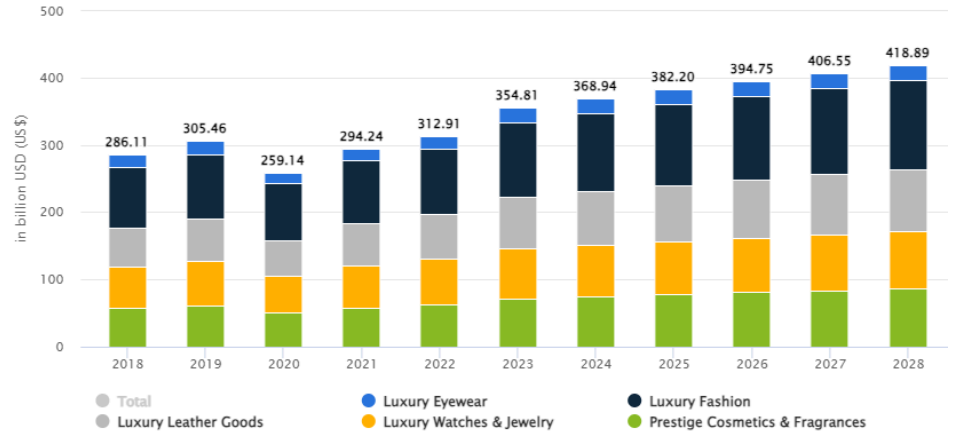
The image below shows Statista’s estimate of the size of the luxury market, but it does not include all the categories we defined above. The market size was $259 billion five years ago, while this year it could grow to $382 billion. The next four years of growth could reach a CAGR of 5.4% per year and a market size of $419 billion, according to Statista. However, since this analysis was made in 2024, it is worth noting that they expected continued growth, but this is not supported by the decline of Kering, LVMH and Richémont, as you will see later.
Some companies are expanding into other subsegments for portfolio diversification reasons, e.g. Gucci not only produces clothes and shoes, but also participates in the accessories market and sells cosmetics, while Hermès sells almost only luxury leather goods.
👌🏼Heritage is very important for these companies, that is, the added value that can only be acquired over time, which creates a barrier for new industry players and hinders market entry.
Although this is not necessarily true in the case of Kering (PPRUY), most companies have a 100-year history, everything is made by hand, the entire distribution network is under control, and each company is usually managed by a family. This is not true for conglomerates, which typically incorporate the right brands into their portfolios through acquisitions. Hostile acquisitions are quite common, with LVMH, and within that, the “wolf in cashmere,” Bernard Arnault, excelling.
Since Kering (PPRUY) is primarily an apparel manufacturer, the industry's sub-segments can also be classified according to which brand it falls into:
- 👗Luxury: most often conglomerates, no depreciation, excess inventory is destroyed (e.g. Burberry scandal), they control the entire supply chain, there is continuous over-demand for their products, production is in France or Italy. Older generation, 30+ buys, some products are passed down from generation to generation, they are mostly sold in physical stores, there are few listed products, there are no prices online.
- Companies: LVMH, Richemont (Cartier), Hermès, Kering, Christian Dior SE (majority owned by LVMH)
- Brands: LV, Salvatore Ferragamo, Dior, Prada, Chanel, Gucci, Bottega Veneta, Balenciaga (these three are Kering), Hermès, Giorgio Armani, etc.
- 👡Premium: half/third of the luxury pricing. Almost never discounted.
- Companies: Moncler, Burberry (here the company itself is the brand)
- Brands: Moncler, Burberry
- 👟Accessible: There is devaluation, outsourced production in underdeveloped countries, on-line orders. It is also called masstige or affordable luxury.
- Companies: Nike, Adidas, Puma, VF Corp, etc.
- Brands: Levi's, Nike, Adidas, Michael Kors, Coach, Ralph Lauren, Tommy Hilfiger, Calvin Klein (both of these are PVH Corp.) Lacoste, Guess, etc.
- 👕Fast fashion: They copy the products of luxury industry players in low quality. Generation Z buys and mixes it with luxury, e.g. Hermès bag with a Zara dress;.
- Companies: H&M, Zara, etc.
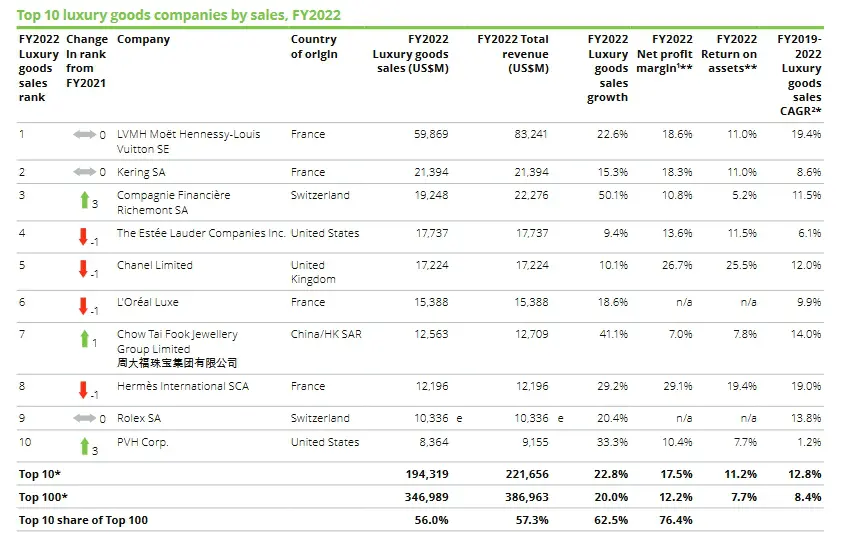
The above is very important because the Top ten players in the entire industry collected 56+% of the revenue and 76.4% of the profit three years ago, unfortunately I could not find a more recent study. From a value creation perspective, it is worth buying almost exclusively luxury industry players, because their capital yields the highest profit. This is true not only for the clothing industry, but also for car manufacturing; it is no coincidence that Ferrari (RACE) earns the most on its cars.
The COVID pandemic has shown how strong luxury brands are. The overall revenue drop in the fashion industry was 70%, compared to which LVMH raised prices by +8%, Chanel by +10%, Hermès by +6%, and by the end of the pandemic, Chanel had raised prices four times! in two yearsIt is clear that they have much greater retention power (8-10% annual price increase, plus 3-4% growth at fair value) than other competitors. What is the reason for this:
- ☝🏼luxury products are purchased by high-income individuals who are not really exposed to inflation
- ☝🏼Price increases are not necessarily a disadvantage, they are status symbols
- ☝🏼There is constant over-demand, so satisfying the pleasure of buying is the main driving force
- ☝🏼For them, price increases are almost irrelevant
At this point, it is worth defining the three categories we are talking about:
- 🪙HNWI: an individual with a net worth of $1 million, excluding their own residential real estate. This is where private banks and wealth managers typically start providing targeted services in the US. These people are very rarely employees, but if they are, they are typically senior managers.
- 👛VHNWI: This category is above HNWI. It includes those with a net worth of between $5 million and $30 million. This is an intermediate level between “regular” HNWI and the ultra category. These people are practically no longer working, are company directors or private individuals who live off their investments.
- 💰UHNWI: refers to the wealthiest individuals in wealth management terminology. They are those with a net worth of over $30 million, not including their own residential property. This group makes up less than 0.1% of the global population, yet they account for a disproportionate share of the luxury market, particularly hard luxury, i.e. buyers of watches, jewelry, handbags, and sports cars, and the super-premium segment. Naturally, these people are not working in the traditional sense of the word either.

The above implies a healthy growth rate of 10-12% per year, which is what the market can handle as long as there is no economic crisis. Plus, the underpricing of the shares also adds to this value, which usually yields quite a good total return potential. In other words, when a brand grows very quickly, it “runs ahead” in its own growth, and then a decline usually follows, the market almost catches up. This happened, for example, with Gucci, which grew 70% year-on-year for three years, which is unrealistically high growth, but I could also mention the luxury watch segment.
💡Discounting is prohibited in the luxury segment, so stocks are usually destroyed or surplus stocks are imported illegally. This is generally not viewed favorably by the public, as was the case with the Burberry scandal.
It is important to note that although product destruction is not an illegal practice, in today's conscious world, it is generally viewed with great disdain by consumers and erodes the strength of the company's brand. Therefore, companies either hide these facts or do not use this practice. Due to the above, a kind of secondary market and websites like Farfetch have emerged. This practice is not viewed favorably by all luxury manufacturers; for example, Kering does not even work with them.
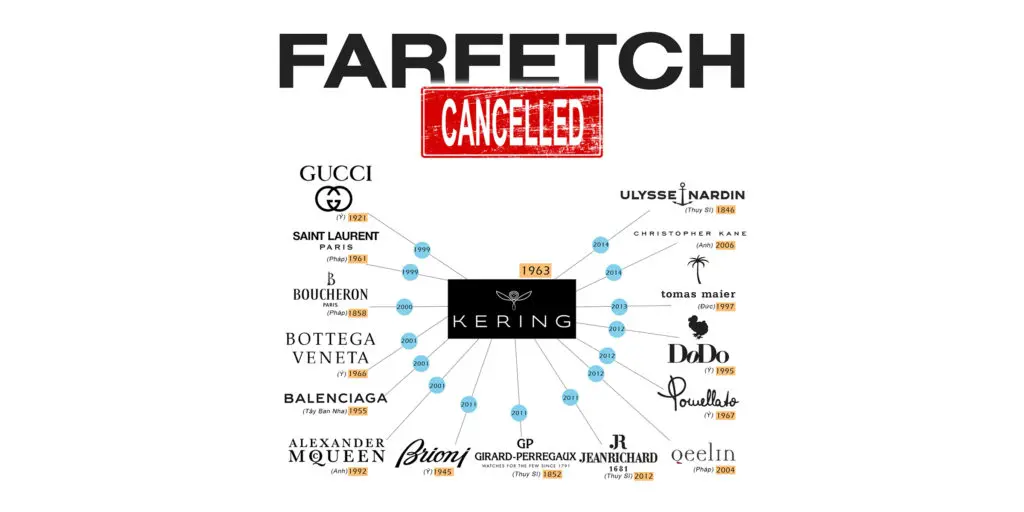
Dior has stated that if too much of something is sold, it should be discontinued. The question is how much pressure the emergence of aftermarket companies will put on luxury companies. There's a good chance it's not a big deal, as the main thing for the rich is to buy the product from the original manufacturer, because on the one hand they don't want to take the risk of buying a fake product, and on the other hand the prestige of the purchase is much greater.
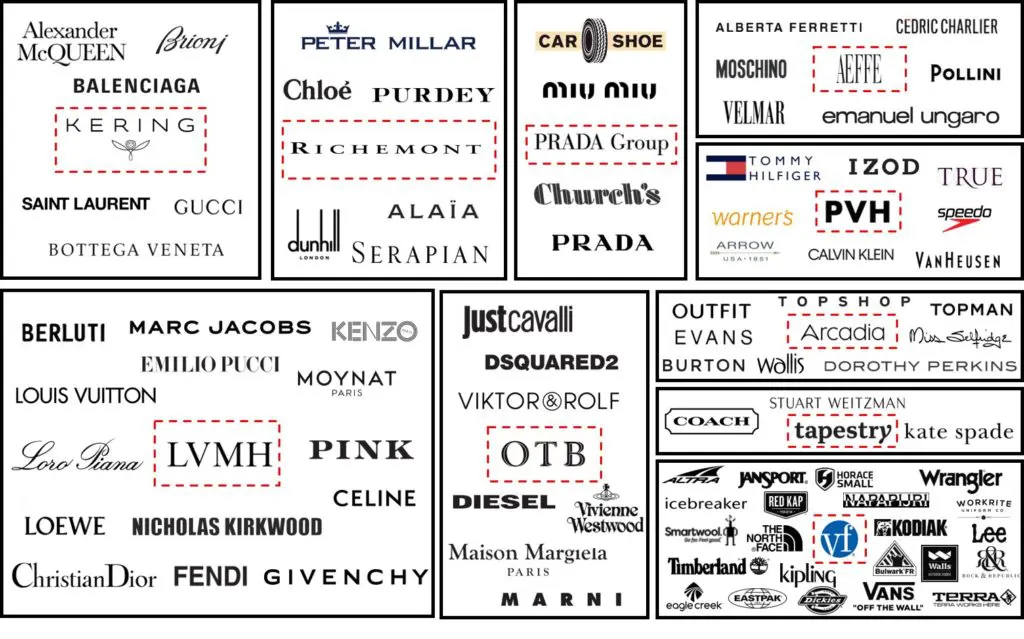
Most people associate the luxury industry with clothes, but for example, Gucci, a company that belongs to the conglomerate (PPRUY), clothes account for only 10% of its revenue. Leather goods bring in much more money, 40% for Gucci, 45% for Prada, 75% for LVMH, and 50% for Hermès, with icons like the Birkin and Kelly models.
☝🏼These products are surrounded by a milieu like Rolls-Royces or Ferraris, there is even a 1-year waiting list for them and only those who deserve it can get them, not just anyone can go in and buy these products.
This can be compared to luxury watches, and these bags do not break down for decades, they are in excess demand, so they change hands at higher prices on the secondary market. They can only be purchased in person in stores in prominent locations. Design is organized around a particular genius who designs these things, which is also the risk. What happens if he dies, steps down, starts his own brand, like Tom Ford, who ran the Gucci brand? Karl Lagerfeld is a good example of this, he was the head of Chanel for 4 decades.

💍What gives luxury brands their power?
According to industry players, if you want to examine the strength of a luxury brand, you need to consider 4 key factors:
- 💶pricing power: determines how much a company can raise the price of its products or services without causing a decline in demand. Hermès has one of the best pricing power in the luxury industry; their extremely high-quality leather products are price inelastic, meaning that consumption does not fall even if the price is increased.
- 👀appearance through consumption: A concept derived from economist Thorstein Veblen, which refers to when the purpose of a purchase is not only to satisfy needs, but also to demonstrate social status. Luxury brands typically build on this: owning a product is also a signal to the environment about the buyer's financial situation and social position.
- 💎investment value stability: It shows the value-preserving nature of the brand's products, that is, the value that the object represents beyond its intrinsic value. For example, some hard luxury products, such as luxury watches, sell for much more than their list price, in many cases from official sources. After they are purchased, their prices increase further due to their rarity and exclusivity, such as the Swiss watch trinity, Patek Philippe, Audemars Piguet and Vacheron Constantin, the latter owned by the Richemont Group.
- ⛓️control over the distribution chain: how much a given manufacturer can interfere in the sourcing of raw materials, the manufacturing process, transportation, and distribution of products. For example, Kering (PPRUY) owns Gucci's entire distribution chain, excluding listed products, which account for ~15% of the brand's revenue.
👗What is the Chanel Pyramid?
In the luxury industry, this term has been used to describe the strategy of the Chanel fashion house: at the top of the pyramid is haute couture, the most exclusive category in the fashion world, offered to a very narrow circle, with high prestige. Below it are ready-to-wear and accessories, and the broadest base is cosmetics and perfumes. This name comes from the literature and industry analyses that wanted to visually present Chanel's business model. For example, at the top of the Chanel pyramid is a $100000 bag or suit, below it is a wider range of smaller accessories, and so on.
👜What is haute couture?
Haute couture is a French term that literally means “high tailoring.” It is the most exclusive category in the fashion world, which only a few Parisian fashion houses are allowed to use with the permission of the Chambre Syndicale de la Haute Couture (the French Haute Couture Association). The conditions are extremely strict, for example:
- 👌🏼Every garment must be made by hand, custom-made,
- 🪙for individual customers, over hundreds of working hours,
- 🏚️a certain number of artisan tailors and seamstresses must work in the workshop,
- 👚It is mandatory to present two collections per year (spring/summer and autumn/winter).
Haute couture pieces are not made primarily for revenue, but for prestige and creative leadership: they showcase the craftsmanship and creativity of the fashion house, which then benefits the ready-to-wear (pret-à-porter) and accessory lines.
- 👉 Example: Chanel, Dior, Givenchy, Valentino haute couture collections.
☝🏼From the above, it can be seen that brands and iconic products are surrounded by a kind of legend, which has to be paid for separately, the function is often secondary. The point is ownership, who owns the given product, and that only very few people can buy the same one, this is worth a lot of money in this market.
🚗Exclusive Automotive (Ultra-Luxury)
It would be a mistake to lump Ferrari or Aston Martin with Ford or Toyota. These are not transportation companies, but manufacturers of exclusive mechanical artifacts, where people buy cars as much for the prestige, desire for ownership and the experience of the car, as for the fact that it meets their everyday transportation needs.
The “Ultra-Luxury” auto sector operates on a scarcity model: production is artificially limited to ensure that demand always exceeds supply. This results in recession-proof order backlogs and profit margins that are multiples of those of mass-produced automakers. Investors here buy into such strong brand loyalty that customers can wait years to take delivery of a single vehicle.
A very good example of this is Ferrari, which could produce more than 13000 cars a year, but deliberately does not.
Important players in the segment:
- Classic Ferrari for sale (RACE)
- Lamborghini & Bentley (Part of the Volkswagen Group (VOW.F))
- Bugatti (Owned by Rimac Group, which is 45% owned by Porsche AG (P911.F))
- Aston Martin (AML.LSE)
- Rolls-Royce (part of the BMW group (BMW.F))
- McLaren (private company)
It is also worth noting that a premium manufacturer is closer to the average automotive industry than its luxury counterpart (e.g. Ferrari). A very good example of this is Porsche AG (P911), which is a car manufacturer between premium and luxury levels, but is no longer able to provide the qualities expected of luxury products, so we do not necessarily think that the characteristics of the luxury industry apply to it today. You can read the analysis here: Porsche AG (P911) Stock Analysis – They're Not Pressing the Gas.
🍸Quality Wines and Soft Drinks
High-end alcohol is one of the most balanced performing segments of the market. Like hard luxury, rare cognacs and single-malt whiskies can increase in value over time.
Investors see this sector as a “defensive growth” opportunity. While consumers may be dining out less, the “drink less, but better” trend continues to drive demand for premium spirits. In addition, the maturation process required for the products creates a natural barrier to entry – you can’t launch a 20-year-old Scotch whisky brand overnight.
We analyzed the two largest players in the segment in detail:
- Brown-Forman Stock Analysis (BF.B, BF-B) – Another Round?
- Diageo Stock Analysis (DEO) – An Aging Party Face?
Summary: Why luxury should be in your portfolio?
Luxury stocks serve a specific purpose: Quality Growth.
- Margin: they generate cash flow that allows for reinvestment and dividend payments.
- Resistance: they often outperform the broader market during periods of inflation.
- Global exposure: a single luxury stock provides exposure to the purchasing power of the rising middle class in emerging markets without directly bearing the regulatory risks there.
Risks
The sector is not without risks, either. These include “Key Person Risk” (the loss of a star creative director), geopolitical tensions (trade wars involving export tariffs), and brand fatigue.
Legal and liability statement: This article is for informational purposes only and does not constitute investment advice in any way. Investment decisions are the sole responsibility of the investor and should be made based on individual financial situation, risk tolerance and investment objectives. The information provided in this article is accurate as of the time of writing; market conditions and company fundamentals may change.
