

I have written briefly about the process of buying stocks before. I mainly focused on why you should buy stocks (What stocks should I buy?), but no serious summary has been prepared on the subject. So in this article I will summarize the most important aspects of buying shares. Let's clarify the basic concepts that are essential for you to make the right decisions.
📈What is a share? The concept of a share
Before you start buying shares, we need to clarify what a share is. The meaning of a share is nothing more than: a security representing ownership rights that has no expiration date. Unlike, for example, a bond, which is a debt instrument with a maturity date. When you buy shares of a company, you are acquiring ownership in it. You will be the owner of the company, albeit to a negligible extent, and in this capacity, the management of the company must serve your interests.
In order for a company to issue shares, it must be a joint stock company. Joint stock companies operate in the same way in all countries, but they are typically called by different names, e.g. in the USA they are referred to as “C” and “S” corporations. It is enough for you to know that a joint stock company can be formally closed or open. The shares of the former cannot be traded on the stock exchange, the percentage of shares held reflects the ownership share of the owners relative to each other, in proportion to the capital. So, if the initial capital is 1 billion USD and the owners invest 250 million USD in equal proportions, then their ownership share will be 25% each. You can also establish a private joint stock company if you meet the legal requirements.
So, the prerequisite for buying shares is that it is a public limited company registered on a stock exchange or awaiting registration. When you buy shares of a company on a stock exchange, it is definitely considered an open joint stock company. However, it does not matter whether you buy the ownership document from the company or from another shareholder. To do this, you need to understand what an IPO is.
🤑What is an IPO? How can you buy shares?
Not surprisingly, shares can only be issued by a public limited company, which means that the company's shares are currently being listed on the stock exchange. This is called an IPO, or initial public offering, and it is actually a share purchase. In this case, within the framework of the IPO, market participants buy the shares from the company at a predetermined price, this is the issue price. At this time, the shares are not yet listed on the stock exchange. From the moment they are listed on the stock exchange, the price of the shares is determined by market conditions, and the price will move depending on supply and demand.
💡Important! An IPO is the first public offering of shares, at which point the shares are not yet “floating” on the market, meaning they are not available on the stock exchange, but you buy them directly from the company. This is a relatively rare case, it only happens when a company is listed on the stock exchange for the first time. In this event, your capital flows to the company, who therefore give up part of their ownership rights. In other words, you support the company with your money. There are also closed capital raising rounds, in which the company makes an offer to a narrow group of investors on an invitation basis and issues extra shares in addition to those already on the market. This event dilutes the other shareholders, as the number of shares increases.
📉Share buyback
Share buybacks also work the other way around, where the company buys back its own shares from the market. Why is this good for companies? Because it reduces the number of shares floating freely on the market, and if they can do this at a low price and then reissue them at a higher price at a later date, the company creates value. Share buybacks also have other benefits: for example, they don't have to pay dividends afterwards. The company can also take the purchased shares off the market, which reduces the supply of shares, which usually drives up the price.
If a company's shares have already been listed on the stock exchange and you are not buying as part of an IPO, you are NOT giving your money to the company, but are buying shares from another owner. In the case of a sale, you receive the other party's money in exchange for the shares, and in the case of a purchase, you give money to own the paper.
💡It is a very common misconception that people think that by buying shares floating on the market they are supporting the company, BUT THIS IS NOT TRUE. In this case, your money does not go to the company, as this is only true when the initial public offering, or IPO, takes place.
If you do not want to support the company because, for example, it sells tobacco products, weapons, environmentally polluting products, alcohol, or other socially harmful products or activities, then do not participate in the IPO or buy their products, which is the best way to stay out of their activities.

⚖️What rights does a share provide?
When you buy a share, you also acquire certain rights, which you can exercise, with a few exceptions:
📜Share purchase: property rights
- 🧑⚖️Right to transfer: The person who owns the stock can sell or transfer the security. This happens when you sell the security through your broker, for which you pay some fee to the broker.
- 🧑⚖️Right to liquidation share: If the company is dissolved/liquidated, their movables/assets are sold. What remains after the loans are repaid is distributed among the shareholders. Here it is worth knowing the payment order, i.e. in what order the claims against the company are paid. This is, greatly simplified, the following: employees, tax authorities, creditors, owners, i.e. the shareholder is at the end of the line.
- 🧑⚖️Right to dividends: A company may pay dividends, but this is not mandatory, it is decided by the company's management. Shareholders who own the instrument before a certain date are entitled to this. The process is completely automatic, usually the broker credits the amount of the dividend, after tax, to the brokerage account.
📌In practice: Of the above, everyone will exercise the right to sell when they "exit" a position, it's an everyday thing, you just have to press a button on the broker's interface and that's it.

I have experience with liquidation law in my startup portfolio, which I have written several articles about (Startup articles). I have received a message that the company went bankrupt and its assets were liquidated. I have NEVER received anything because while the company is going bankrupt, it usually also goes into debt and the creditors are compensated first. So, the lesson from this is that in the case of companies with a lot of debt, you run not only the risk of low growth, but also the risk of liquidation, that is, that you will not get your money back. A company does not have to go completely bankrupt for you to do badly. For example, if its price drops by 90% and it is acquired and then taken off the market, then from your perspective it is pretty much the same as if it had gone bankrupt. The above is very common in startup companies, but relatively rare in listed companies, but we have seen a fair number of companies go bankrupt.
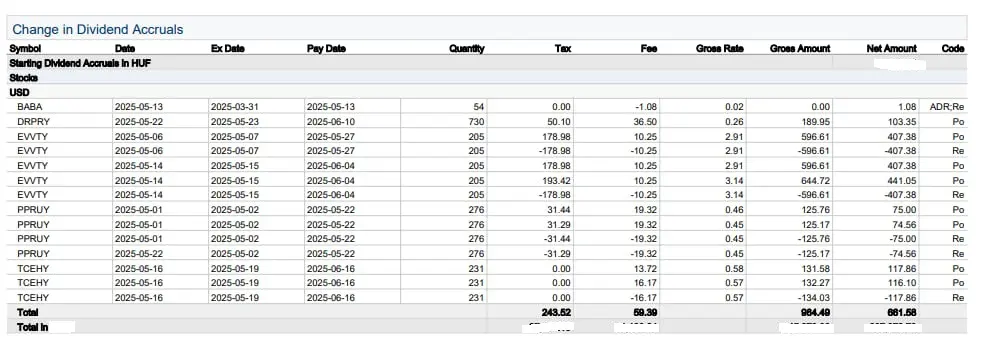
The right to a dividend does not have to be exercised, it is automatically exercised if you own the paper on the ex-dividend date, at which time you are entitled to the dividend. Your broker will credit this to your accounts after taxes and other contributions, such as the cost of the dividend credit, without you having to do anything. The broker will indicate these in the monthly financial statements, but will often also send you a notification about it by e-mail. The company decides whether to pay a dividend, increase or decrease it, suspend or terminate it.
📜Share purchase: rights related to company management
- 🧑⚖️Right of control: You can request information about the company's operations.
- 🧑⚖️Right of observation and challenge: Shareholders may make comments on the topics of the general meeting. They may also oppose the resolutions of the general meeting if they conflict with the law or the articles of association.
- 🧑⚖️Participation in the general meeting: All shareholders may attend and vote at the general meeting of shareholders.
- 🧑⚖️Right to be entered in the share register: The company registers new owners in its database and deletes the old ones.
📌In practice: In fact, the above rights cannot really be exercised by small shareholders, except for attending the general meeting. In the case of mega-corporations, the right to control usually consists of writing to the contact information of the investor relations department, and if they are smart, they will respond, as American companies usually do. Obviously, the larger the share you own in a company, the more weight it carries if you report something, and this is roughly true for the right to comment and object: as a small investor, you will not exercise them.
The right to participate in the general meeting is worth exercising, on the one hand it is interesting to observe the company's operations from the inside, to validate what the management says, on the other hand you can eat, drink on the company's account and ask questions to the management. Obviously you have to arrange the travel there yourself, and in the case of a portfolio of, say, 30 items, this also runs into practical problems. Owning shares can also provide additional rights, for example, as an LVMH owner you can enter the museum for free, in the case of shipping companies you get discounts, and I could list more.
You can't always exercise your right to register your shares in the company's register, only when the broker registers your name directly in the company's register. For example, Interactive Brokers holds all of its clients' shares in their own names, so in this case they exercise this right for you. This can be dangerous because if the broker wants to cheat or is unavailable tomorrow, it's hard to prove what was in your name, which is one of the reasons they are so cheap. Solution: always save your monthly statements.
In many cases, shareholders have the right, but not the power, to make a decision. However, Interactive Brokers, for example, sends out notifications in such cases, and in some cases, they can also vote.
🛒Stock buying: how can you buy stocks?
As you can see above, there are quite a few general rights attached to shares. However, not all shares are created equal, and it doesn't matter how you buy the shares. Theoretically, it is possible to buy securities directly from a company. The process of buying shares is quite complicated and capital intensive, with around USD 50000 being the lower limit before you'll be approached. Therefore, almost 99.99% of private individuals buy shares through an intermediary, i.e. a brokerage firm or bank. They may do this by packaging it into other financial products, such as bank equity funds or ETFs.
When buying shares, it is very important to understand that what you buy on the market is not always the share itself, but a “market instrument”. That is why you may find a share with several identifiers on different exchanges. Each such product has an international number, the so-called ISIN code. This identifies all instruments that are listed on the exchange, for example, bonds, shares and so on. You will almost NEVER use this, unless you want to check something.
Instead, you will use the stock's identifier, called the "ticker," which is usually a 3-5 letter identifier. Most stock search sites will find the company not only by the name of the stock, but also by its identifier. Here are some examples:
- MSFT –Microsoft
- AAPL - Apple
- GOOGL –Alphabet
If a company has multiple shares listed, you will see multiple identifiers under its name. This is because companies are assigned a new identifier on each exchange, and different types of shares, such as common stock or preferred stock, also have different identifiers. The image below shows data from the Finchat.io listing software and Alphabet’s listed securities on different markets:

🏷️Types of shares
A stock purchase can also be made in other forms, for example, an investment fund or ETF can also contain stocks. So when I use the term stock purchase, I mean a specific security purchased in a controlled capital market transaction. Now that we have clarified this, let's look at the types of stocks:
- 📊Common stock: This is the "general" type of share, which you would acquire with an average purchase, and does not provide additional rights other than those listed above.
- 📊Preferred stock: they usually provide some kind of priority, such as voting, veto, dividend, liquidation rights, etc. These are also usually indicated in the stock identifier, e.g. Bank of America common stock is traded under the ticker (BAC), while preferred stock is traded under the ticker (BAC.PRA).
- 📊Employee shares: It is only given to the company's employees for the purpose of supplementing income and as an incentive, as a kind of benefit. Typically, senior managers are rewarded in this way, the other right is the option to buy and sell, and its transferability is limited.
- 📊Interest-bearing stocks: An extremely rare form, the securities pay a predetermined interest rate in addition to dividends.
- 📊Redeemable shares: Redeemable shares give the company the right to buy and the shareholder the right to sell.
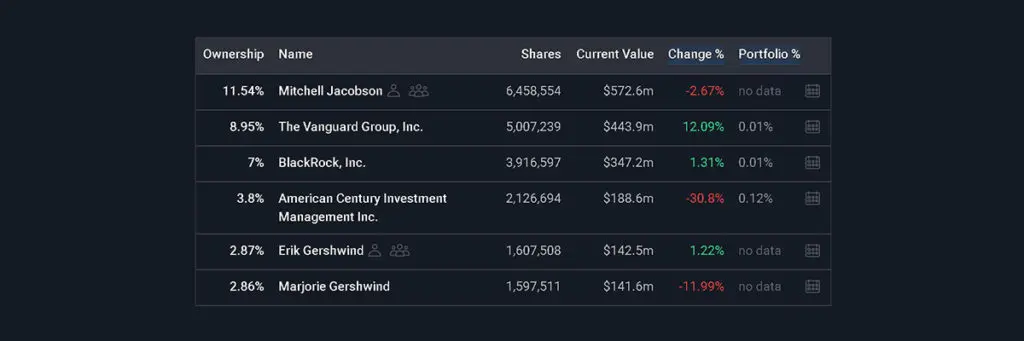
📌In practice: In fact, you will almost only encounter common stock among the above, preferred stock is very rarely traded on the market, usually the founders keep it for themselves, as I wrote in the Nike stock analysis (NKE analysis) or investors like Warren Buffett are fighting for it as part of certain deals. The image below shows the ownership rights of MSC Industrial Direct Co. at the end of 2020.
If you want to buy a stock, focus on which market you want to buy it in. For example, if you have savings in USD and you buy an American security listed on a European stock exchange, called an ADR, then your currency will be converted into EUR, which is a cost. This is also true for the Canadian stock exchange, where I bought shares of Computer Modelling Group (CMG analysis), because of this, my dollars were converted to CAD.
🛒The process of buying shares, its pitfalls
As I wrote earlier, a stock can be listed on more than one stock exchange. This is primarily for tax reasons, and because not all stocks are available on all exchanges. In fact, it is common for some brokerage firms to only have access to certain exchanges and, through them, to the instruments listed there. So, the first step is that you will need a brokerage account to access the different stocks.
What is a brokerage account?
A brokerage account is similar to a bank account, except that you can hold not only cash, but also securities. The very first step in buying shares is to open a brokerage account somewhere, which is now easiest to do online. Since whether a broker accepts you depends primarily on your citizenship and tax residency, there is no clear answer to which broker you have access to. It is therefore worth starting with one of the online discount brokers. Examples include:
- LightYear
- Revolut
- Trading 212 etc.
The point in this case is to get to know the interface, how things work, nothing more. Start with a small amount, enough that you don't mind losing, a few hundred dollars is enough for this. If you are beyond that, then before investing a larger amount, open a second account with another broker. I would recommend only one of them, which is widely available to citizens of many countries:
- Interactive Brokers: it is the cheapest on the market, it reaches almost all stock markets, and they have a lot of extra services that are available for free
It is important to diversify at the broker level for larger amounts, opening accounts at a minimum of 2 different places, but it is even better if you have accounts at three brokers. It is worth taking a close look at the following:
- brokers' price list due to costs
- the institutional background, whether it is sufficiently reliable, where it is registered, what kind of insurance it provides
- which markets brokers have access to
- what accounts they offer that can provide tax benefits or help with options, for example
- what other services they have, such as data sources for analysis, etc.
Below are some typical examples of real-life situations that I have encountered over the past few years.
📈How to trade?
I have been asked this question many times, and I don't know the answer because I'm not a trader. Traders follow trends and price patterns, meaning their methodology is technical analysis, which they follow over different time frames. You need to choose a broker that offers the necessary conditions for trading. What are the characteristics of trading?:
- you will buy a lot of shares
- you will have a large number of transactions due to the many buying and selling
- you need access to the commodity exchange, i.e. the futures market
- You will basically use derivative products for trading (CFDs, warrants, etc.)
- you will use technical analysis, meaning you will need live data
It is very important that if you trade with high frequency, you must see live data, otherwise you will not be able to make the right decisions and you will not see technical patterns in time. Trading is a completely different genre than investing, you need to learn this separately!
📊What stocks are worth buying?
Another question that constantly comes up is what kind of stock is worth buying. The answer is that no one knows this in advance, but investors invest for a longer period of time, i.e. for at least years. To do this, you need to use the tools of fundamental analysis, i.e. the main tasks will be stock analysis. For this reason, you need to access a lot of data, read analyses, look at Q reports and transcripts, and I could list more. What are the characteristics of investing if you do it right?
- you will buy few stocks and trade little or only buy the market as an ETF
- you want to keep costs low
- you need access to many stock markets if you want to diversify
- You will use fundamental analysis, for which I think the Inteactive Brokers platform is the best, for example, they provide EVA and Morningstar data for free.
- you will need an external stock selection site like iO Charts
Investors and long-term stock buyers basically work based on numbers, they read quarterly reports, they don't need live data, unlike technical analysts. Thesis plays itself out over years, which means you need a completely different approach to investing in stocks than trading them.
🪙Buy dividend-paying stocks
Quite a few people treat dividend stocks separately, as if they were a separate category among the types of stocks, but in reality they are not. It is simply that some companies pay out the cash they generate as dividends, while others do not. Since this is a longer-term thing, from this perspective, buying dividend stocks fits into your investment strategy. In other words, when buying dividend stocks:
- everything mentioned in investments, plus
- a broker who does not charge a separate fee for crediting dividends
🤑If you are interested in what brokers we use, read our articles below:
(I.e.Interactive Brokers broker account analysis – Professional for professionals
📈LightYear Broker Account Analysis - Simplicity and cheapness go hand in hand
🇭🇺Information for Hungarian investors🇭🇺
🏦The role of the MNB in choosing a broker
🪙KBC Equitas broker and Erste Invest broker
📊Dividend-paying stocks: no double taxation treaty with the US since 2024
🪜The process of buying shares
Now that you have some idea of what to look for when choosing a broker, let's dive into buying stocks, and take a step-by-step look at how you can buy a security. The process of buying stocks is very simple:
- You need an intermediary, which can be a bank or a brokerage firm, the latter being cheaper and having access to more instruments
- You will need to open one or more accounts with the above-mentioned providers, review the costs in advance
- Deposit the minimum amount required by the broker to open an account.
- If you want to buy shares denominated in another currency, you will need to convert them at your broker, so check the costs of this as well.
- Review the tax rules, for example, in which country, how much dividend tax is deducted, how much is the tax on exchange gains, how savings accounts work, what tax breaks you can take advantage of, etc.
- Do your own research on the company. You can use fundamental or technical analysis, or both.
- On your first brokerage accounts, just try things out with small amounts of money to get the feel and gain some experience.
General tips for getting started with stock buying
I don't think it's worth going into more detail about buying shares than this. The actual steps also depend on the interface of the given brokerage firm and what orders can be placed on it. Since these are broker-specific, for example, where you find what, which button to press, etc., I won't go into detail about this, but buying shares is not something that comes from the devil. Think about it, millions buy and sell every day, so why shouldn't it work for you?
I'll give you some tips on how to get started. The more normal brokers have:
- They have detailed descriptions of how their systems work, what orders can be placed there. For example, Interactive Brokers has an IBKR Campus section with tutorials (IBKR Campus).
- Many brokers have downloadable clients, web interfaces, and some kind of app. Typically, their functionality is not the same, and their usability also differs. It is worth reviewing these to see which one suits you best.
- Practice makes perfect, you don't have to jump into the deep end right away. Instead, I recommend building it more slowly, for example, building a portfolio doesn't happen overnight.
- If you have technical problems or questions, write to the customer service, they are usually very responsive, after all, it is about money. If they are not, I will simply leave the broker. If I ever have a multi-million dollar problem, the solution should not depend on the inappropriate attitude of the brokerage company.
🧠Specific tips based on my experience
In this chapter, I share specific stock buying tips and tricks that I have come across as an investor in recent years. I think these can help beginners, even if they are trivial.
📝Cost reduction
Reducing costs is the easiest way to increase returns. Every transaction costs money, as does currency exchange. So think carefully about how much you are giving and losing. As an investor, this is a relatively simple process, but as a trader, it is unfortunately much more difficult.
In the case of Interactive Brokers, there is an option to reduce costs by, for example, deducting transaction fees from the monthly account management fee. In other words, if, for example, the price of a stock drops and you buy or sell something, the costs of these are deducted from the monthly fee, so it is worth calculating these as well.
📋Stock analysis
If you have invested for the long term, it is definitely worth analyzing the targets fundamentally. It is not worth placing orders on impulse, based on feelings, or riding the hype train, just as panic selling makes no sense. Use filter sites like iO Charts for stock analysis, and do a minimum of reading on the topic.
If you don't care about that at all and don't want to buy individual stocks, then buy a market-tracking ETF that includes all stocks. For example, an S&P 500 ETF tracks the US stock market index, meaning it contains all the stocks that are in the index. This also solves the diversification issue.
🎯Extra services
It is relatively difficult to assess in advance what extra services a broker offers. In my experience, these can be divided into three groups: educational videos, webinars, and extra “subscriptions and data sources” that, if you did not have an account with the broker, you would have to pay a third party separately. Here are a few thoughts on these:
- instructional videos: They are useful, they help you understand how the interface works, use them.
- webinars: they are more likely not to be good than good. You have to register for most of them, which allows the broker to collect your data and then pester you with their offers, banks do this regularly. It is almost always controlled, the given provider will have a good solution for you, just now, just for you. Instead, there is YouTube, there are thousands of videos about everything.
- subscriptions, data sources: is one of the most useful services for stock analysis. Interactive Brokers, for example, allows account holders to access Morningstar analysis for free, which would otherwise cost $249 per year. They also provide institutional EVA data, albeit in a reduced form, which, as far as I know, is not otherwise available to individuals.
It is also important how easy the interface is to use, but obviously everyone has to experience this for themselves. Generally, app-based ones are simpler, while web and PC clients are more complicated.
🔍Stock purchase: what they didn't have access to
Always check which markets and instruments you have access to through a broker. It's an unpleasant surprise when you want to buy a stock but the broker won't let you because they either don't have access to the market or charge a service fee.
🧾Summary of stock purchase
Above I summarized how to buy stocks, what a brokerage account is, what the pitfalls are, and what you should pay attention to. Of course, this is just the tip of the iceberg, I didn't mention a lot of tax issues, and there are special, country-specific cases that cannot be fully covered. It is very important which country you are a tax resident of, how much income you have, and what style you prefer. Moreover, your level of knowledge is not the same, someone who doesn't know what a stock is yet has to approach the topic completely differently than someone who has been dealing with it for years. The best advice I can give you is: read everything and look at several sources, it will give you the full picture. If you have any questions or something is not clear, feel free to write a letter to the given service providers, they are usually willing to answer, after all, it is about money! And don't forget: buying stocks is not nearly as complicated, otherwise tens of millions wouldn't be able to invest every day!
Frequently Asked Questions (FAQ)
Which broker should I choose to buy shares?
There are several aspects to consider when choosing a broker - we will write a complete article about this - but I would like to highlight a few that are worth considering:
- size, reliability: The bigger a broker, the safer it is. Those with a banking background – Erste, K&H, Charles Schwab, etc. – are even better, and well-known brokers are typically more reliable.
- expenditures: Brokers operate with various costs, such as the account management fee, the portfolio fee - which is the worst cost -, the purchase/sale fee and the currency exchange cost (if USD is not deposited in the brokerage account)
- Availability of instruments: It doesn't matter which broker has which market available, or whether they add the given instrument upon request and how quickly.
- account type: cash or margin account, the latter can only be used for options. For Hungarian tax residents, having a TBSZ account is important, but citizens of other countries also have special options – such as the American 401K retirement savings account – which are either supported by the broker or not.
- surface: is one of the most underrated aspects, and it can be a real pain. Anyone who had an account with Random Capital, a now-defunct Hungarian broker, knows what it's like to work on a platform left over from the 90s. Erste's system is lousy slow, Interactive Brokers requires a flight test, and LightYear believes in simple but modern solutions.
Based on the above, I recommend the Interactive Brokers account because:
- the world's largest broker with a strong background
- a few million instruments are available on it, and shares listed on multiple markets – e.g. both the original and the ADR – of a single share are often available
- Interactive Brokers a discount broker, they have the lowest prices on the market
- you can link your Wise account to them, from which you can quickly transfer money
- Morningstar's analyses are available for free under the fundamental explorer (good for analysis)
- EVA framework data is available under fundamental explorer (useful for analysis)
- they have both cash and margin accounts, Hungarian citizens can open a TBSZ
- you can use three types of interfaces: there is a web and PC client and a phone application
How to buy shares?
Basically, it's very simple: you need to open a stock account with a broker, deposit the amount required by the broker, and then, after you get to know the interface, you simply press the buy button.
Buying shares for beginners: what to do and what not to do?
As a beginner, the most important thing is not to overcomplicate things. Choose a discount broker with a very simple interface, such as LightYear, deposit money and try the interface, buy and sell assets. Don't focus on generating the highest possible return, just understand how the stock market works, gain experience. Pay attention to how you handle pressure, how much risk you are willing to take. Investing is primarily a matter of self-knowledge, you don't need a lot of knowledge to achieve average stock returns, it's more a matter of discipline.
Where can I buy shares?
There are basically two ways to buy stocks: either you buy a block of shares directly from the company, which is an incredibly expensive and serious legal process, or you buy them through a broker. In this case, all you have to do is open a brokerage account.
Buying foreign shares: how do I do it?
Foreign stocks mean something different to everyone, so you can naturally consider the home market where you live as your home market. Many investors therefore prefer this market, which is called home bias. However, I recommend that you open an account with a broker that also covers foreign markets, fortunately almost all of them do these days. Read a lot about your targets, that will give you the most complete picture.
Selling a share: when should you sell a share?
Selling a stock is no more complicated than buying it, you just have to press a single “sell” button. However, it usually comes with a greater psychological burden, which is why people tend to resort to panic selling to relieve the pressure.
What stock is worth buying?
First of all, something about which you have strong convictions. There is no point in buying blindly, the psychological burden is always when the price of a stock goes up or down. If you understand what you bought, and not just blindly getting into something, then you will be able to make good decisions, otherwise it is all just speculation.
Which stock price will rise or fall?
Nobody knows, because there is no magic bullet that can tell. It can be based on mathematical probabilities. The prices of high-quality companies that have growing sales, are able to reinvest the cash generated into the business, and have high intrinsic value creation tend to rise in the long term. But in the short term – a few years – the market and the price can move anywhere.
Legal and liability statement (aka. disclaimer): My articles contain personal opinions, I write them solely for my own entertainment and that of my readers. The articles published on iO Charts do NOT in any way exhaust the scope of investment advice. I have never intended, do not intend, and am unlikely to provide such in the future. What is written here is for informational purposes only and should NOT be construed as an offer. The expression of opinion is NOT in any way considered a guarantee to sell or buy financial instruments. You are SOLELY responsible for the decisions you make, and no one else, including me, assumes the risk.