

🌏 Market overview
If it’s an Australian stock, it’s an Australian stock exchange. The Australian Securities Exchange (ASX) is not the market that comes to mind first for a European investor – and this is exactly the kind of inattention that can lead to serious opportunities in the long term. The ASX has nearly 2200 listed companies, with a combined market capitalization of over $1500 billion, which places it around 15th in the global rankings. The size of the market is therefore comparable to the large European stock exchanges (London, Frankfurt, Paris), but its composition is completely different: while the technology sector accounts for nearly 28% of the market capitalization in the S&P 500, this proportion is only around 3–7% on the ASX. This is more than compensated for by the raw materials and financial sectors: the “Big Four” banks (Commonwealth Bank, Westpac, ANZ, NAB) and mining giants (BHP, Rio Tinto, Fortescue) together control over 40% of the index’s capital value.
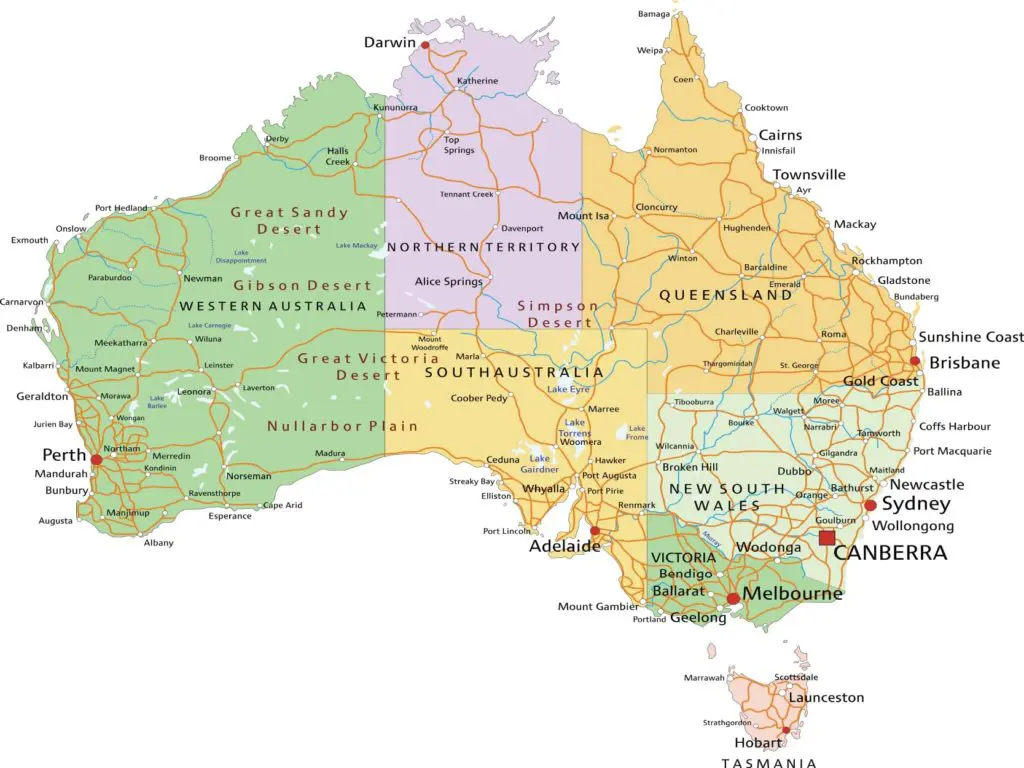
This imbalance is both the biggest risk and one of the most important features of the ASX. Australia is one of the world's most important exporters of raw materials: Chinese industrial demand drives the majority of iron ore prices, and China accounts for nearly 60% of the island country's iron ore exports. This means that the ASX is highly exposed to both the Chinese economic cycle and the volatility of the broader commodity markets. At the same time, the financial sector is a highly regulated, stable dividend-paying system. Through the dividend imputation system, the average dividend yield of Australian stocks has consistently been double that of the US, making the market attractive to income-focused investors. The S&P/ASX 200 had its third consecutive positive year in 2025, rising around 10% over the past 12 months.
The Australian stock market also has another, less obvious but equally important feature: the Anglo-Saxon system of relations. Australia, the UK, the US, Canada and New Zealand form an informal economic and cultural nexus within which Australian companies can expand with relatively low barriers to entry. This expansion path is particularly valuable in the SaaS and technology sectors: Australian software companies almost naturally enter the New Zealand market first, then the UK, and finally the North American market – a shared legal tradition, a shared business culture, a shared language area and a large Australian diaspora. This pattern explains why the Australian tech companies discussed below are able to achieve globally competitive growth without having to expand from scratch.
Although Kelly Partners Group (ASX:KPG) is not on our current list, as I have previously done an in-depth analysis of the company, I think this company is a textbook example of what I have said above. It perfectly represents the pattern that you will also recognize in other Australian companies, so it is worth reading its analysis: Kelly Partners Group Stock Analysis – Leonard, is that you?.

1. 🏥 Top 3 Australian stocks: Pro Medicus (ASX: PME), the invisible infrastructure of hospitals
Pro Medicus is a medical imaging software developer and marketer, with its flagship Visage 7 platform, a cloud-based PACS (Picture Archiving and Communication System) and radiology information system capable of streaming radiology images in real time. Put simply, when a radiologist opens a patient's CT or MRI scan and can browse through the images in a lightning-fast, seamless manner, there's probably some kind of Pro Medicus software running in the background. The company was founded in Melbourne in 1983 and today embodies one of the least-known, yet most impressive, success stories of Australian-founded software: In the fiscal year FY2025, it generated revenue of AUD 213 million, up 32% year-on-year, and net profit of AUD 115 million – a net margin of 54%, placing it among the most profitable software companies in the world. The debt is zero, with AUD 210 million sitting in the coffers.
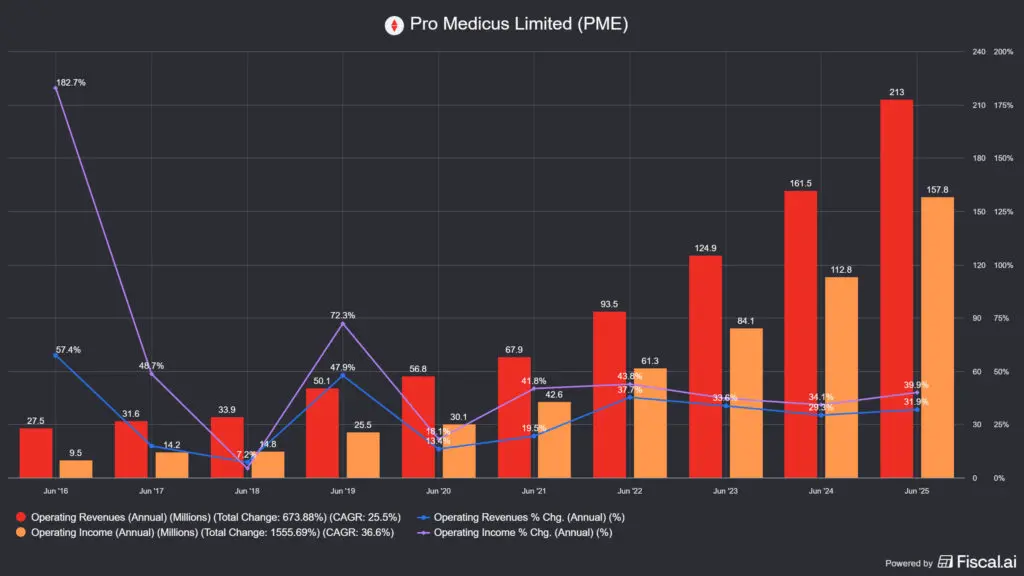
The competitive advantage comes from three mutually reinforcing sources. The first is proprietary streaming technology: Unlike other systems, Visage 7 does not download the image to the user's device, but streams it on-demand, so super-fast, high-resolution image viewing is possible even from a laptop. This architecture is not only faster, but it also drastically reduces migration time. Compared to the industry average of 2–3 years of implementation, Pro Medicus can typically get its systems up and running for new partners in 11 months. The second is mission-critical embeddedness: In the largest US hospitals (NYU Langone, UCSF, Mass General Brigham, Duke Health), radiologists already require access to Visage as a condition of employment, meaning that replacing the system is not a business issue, but a talent retention risk. The third is the revenue model: contracts are for 7–10 years, sometimes worth nearly 330 million USD (e.g. Trinity Health, 2024), a cash flow that no other company in the market segment can demonstrate. 88% of revenue comes from North America, but the recent opening towards cardiology (UCHealth, 170 million USD/10 years, 2025) and the European expansion are drawing a completely different trajectory.
📌In practice: Mark Leonard, founder of Constellation Software, had a great example of the rise of artificial intelligence, this is the radiologist paradox. The essence of this is that AI does not reduce, but rather increases the number of radiologists, because they have the greatest added value in the chain, they are the ones who make the diagnosis at the end, they take responsibility for the decision. Access to the Visage system above also shows well: the higher added value workforce dictates, and if he asks for the Pro Medicus Visage system, he will probably get it.
🐂 Bulls say
Pro Medicus currently covers roughly 9% of the North American radiology market. Analysts' consensus is that this number could increase to around 15-20% by 2030, purely through organic expansion. Cardiology is a completely new market, about one-fifth the size of radiology in volume, but due to the complexity of the examinations, it can generate up to 2–3x higher revenue in some cases. The European market is also almost untouched, while the company has been present on the continent for 25 years. AI as a platform: Visage is increasingly becoming an “app store” where third-party AI models run, further deepening the embeddedness. The company generates AUD 213 million in revenue with 132 employees, the revenue efficiency per person is almost sci-fi level, and it is structurally sustainable, as serving the growing customer base in software services involves almost zero extra costs, meaning it is highly scalable.
🐻 Bears say
The pricing is not without its caveat: the stock's P/E multiple has historically been around 160-270x, which leaves minimal room for a potential slowdown. The risk of saturation in the North American market is real: if the majority of large hospital systems are acquired, the organic growth rate will inevitably decrease. GE HealthCare, Epic Systems and Philips are also not idle, all three companies are redeploying resources towards cloud-based PACS. Moreover, 88% of the company's revenue comes from a single market (the US) and a single product line (radiology), which poses a concentration risk.
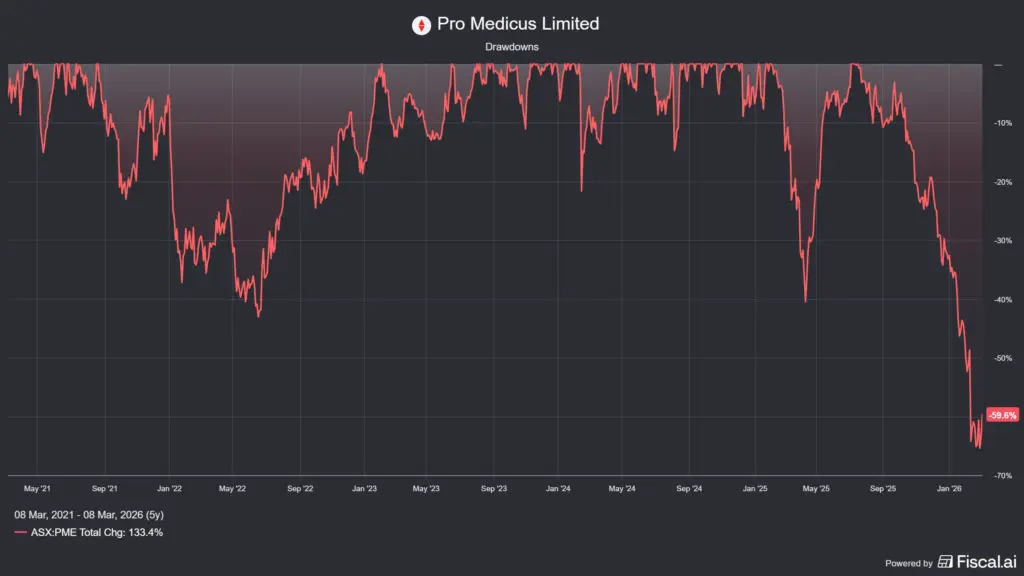
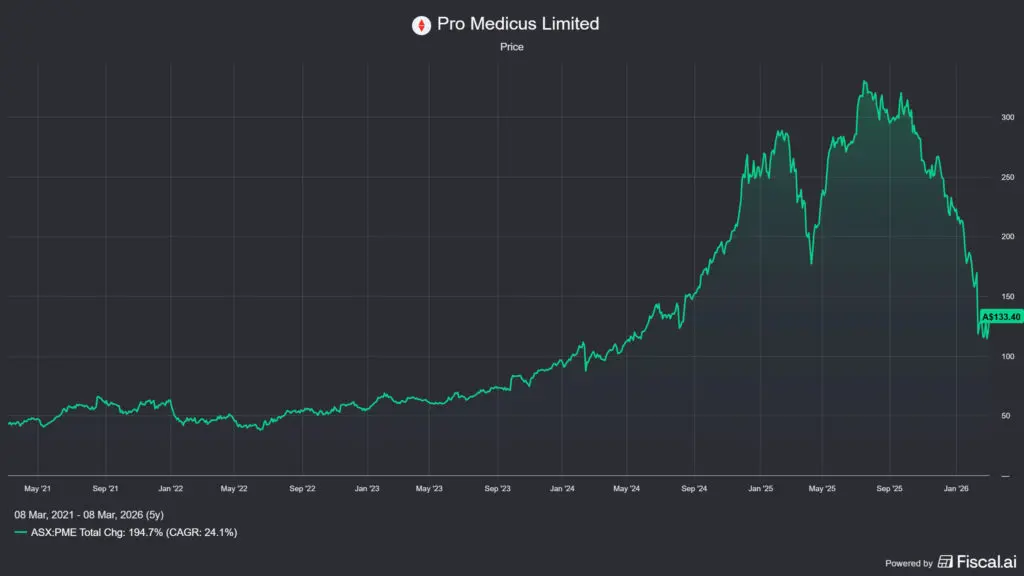
📌In practice: Pro Medicus is one of, if not the best companies in the Australian market, and in return it trades at an astronomical price, almost always. However, now the share price has been slashed by 60% due to the AI scare, which could be a good entry point. The US market is about twenty times the Australian market in terms of purchasing power, while the British one is roughly four to five times. If you buy this company, you should definitely look into the market size and saturation, as astronomical growth can only be maintained if it has a truly large, unconquered market share at its disposal. Of course, Pro Medicus' service also has a displacing power against competitors, which can also be calculated. Secret tip: in my experience, Pro Medicus is much more volatile than the other three stocks, its daily movement can reach up to 8-10%, so you can trade with it.

2. 🏛️ Top 3 Australian stocks: Objective Corporation (ASX: OCL), the government's "operating system"
Objective Corporation is one of the most interesting Australian tech stocks: It has been listed on the stock exchange for 25 years, has not raised a single penny of capital since then, and its founder, Tony Walls, who holds a 65% stake in the company, has remained at the helm throughout. It’s the kind of founder-led business that the best investors wait years for. The company develops and sells GovTech SaaS software: its products, Objective Nexus, Objective Build, Objective Connect, Objective RegWorks, and a dozen more, handle document storage, development permit processing, regulatory compliance, public procurement processes, and data redaction for government agencies and highly regulated industries. Put simply, if an Australian or New Zealand municipality is digitally processing building permits, it’s likely using Objective software.
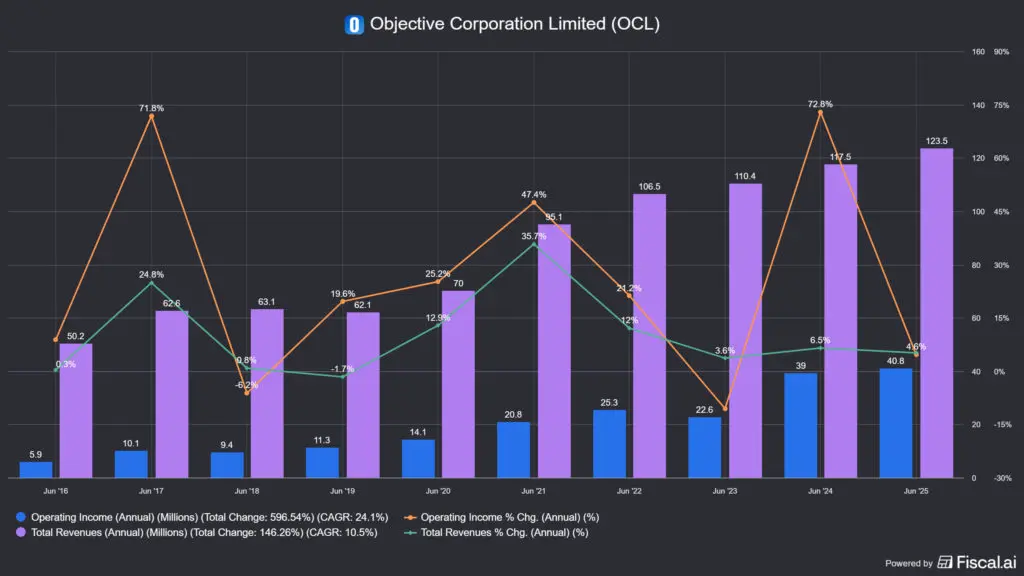
The competitive advantage lies in the extraordinary stickiness. Public sector software replacement is not a market decision: it requires a combination of political approval, retraining time, data migration risk and a public procurement process. This results in Objective’s customers almost never switching, ARR (annual recurring revenue) has grown at a CAGR of 18% over the past five years, while churn is minimal. The FY2025 results: 6.5% revenue growth, 16% profit growth, 33% EBITDA margin, debt-free balance sheet, AUD 90 million in cash. According to Goldman Sachs, only 20% of enterprises globally have migrated to cloud-based SaaS: this figure provides context for Objective’s overall growth trajectory. Expansion in the UK has particularly accelerated, and the acquisition of Isovist Holdings in 2025 further expanded the product portfolio with map-based planning and zoning software.
📌In practice: I worked in the public sector as an IT specialist for 12 years and although everyone hates bureaucracy, it is the nature of things that makes it very difficult for public companies to change anything. Objective Corp.'s customers are incredibly sticky, they retain customers exceptionally well even in Australian markets. However, growth is also limited because of this, this 5-6% annual revenue growth is the average, so it can hardly be called a growth stock.
🐂 Bulls say
Government spending in Australia has not fallen in nominal terms in any year since 1960, with average annual growth of around 4%, which Objective regularly outperforms. This backdrop creates a structurally secure revenue base for Objective. The ~17-18% annual rate of increase suggests that growth is not only sustainable, but could even accelerate as cloud migration progresses. The expansion into the UK is a textbook example of Anglo-Saxon compatibility: the same legal traditions, the same business culture, a huge public sector market. The 65% founder ownership indicates that the alignment of interests between management and shareholders is almost perfect. Tony Walls does not optimize for quarterly numbers.
🐻 Bears say
The pace of revenue growth has lagged behind its own targets in the last two years, which has shaken market confidence to a lesser extent. The TAM (available market) is smaller than that of fully horizontal SaaS players: the public sector focus inherently limits the speed of scaling. If government IT spending is constrained (e.g. in a recessionary environment), Objective's contract renewal cycle may be extended. The competition is also not sleeping: Microsoft, SAP and Oracle also have government solutions, although the specific Australian/New Zealand regulatory knowledge makes it seriously difficult for them to launch a head-on competition.
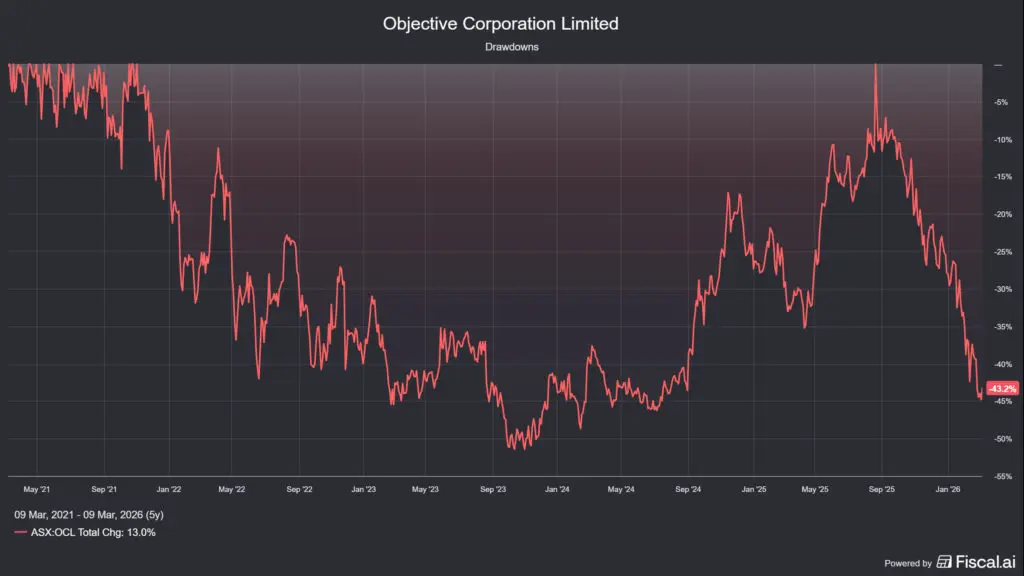
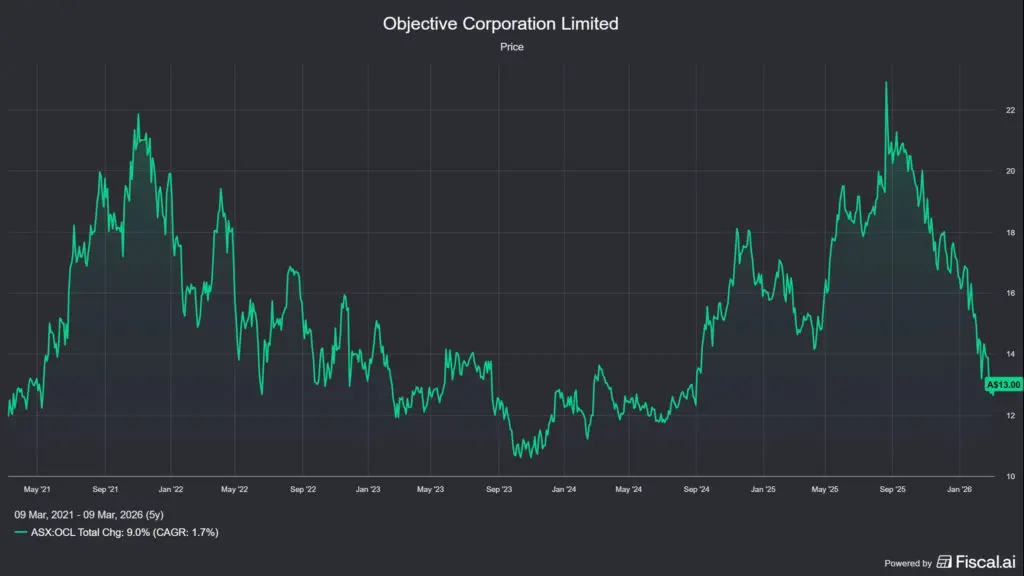
📌In practice: Objective Corporation, in my opinion, can be considered more of a vertical market software than a horizontal one. As I mentioned in connection with Pro Medicus, here too you have to look closely at the size of the market, because the situation of the Australian public sector is not really transparent to most investors. However, the company can also use the advantage of the Australian diaspora in other Anglo-Saxon countries, and they also have a much larger market, so I think there is still room for growth. The AI scare is working here too: the share has fallen by ~45% in the past six months.

3. 📊 Top 3 Australian stocks: Technology One (ASX: TNE), ERP system above all
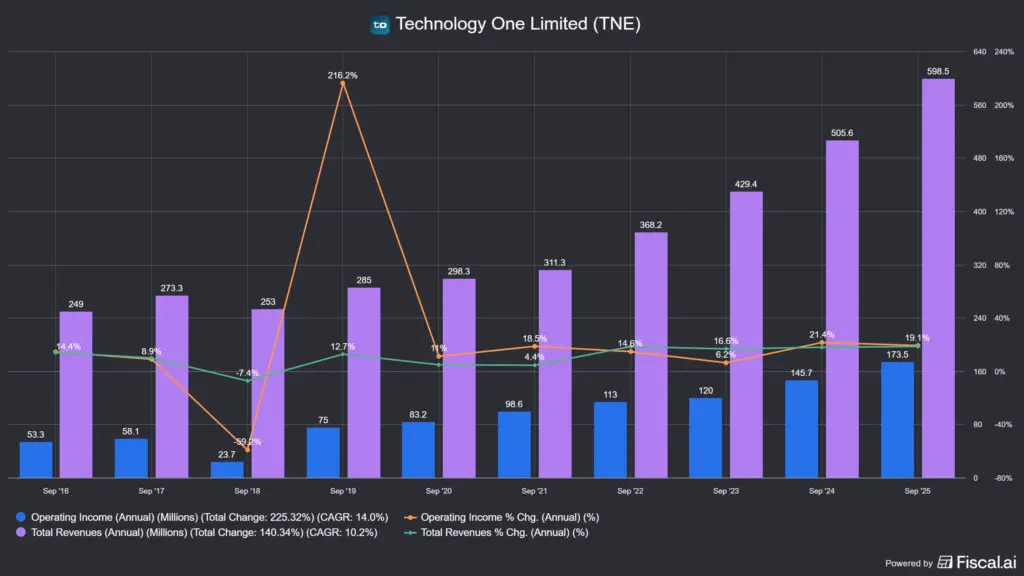
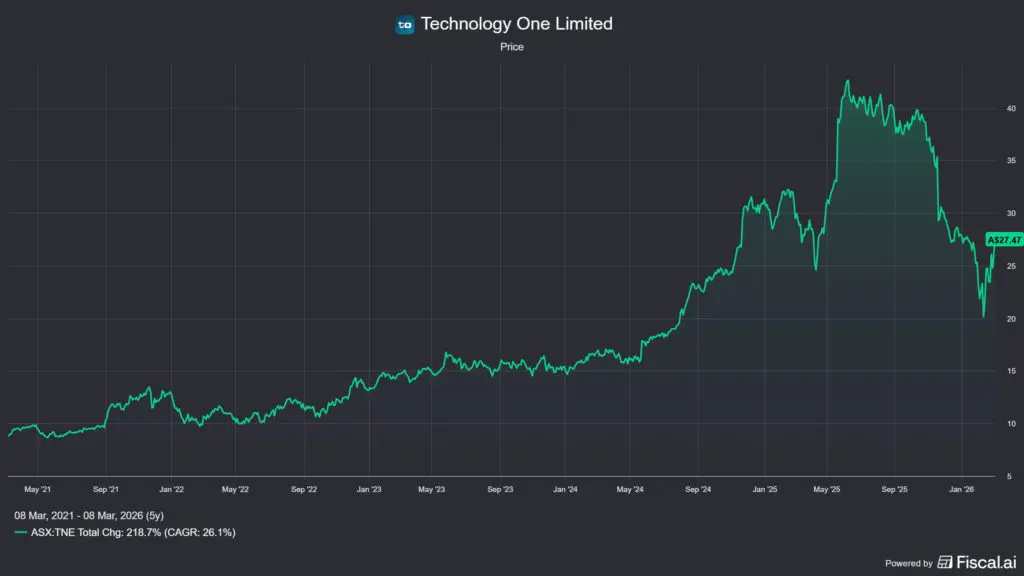
Technology One is Australia's largest enterprise ERP SaaS company, founded in 1987 by Adrian Di Marco in Brisbane. ERP stands for Enterprise Resource Planning. It is an integrated software platform that manages all of a company’s key business processes in one place: finance, accounting, HR, payroll, project management, asset management, procurement, inventory, and so on. The best example of this from Europe is the SAP enterprise management system. What really sets Technology One apart from its competitors is not its size, but its scale: the company has been consistently profitable since 1992, and has set records in revenue, profit, and SaaS fees for the past 12 years in a row. In the 2025 financial year, revenue grew by ~18% to ~600 million AUD, profit before tax rose to 181.5 million AUD (+19%), and ARR reached 554.6 million AUD (+18%). The company reached the AUD 500 million ARR milestone 18 months ahead of schedule, and the new goal is AUD 1 billion ARR by 2030. This is not optimistic marketing text, management has doubled EBITDA in 5 years.
The product strategy is based on a vertical focus: Technology One does not try to be a general ERP for all industries, but is deeply specialized in higher education (60% of Australian, New Zealand and UK higher education institutions run on them), the public sector (230+ government agencies), asset-intensive industries and the financial sector. Their Net Revenue Retention (NRR) is 117%, meaning that existing customers spend 17% more year-on-year, purely through organic expansion, without having to acquire a single new customer. The churn rate is 0.3% at a half-year level, which is at the forefront of the global SaaS industry. The “ERP in 30 days” implementation model can be implemented in a fraction of the time compared to competitors, which provides a serious competitive advantage in market acquisition. The British expansion is particularly impressive: 2025 revenue from the United Kingdom increased by 49%.
📌In practice: For Europeans, the most well-known company that produces ERP systems is SAP, but e.g. IBM also had one, called Tivoli. This is a fairly competitive enterprise software market, but once someone starts using such a system, it is almost impossible to break out of it. It is no coincidence that all such software systems have extremely high retention rates, low churn rates, and are a real pain in the ass to replace. In any case, if you are analyzing Technology One, be sure to look at industry metrics: NRR, churn rate, and the like.
🐂 Bulls say
An NRR of 117% means that Technology One's revenue would grow even if they didn't acquire a single new customer, a natural expansion of their existing base. The UK represents a TAM estimated at $13.5 billion, a fraction of which the company has covered to date, while the pace of expansion accelerates half-yearly. AI integration reduces the IT burden for customers and deepens the system’s indispensability through truly automatable processes entering the SaaS+ platform. Inclusion in the S&P/ASX 50, S&P International 700 and S&P Global 1200 indices (2025) could bring institutional customer expansion.
🐻 Bears say
SAP, Oracle and Microsoft Dynamics compete with much greater resources globally for the same large enterprise segment. The emergence of AI-based, low-code/no-code platforms could put pricing power under pressure in the long term. The company generates 83% of its revenue from Australia and New Zealand, a concentrated geography compared to its global ambitions. If the UK expansion is slower than expected, market expectations could lead to a significant downward correction in the valuation.
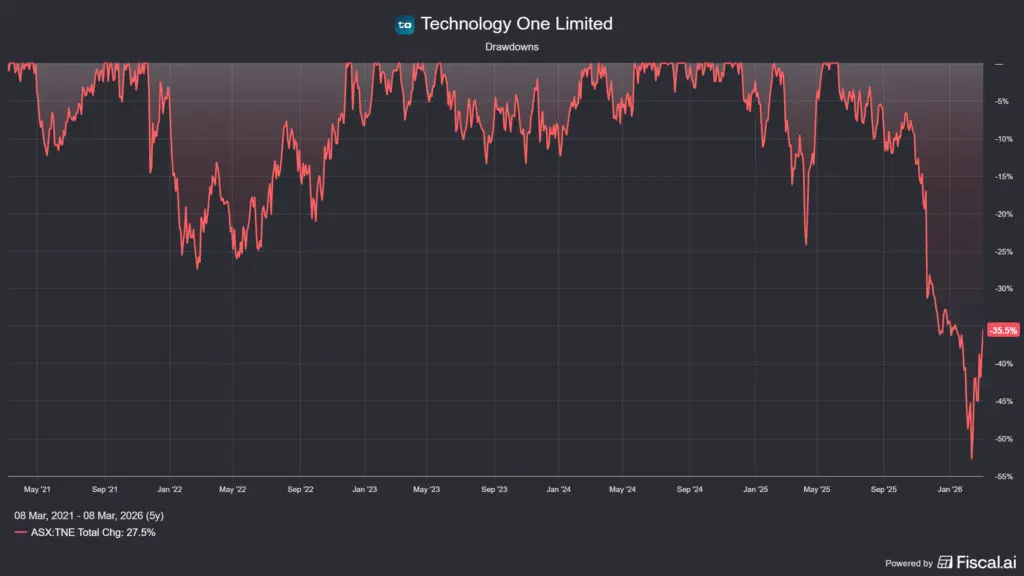
📌In practice: Technology One's downfall may be that it had to exit the Australian market and enter the global market. The bigger the pond, the more fish there will be that are bigger than you. So, of the three stocks, this one is perhaps the most competitive, yet its revenue has grown by 17.6% over the 3-year average, 14.9% over the 5-year average, and 10.6% over the 10-year average. This is usually a pretty good sign that the company has a strong competitive advantage, but you still have to dig deep to find it. Secret tip: there are Morningstar analyses for all three companies, if you have access to them, they are worth reading.
🤫 +1 Secret Tip: Mader Group (ASX: MAD) – The Doctor of Mining Machinery
If the previous three stocks were good for software enthusiasts, then Mader Group is a real unique piece in comparison. The company does a single, well-defined business: provides maintenance and technical services for mining, energy and industrial heavy equipment. Founded in 2005 by founder Luke Mader as a single technician in the mining regions of Western Australia, it has grown over 20 years to a company with 3900+ employees, 490+ customers, 540+ locations and 9 countries, with revenues approaching AUD 1 billion. The 10-year revenue growth rate – CAGR – is approaching 30%.
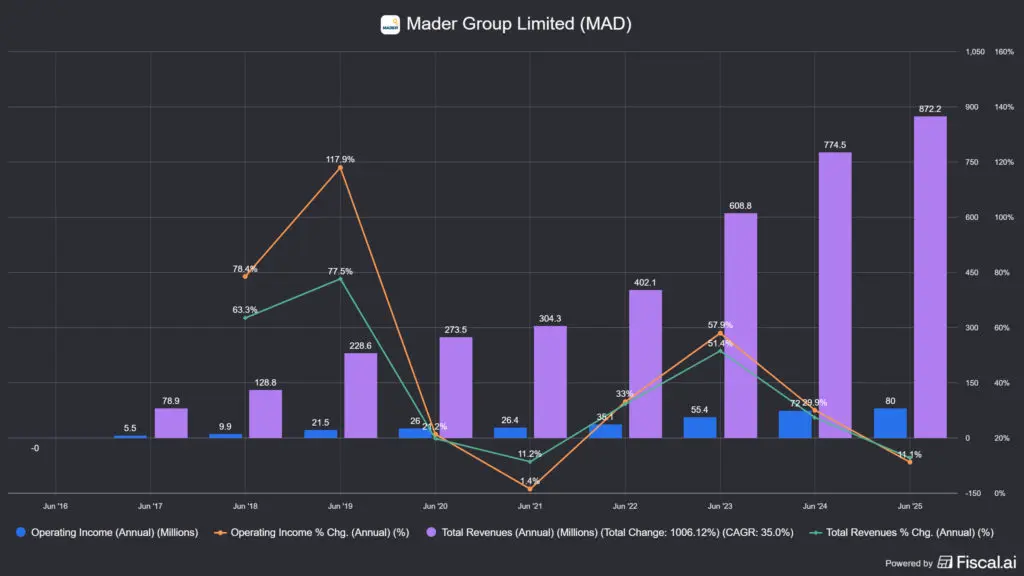
The essence of the business model is the intersection of the outsourcing trend with the structural needs of the raw material cycle: Mining companies are increasingly finding it difficult to maintain a full team of skilled mechanics in-house, which is capital intensive, cumbersome and creates unnecessary inflexibility when production fluctuates. Mader, on the other hand, offers a “tap on, tap off” model: The necessary technicians are sent to the site as needed. The growth logic is threefold: the aging of production equipment (older machines require more maintenance), the increase in demand for outsourced maintenance, and the conquest of the North American market, which is many times the size of the Australian market. Revenue in 2025 was 872 million AUD (+12.6%), net profit was 57 million AUD (+13.3%), and the 5-year average ROIC is around 25%.
🐂 Bulls say
North American expansion is still in its early stages, with around 19-21% of the company’s revenue coming from there, while the market is several times the size of Australia. The average age of mining equipment globally is increasing, the technological complexity of new equipment is increasing, while the shortage of skilled mining equipment operators is becoming increasingly significant. It is this combination that will make Mader’s offering increasingly valuable in the near future. The business’s capital requirements have reduced in recent years, with the balance sheet moving from a net debt position to close to net cash, allowing it to finance organic growth without the need for dilution.
🐻 Bears say
Mader’s revenue is closely linked to the commodity market cycle: when Chinese demand falls, mining companies are the first to cut maintenance costs. The net profit margin is around 6.5%, which is thin and leaves little room for error. Automation and robotics could eventually replace traditional manual maintenance, which affects the fundamentals of the company’s business model, but I don’t think that will happen for years. Retaining workers is a competitive and expensive industry, and rising technician wages are putting direct pressure on margins.
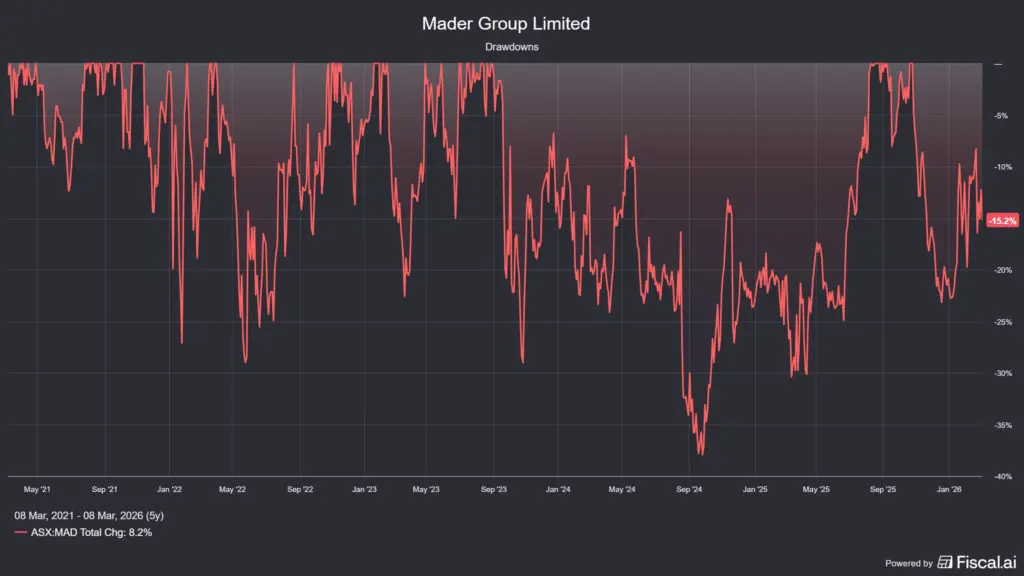
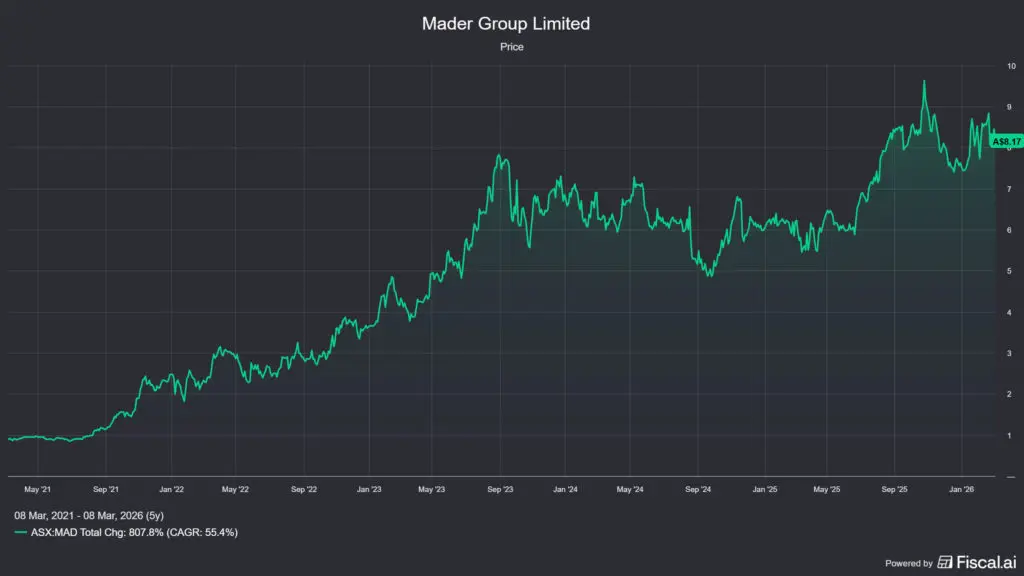
📌In practice: Mader Group is not a mining company, its activities are related to this industry. This also means that although the revenue comes from cyclical companies, Mader is not that cyclical. It is also interesting that the capital requirement of mining companies is around 19-20% of revenue, while in the case of Mader Group it is around 4-5%. In other words, it relies on the raw materials market, but without the disadvantages of raw materials companies, as it is a service company, and which seems to be an ideal mix, especially in the world of AI exposure. Mader Group (ASX:MAD) is also not particularly cheap, it moves more or less in line with the commodity market, which is currently experiencing an upward phase.
📝 Top 3 Australian stocks: summary
The Australian market holds some real gems for investors willing to explore the less-seen corners of the Anglo-Saxon stock markets. The three tech companies presented above, Pro Medicus, Objective Corporation, and Technology One, have in common that they all occupy a dominant position in a narrow but structurally growing market niche, their customers face high switching costs, and all three have excellent labor efficiency, meaning that revenue is not proportional to the number of employees.
Mader Group is an investment with a completely different logic: it's not about software margins, but about outsourced maintenance of the Australian resource economy, in a very capital-efficient model. The secret tip is no coincidence, the market has largely ignored it for the past 10 years, while the company is rolling forward at a 30% annual revenue CAGR.
It is important to emphasize: None of the companies featured here are “cheap” in the traditional sense. Pro Medicus often has a triple-digit P/E multiple, and Technology One is not much more modest. However, these premiums are the price paid for structural quality. The question is always whether growth can exceed the level implied by today's pricing. This question must be answered individually by each investor based on their own time horizon, risk tolerance, and cost of capital expectations.
(I.e.And if the names on the list above aren't enough, read the in-depth analysis of Kelly Partners Group (ASX:KPG): Kelly Partners Group stock analysis – Leonard, is that you?
🤑If you are interested in what brokers we use, read our articles below:
(I.e.Interactive Brokers broker account analysis – Professional for professionals
📈LightYear Broker Account Analysis - Simplicity and cheapness go hand in hand
❓ FAQ – Frequently Asked Questions
Why even look at Australian stocks when there's the S&P 500?
Despite the S&P 500’s best performance in the past decade, investors should not ignore the rest of the world’s markets. The Australian market offers diversification value in several ways: low correlation with the US technology sector, natural exposure to commodity cycles, higher average dividend yields (due to the dividend imputation system, some dividends can be combined with tax refunds for Australian tax resident investors), and last but not least, tech companies that occupy low-profile but structurally strong positions. This is a natural way to reduce portfolio-level concentration risk.
How to invest in Australian shares from Europe?
Most international brokers (Interactive Brokers, DEGIRO, Saxo Bank) provide access to the ASX, where securities are traded in Australian dollars (AUD) instead of forints. It is important to consider currency risk: the AUD is strongly linked to Australian interest rates and commodity prices, so fluctuations in the AUD/EUR or AUD/HUF exchange rate will add extra volatility to the position. Some companies (e.g. Pro Medicus) are also available in ADR form in the USA, which can make access easier. However, there are brokers that do not reach the Australian market, such as LightYear.
What is the main difference between the investment thesis of Pro Medicus and Technology One?
Both are software companies, but on very different tracks. Pro Medicus is a stock with a super-concentrated product (medical imaging), extremely high margin, strong North American exposure, and both risk and potential return are higher. Technology One is a broader, vertically specialized ERP platform, with Australia and New Zealand as its base and the UK as its growth engine. It is moving on a more predictable, but perhaps slower track. The former is more of a vehicle for the focused, high conviction investor, the latter is more of a vehicle for those looking for a solid, stable growth profile.
How dependent is Mader Group on Chinese demand?
Indirectly yes, but less directly. Mader's customers are Australian and North American mining companies whose production decisions are influenced by Chinese demand (especially the steel and copper markets). If Chinese growth slows, mining companies may reduce capital investment, which could also affect maintenance costs. However, the maintenance of the existing equipment fleet continues even when production is down, and machines age even when production is slower. Therefore, Mader is a little less cyclical than it first appears, but the correlation with the raw materials market cannot be avoided.
Is Objective Corporation considered a small cap company? How liquid is it?
Objective Corporation is a mid-cap stock on the ASX, with a market capitalisation of around AUD 1-1.5 billion. This means that for institutional investors, building and closing positions requires a more patient approach than in the case of BHP or Commonwealth Bank. The high level of founder ownership (65%) also reduces the number of shares outstanding (free float), which reduces daily liquidity. This can be managed by building smaller positions, sometimes over several days, but aggressive entry and exit strategies are more difficult to implement than in a large-cap stock.
Legal and liability statement: this article is an informative analysis only and does not constitute investment advice in any form. Investment decisions are the sole responsibility of the investor and should always be made after considering the individual financial situation, risk tolerance and investment objectives. The data found at the time of writing reflect the current state; market conditions and company fundamentals may change.