

🌏 Market overview
Which Ukrainian stock is the most overvalued? Who would dare to touch such a beehive now? If there is an investment thesis that simultaneously contains macro risks and unrealistically low valuations, it is the Ukrainian stock market. This is not an in-depth analysis, but rather a thought-provoking one: Is it possible to find a quality compounder on the stock exchange of an actively warring country, and if so, what criteria should be considered?
The three most talked about names are Kyivstar (KYIV), MHP and Astarta (AST), all representing different sectors, with different risk profiles and varying degrees of exposure to Russian missile attacks. What they have in common is that all three have been thoroughly beaten by the market, and all three are worth taking seriously, at least for a thorough due diligence.
🗺️ The geopolitical filter: West vs. East 🗺️
The Russian-Ukrainian war broke out in February 2022, which completely discouraged most investors from the Ukrainian market. The region became a kind of no-go zone for investments, which is completely understandable: no one likes to have their company's facilities rained down on by missiles, as this makes the future completely unplanned. Ukraine also became a target for corruption, as there were countless reports that the system there was not known for its transparency, to put it mildly. However, the war has been going on for more than 4 years and there is no question that the parties are getting closer to exhaustion, so even if the clashes do not necessarily end, the fighting will sooner or later reach a standstill. This always creates a kind of asymmetric risk/reward ratio in a battered stock market, where the chance of a rebound increases due to low valuation.
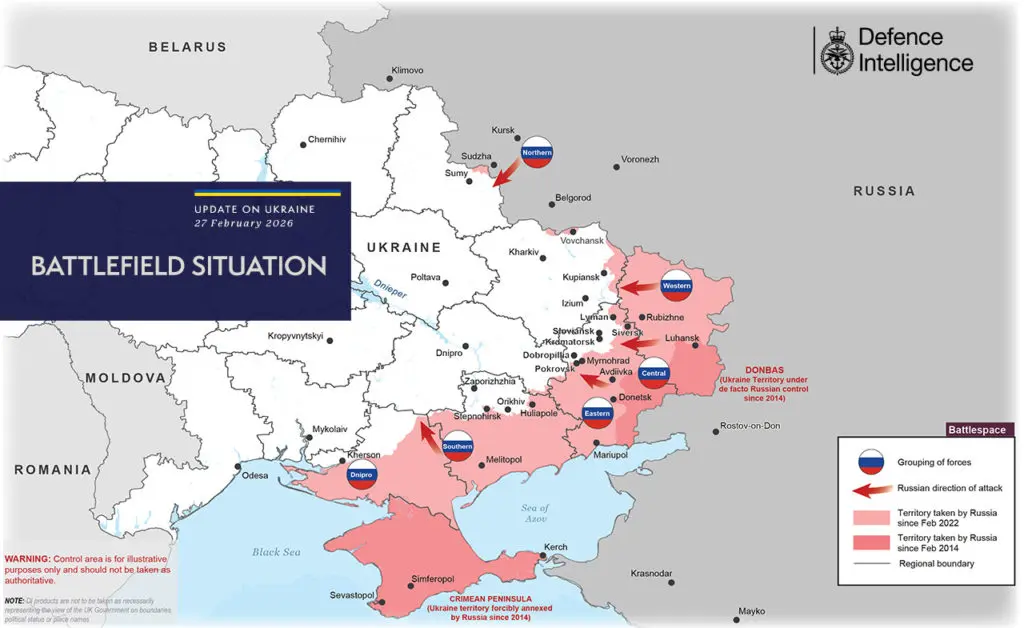
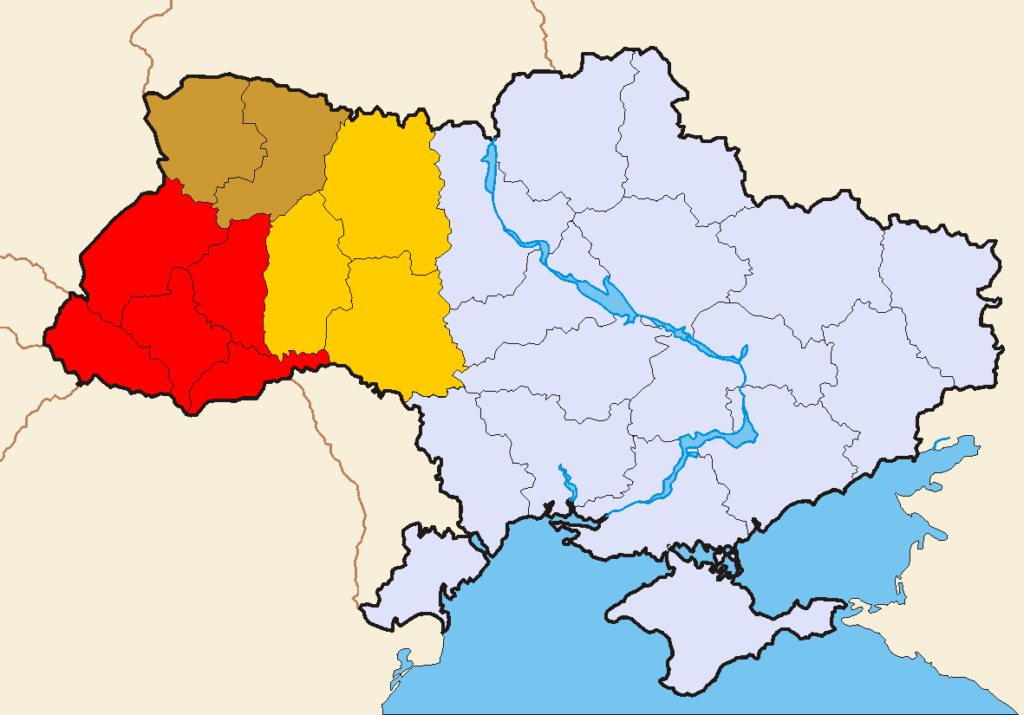
Before we get into the fundamentals, it’s worth noting that the regions of Ukraine are completely different from an investment perspective. The eastern and southern parts of the country, such as Donetsk, Zaporizhia, Kherson, are located near active front lines, where the damage to infrastructure is catastrophic. In contrast, the western regions, such as Lviv, Ternopil, Khmelnytskyi, Vinnytsia, have received significantly fewer direct hits, although missile attacks on energy infrastructure affect the entire country. This filter is the first and most important step when analyzing Ukrainian stocks: Where are the production capacities that are still intact? If the majority of a company's assets are located west of the Dnieper River, it presents a completely different risk profile than an eastern exposure.
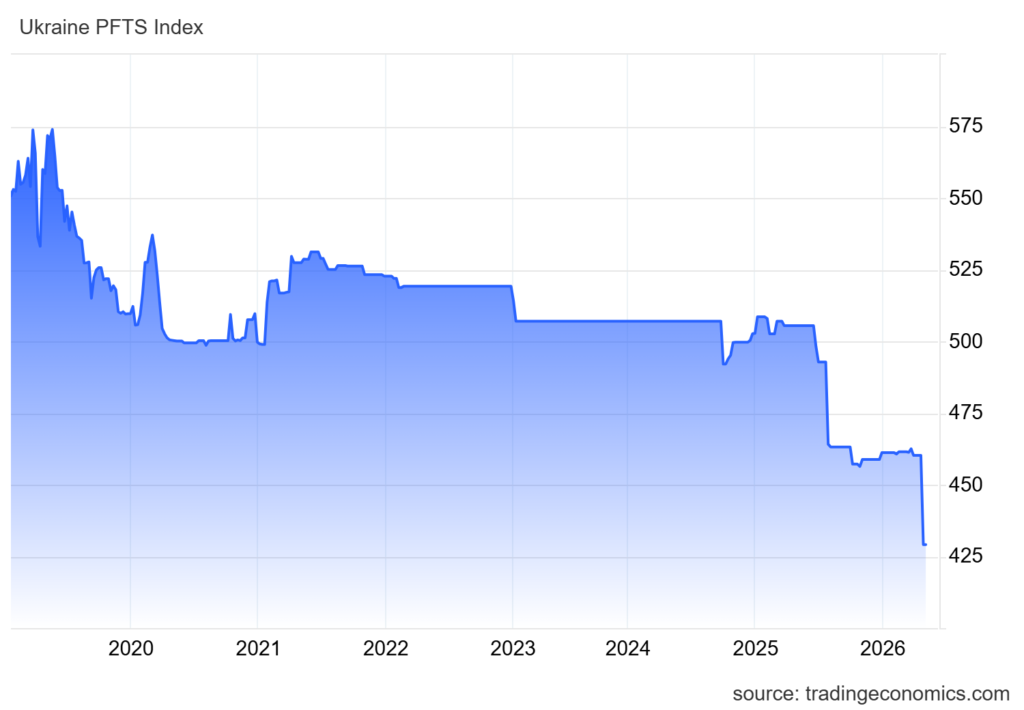
Ukraine's capital market is extremely underdeveloped by Western European standards: the local stock exchange (PFTS) operates with minimal turnover, and the really good Ukrainian companies typically appear on the Warsaw Stock Exchange (WSE), London Stock Exchange (LSE) or, more recently, New York Stock Exchange (Nasdaq), if they go public at all. Many do not: the most valuable Ukrainian companies, such as security hardware manufacturer Ajax Systems or fintech Monobank, are still privately held.
There are three instructive data points worth noting about the market. First, the country has proven to be much more resilient economically and militarily than markets expected in 2022. GDP grew by 5.3% in 2023, agricultural exports have not stopped, telecommunications networks are operational, and e-commerce is expanding. Second: different parts of Ukraine offer completely different opportunities. The eastern and southern parts of Ukraine are active frontline areas, while the western regions (Lviv, Vinnytsia, Khmelnytskyi, Ternopil) suffered incomparably less from direct military destruction. Third, the reconstruction option is asymmetrical. Any lasting ceasefire or negotiated peace agreement would immediately and massively reprice the price of these shares, an upside that current valuations do not reflect at all, and companies operating in Western territories will obviously have an advantage in this as well.
📌 In practice: The missile attacks are targeting energy infrastructure across the country, which increases operating costs for all Ukrainian companies (generators, battery backup, alternative energy sources). But this is a risk that is already priced in, and it is reflected in the numbers. The real question is whether the company’s business model is flexible enough to handle these additional costs. The other option is for the company to move its entire infrastructure and employees abroad, as EPAM did, as you will see later.
1. 📡 Top 3 Ukrainian stocks: Kyivstar (KYIV): digital monopolist in a war environment
Kyivstar is Ukraine's leading mobile network operator and increasingly digital platform: with nearly 22 million mobile subscribers and 1.2 million broadband customers, it dominates about half of the country's telecommunications market. In December 2025, it became the first Ukrainian company to be listed on the Nasdaq stock exchange (ticker: KYIV), which in itself is a confirmation of institutional investor confidence. The issue was led by Morgan Stanley, Barclays and Rothschild. The presentation of the last quarter's data can be found here: presentations.
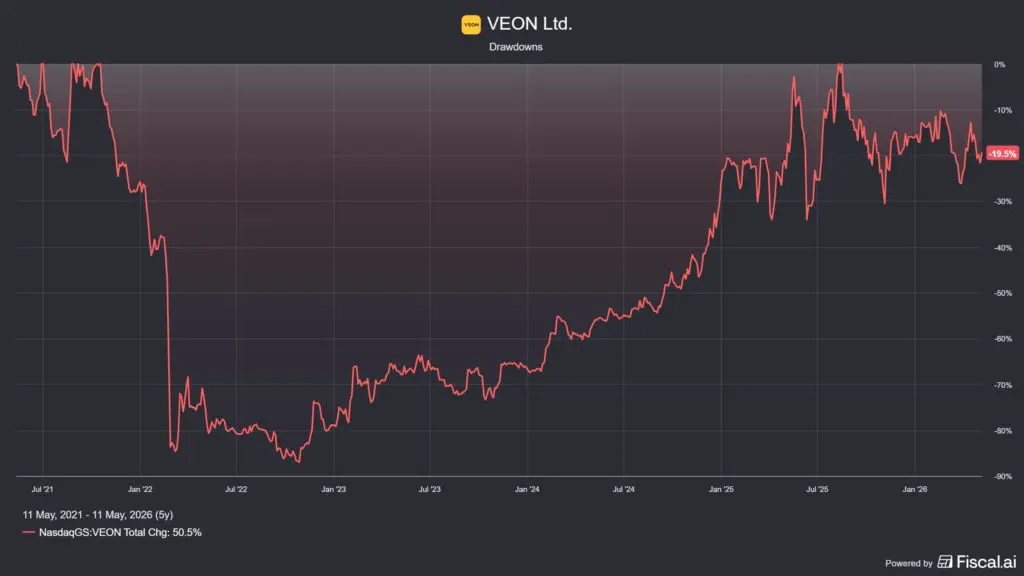
Fontos megjegyezni: Kyivstar is the subsidiary, while VEON holding (Nasdaq: VEON) is the parent company, which also operates plots in Pakistan, Kazakhstan, Bangladesh and Uzbekistan. So anyone who bets on Kyivstar can do so directly (KYIV ticker) or indirectly through the parent company (VEON ticker), both stocks are available on IBKR.
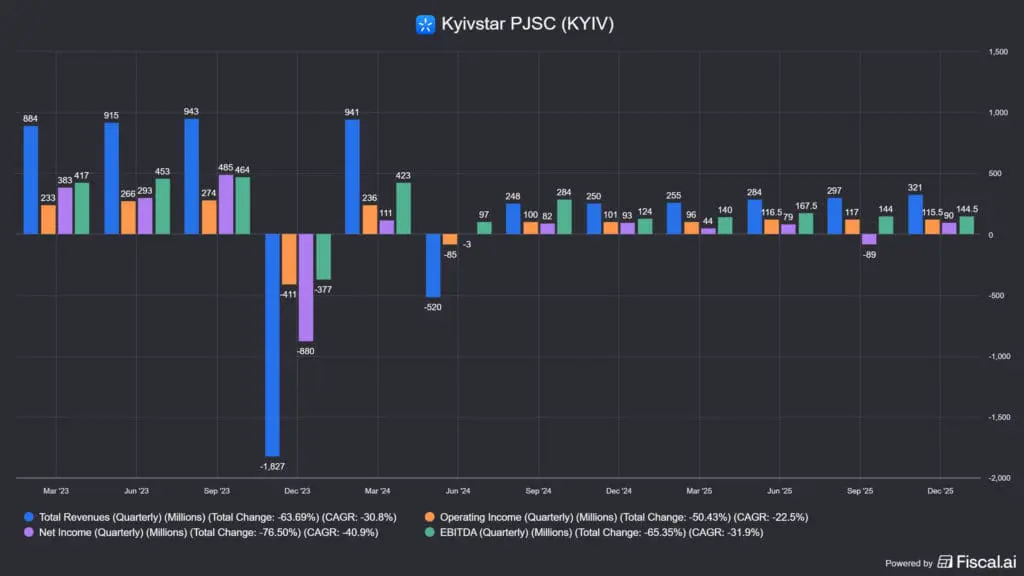
The financial performance is impressive: 2025 revenue grew to ~1.16 billion USD (+25% YoY), EBITDA margin was around ~48%. This is not a stagnant infrastructure operator, this is an actively expanding digital platform. Direct digital revenues grew by over 500% in 2025 due to the acquisition of Uklon (personal transportation like Uber) and the expansion of Helsi (electronic healthcare platform).
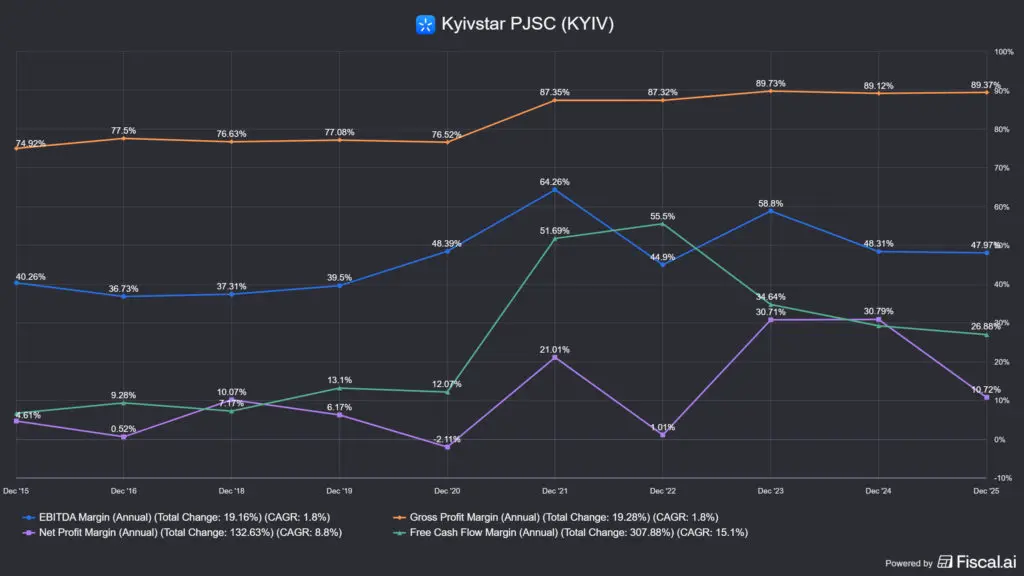
The number of multiplay customers, who use at least one digital service in addition to their mobile connection, exceeded 6.6 million, accounting for nearly 32% of the active mobile base. Kyivstar essentially has a monopoly position in the Ukrainian market. It is important to note that since the situation is changing rapidly, it is worth looking at quarterly figures instead of annual ones.
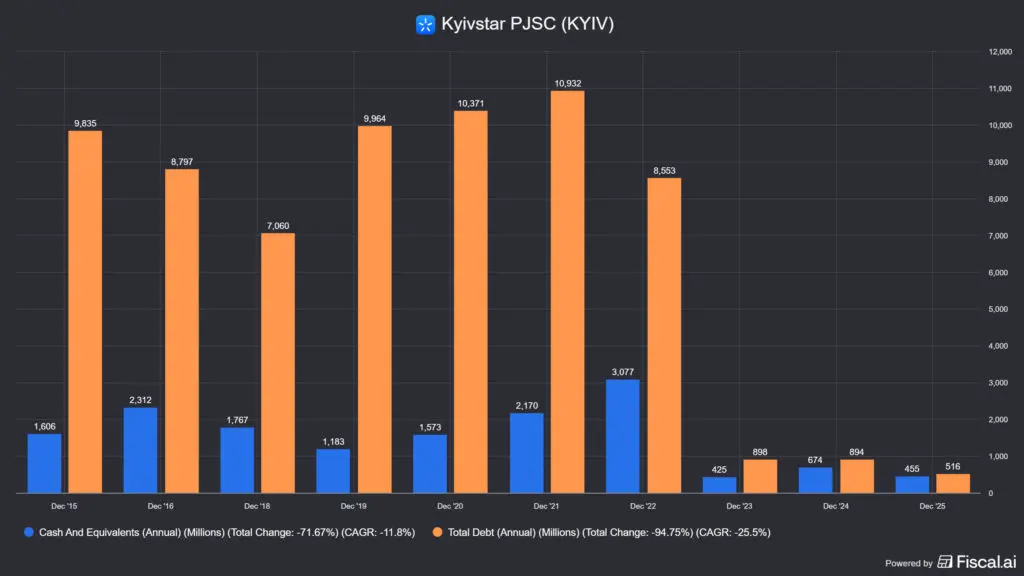
As for the balance: Kyivstar has ~456 million USD in cash and minimal net debt, which is nothing more than the difference between cash and total debt. Compared to a telco, this is an extremely high-quality balance sheet; European peers are typically more indebted, let alone their American peers, AT&T and Verizon.
📌 In practice: Kyivstar's business model has one of the most important features of compounders: sticky, subscription-based revenue and high switching costs. If someone has had the same phone number for 27 years, it is difficult to leave the service provider. Infrastructure is both a competitive advantage and a barrier to entry: no one builds another, parallel mobile network in wartime conditions. Moreover, the acquisition of Uklon and Helsi is creating a digital ecosystem whose value the market has not yet priced into mere telco multiples.
🐂 Bulls say
Valuation is low (although it was much better in March): EV/EBITDA forward ~4.5x, P/FCF ~9.7x, these multiples are ridiculously low for a 20% growing, debt-free, monopoly company. Missile attacks on energy infrastructure affect the entire country, but Kyivstar's decentralized mobile network is a much harder target to hit than a factory or a hydroelectric power plant, but not impossible. The move towards a digital platform (ridehailing, e-health, enterprise cloud) can add a real growth engine to the traditional telco business model. Any developments in peace negotiations could immediately reprice the stock with the disappearance of the geopolitical risk premium.
🐻 Bears say
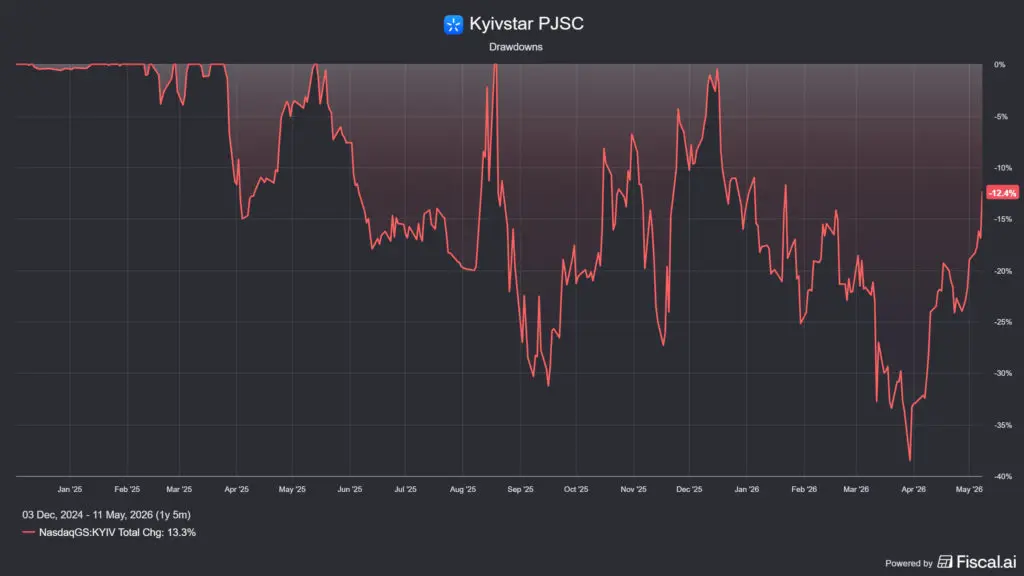
VEON holding will remain an 80%+ owner even after the listing. This means for minority shareholders that capital allocation decisions are not in their hands. If VEON wants to withdraw money through intercompany transactions, the minority investor cannot prevent this. The hryvnia exchange rate risk is a real threat: revenues are generated in UAH, reporting is in USD, and the foreign exchange loss in 2024 amounted to 81 million USD, which is roughly 7% of revenues. The liquidity of the stock is low, the price chart shows extreme volatility, which is a consequence of a narrow float. The capital intensity is around 19-21%, which is quite high.
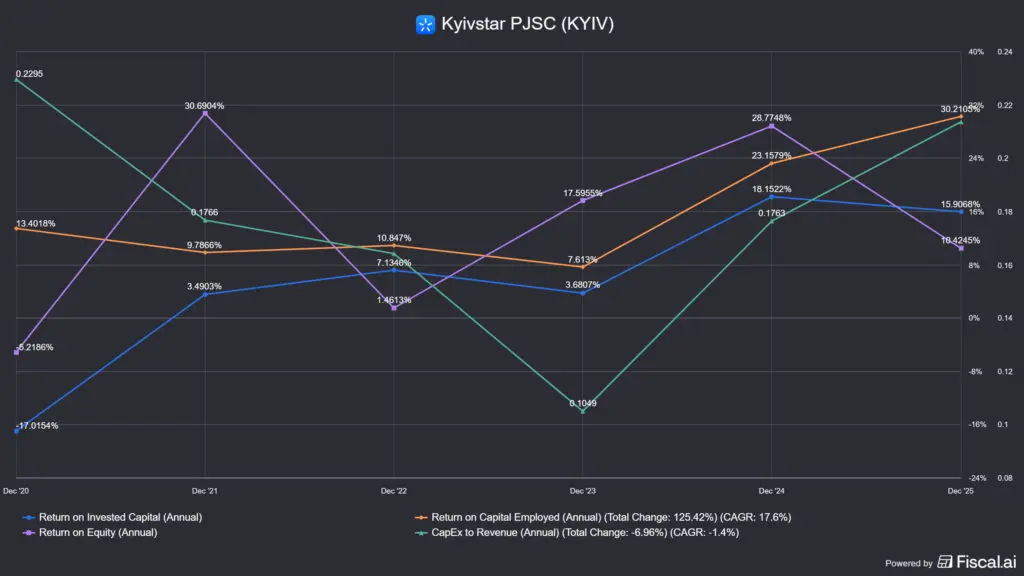
📌 In practice: Kyivstar is perhaps the most obvious “bet” among Ukrainian stocks for a future share price rebound: monopolistic network, subscription model, digital expansion, Nasdaq listing. It is no coincidence that Morgan Stanley, Barclays and Rothschild led the share offering. The risks mentioned above are real, but the business model is probably one of the most resilient to the country’s internal conflict. However, one thing is worth keeping in mind: Investing in Ukrainian stocks is a kind of geopolitical option buying on a fundamental basis. If it doesn't work out, you could lose big, although I think this risk is limited downwards and who knows how far it can go upwards, but this should be taken into account when sizing the position.
I also have a personal observation regarding holding companies: the share therein cannot be managed independently, even if it is otherwise listed as a separate share. For example, even though Ferrari makes up a large part of Exor NV's value, it still can't be extracted from it, just as Berkshire Hathaway doesn't only give investors Coca Cola and Apple. Kyivstar, on the other hand, can at least be bought and sold separately, without having to buy VEON, but its resources can still be siphoned off by the parent company at any time, for example to cover its own losses. Of course, it's not very likely that it will slaughter its own goose that lays the golden eggs, but we've seen miracles on the stock market before.
2. 🐔 Top 3 Ukrainian stocks: MHP (LSE: MHPC), the chicken factory of Europe
MHP is the world's 8th largest poultry producer and Europe's largest chicken exporter. It is a dominant player in Ukraine's 54% poultry market, but the real story is its vertical integration and growing presence in Western Europe: it owns everything from grain production to feed production and poultry farming, from slaughterhouse to consumer packaged goods. This model may be familiar from a Polish competitor, Dino Polska is doing something similar in the FMCG market with its own chain of stores.
The vast majority of production capacities are located in the central-western regions of Ukraine, Vinnytsia, Kirovohrad, Poltava. This is geopolitically ideal: far from the most affected eastern and southern regions of the country. The company also operates its own bio-economic complex, invests in alternative energy sources, and actively manages its energy exposure during the war.
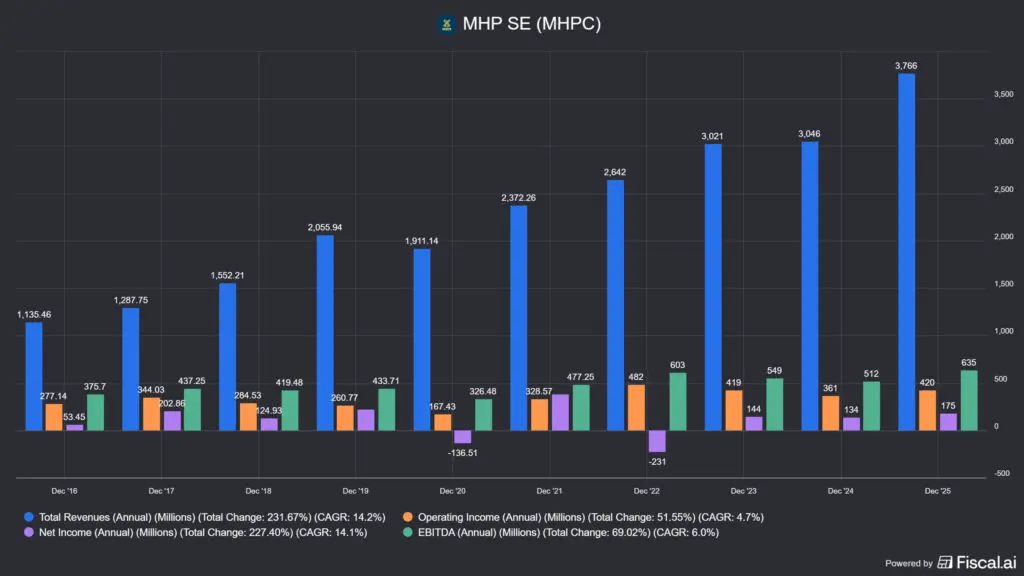
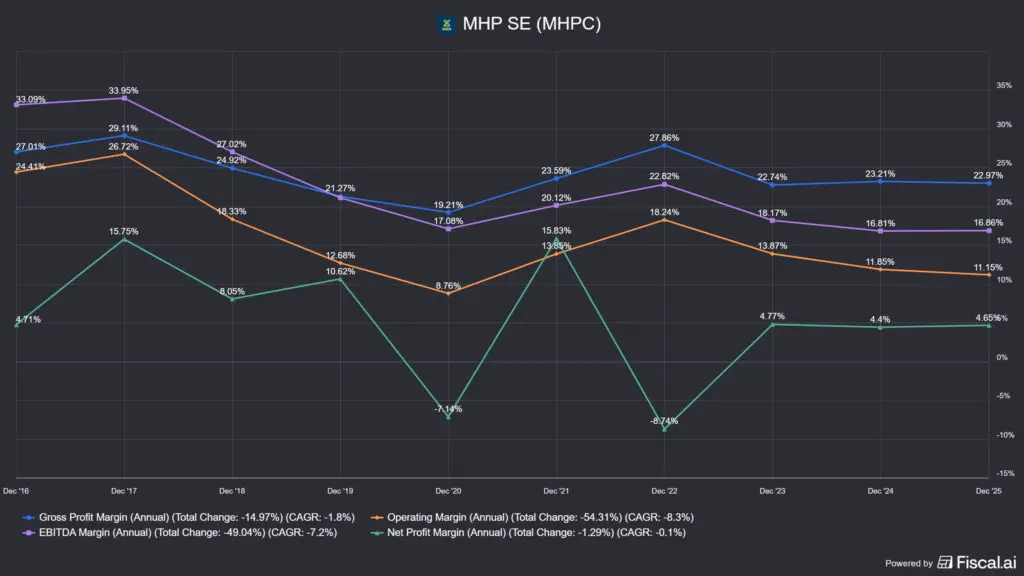
Financial performance for 2025: Revenue of USD 3.76 billion (+23.6%), EBITDA of USD 635 million (+24%), EBITDA margin improved to ~17%. Market capitalization of ~USD 1.04 billion, the company is not traded on the stock exchange at less than a third of its revenue, which means a historically low multiple.
MHP is strong in terms of skin in the game: Founder and Chairman Yuriy Kosyuk is the company's largest shareholder through WTI Trading Limited, and in 2024, the Saudi state-owned SALIC acquired a 12.6% stake, indicating that the company received external investors even in wartime. MHP is also active in its expansion in Western Europe: in 2019, it acquired the Slovenian Perutnina Ptuj (the leading poultry processor in the Balkans), and in 2025, the Spanish Uvesa and Payan Hermanos, thus entering the Spanish market with a ~10% market share.
🐂 Bulls say
Vertical integration ensures structurally low capital costs: MHP is not dependent on external feed, processing or logistics partners, incremental capacity expansion can be efficiently scaled. European protein demand is structurally growing and MHP competes with Western European producers with low production costs. The investment by Saudi SALIC indicates that global capital sees value in this stock at a low valuation. EU market quotas have been relaxed since June 2025, opening the door to increased export volumes.
🐻 Bears say
Labor shortage is a real problem: More than 3000 employees were called up for military service, which is 10% of the 30-strong workforce. The additional costs associated with the war (generators, security, logistics) are increasing year by year. The low liquidity of the LSE listing is another obstacle: the spread of the shares traded in the form of GDR (like ADR in the USA) is high. The regulation of EU export quotas means political dependence, over which the company has no influence.
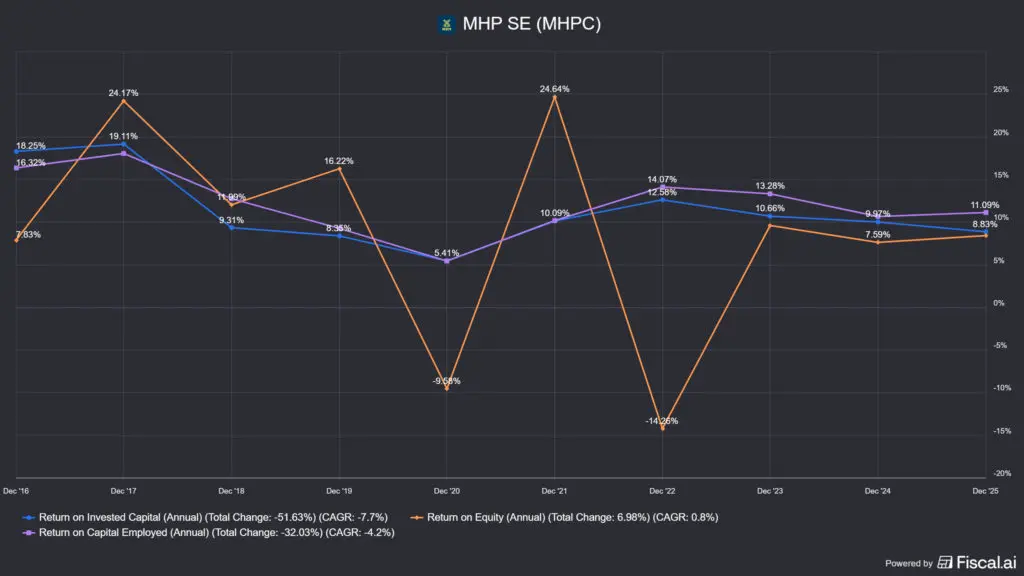
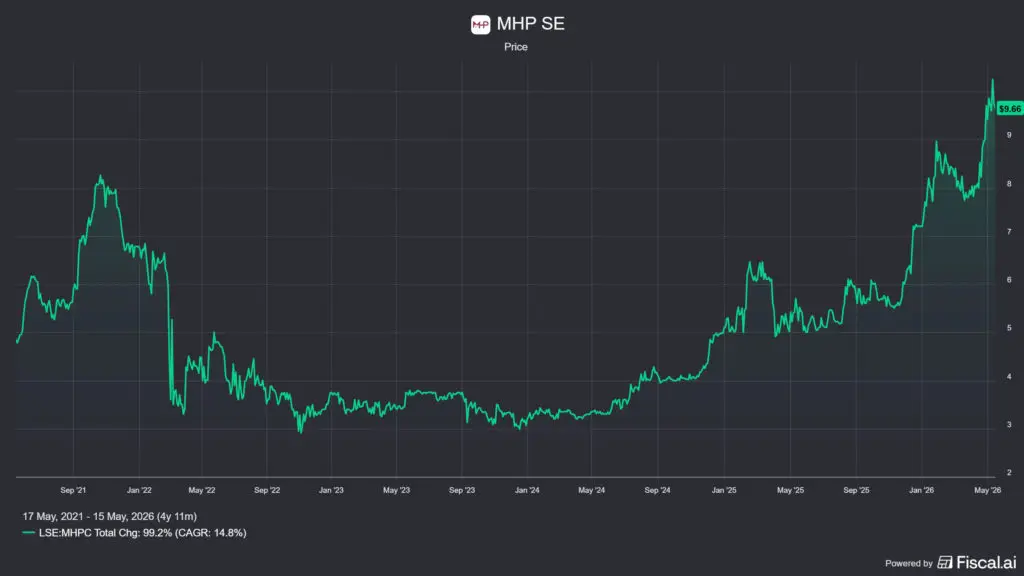
📌 In practice: MHP is a proven, vertically integrated agribusiness that is building an increasingly strong position in European and Middle Eastern markets. The Balkans-Spain-Ukraine triangle offers some war-resistant diversification. However, the share price is already higher than before the war, which means that the market does not treat this company as a truly “Ukrainian” company, but as a well-diversified conglomerate operating in several foreign markets, which is true. Despite this, the fundamentals have nicely followed the price increase, so MHP is still cheap now.
However, MHP relies the most on physical assets of all the stocks examined: not a platform, not a software, but physical production, sales, exports. It does not create much value above its cost of capital: the poultry market has never been about high margins and strong cash generation capabilities. For those who want exposure to the Ukrainian real economy in their portfolio and accept the LSE liquidity constraints, this is one of the best options. The company will not collapse if the peace talks drag on, but the real repricing catalyst would be geopolitical easing in this case as well.
🤫 Top 3 Ukrainian stocks: Astarta (WSE: AST), sugar, soy and deep undervaluation
Ukraine's largest sugar producer and a vertically integrated agricultural holding on the Warsaw Stock Exchange, whose valuation was practically completely destroyed by the war risk premium.
Astarta owns six sugar factories, 220,000 hectares of agricultural land, a soybean processing plant, a dairy farm, and bioenergy capacity. The bulk of its assets are concentrated in the central-western regions of Ukraine, Vinnytsia, Khmelnytskyi, and Poltava. Founder and CEO Viktor Ivanchyk has been running the company since 1993, owning 41.9% of it, and Fairfax Financial (Prem Watsa's Canadian investment holding company) is also a shareholder, indicating serious skin in the game on both sides. IFC (World Bank subsidiary) invested USD 40 million in the new soy protein concentrate plant, which is also an independent quality investment.
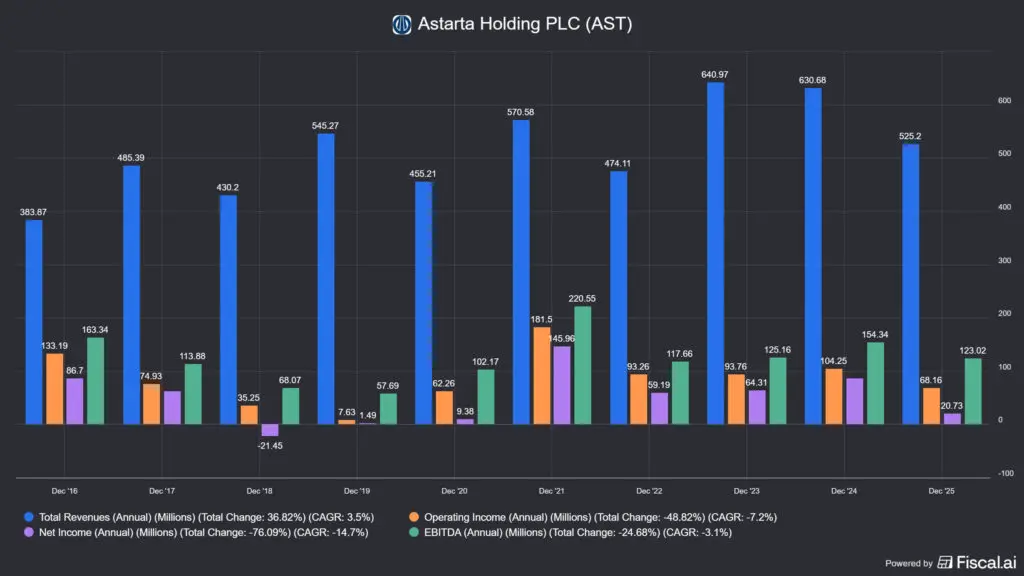
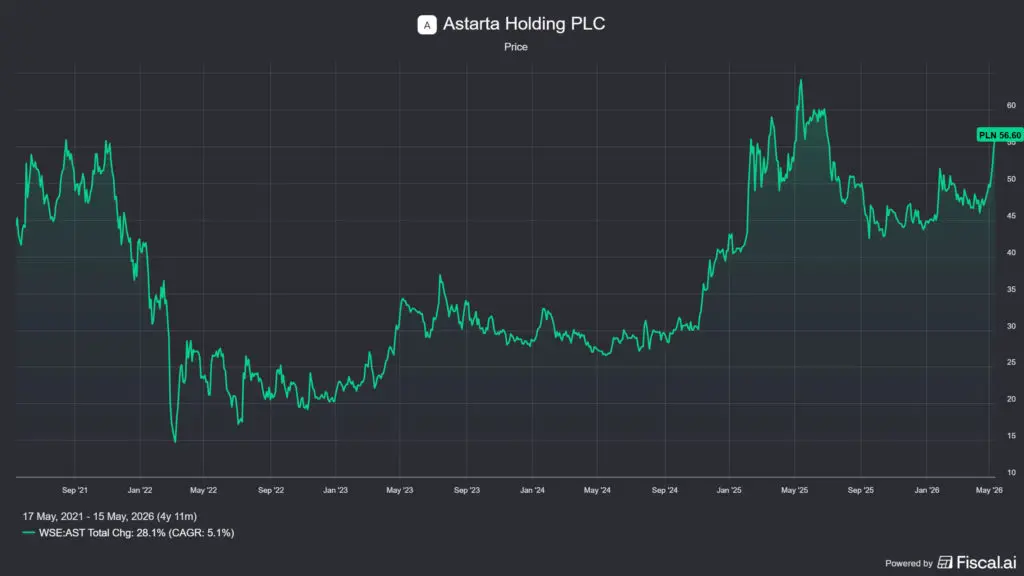
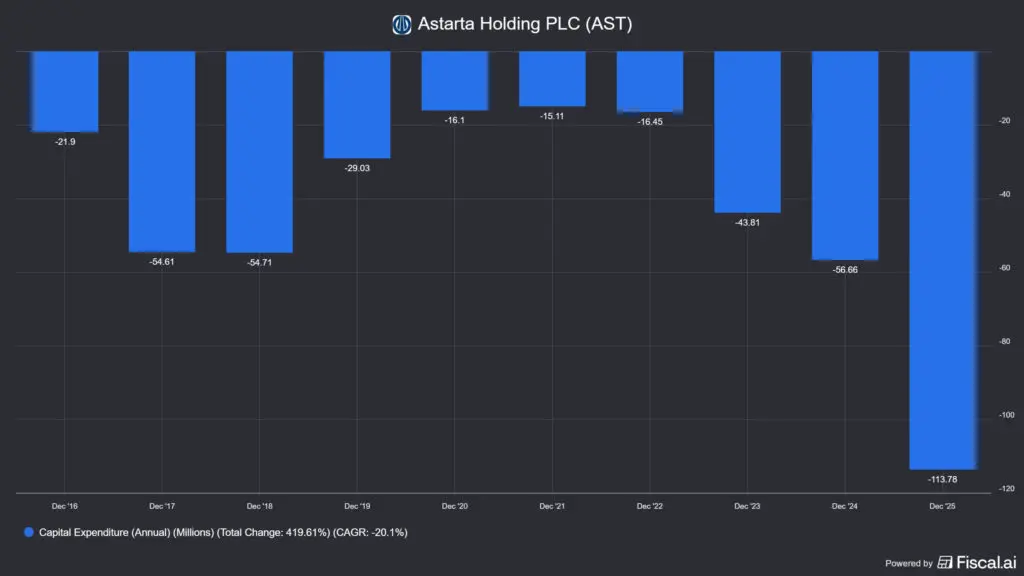
Despite the increase, the valuation is still depressed, like the other two names: ~$384 million market cap, ~$525 million in revenue, which translates to a 0,6x P/S multiple. Net profit in 2025 was only $20.7 million, EBITDA was $123 million, so the numbers decreased compared to the previous year, but this is mainly due to capital investments. All this implies a ~5.3x EV/EBITDA, which is a fairly low valuation for an agricultural holding company, or practically any company.
🐂 Bulls say
Astarta is listed on the Warsaw Stock Exchange and available on IBKR, making it one of the most accessible Ukrainian agri-stocks. The IFC investment and Fairfax Financial’s shareholding are two independent, qualitative signals that the balance sheet is indeed solid and the management is reliable. The USD 80 million soy protein concentrate plant and the USD 76 million Khmelnytskyi oilseed processing plant investments offer organic revenue growth in addition to the reconstruction story. The sugar and soy markets are global, the product can be exported, and Astarta is not solely dependent on domestic Ukrainian demand.
🐻 Bears say
Sugar industry cyclicality is a real risk: Astarta's own history has shown that profitability was almost zero in 2018-19t. It is listed on the Warsaw Stock Exchange, where liquidity is low and spreads are high. I have my own experience of this in the opposite case, Dino Polska, which is also Polish and listed as an ADR on the US exchange, is quite illiquid, so it is worth buying it on the Polish WSE. This is a warning sign that Astarta shares may be similarly difficult to access. The Poltava region exposure is closer to the front lines for some assets than you would like as an investor.
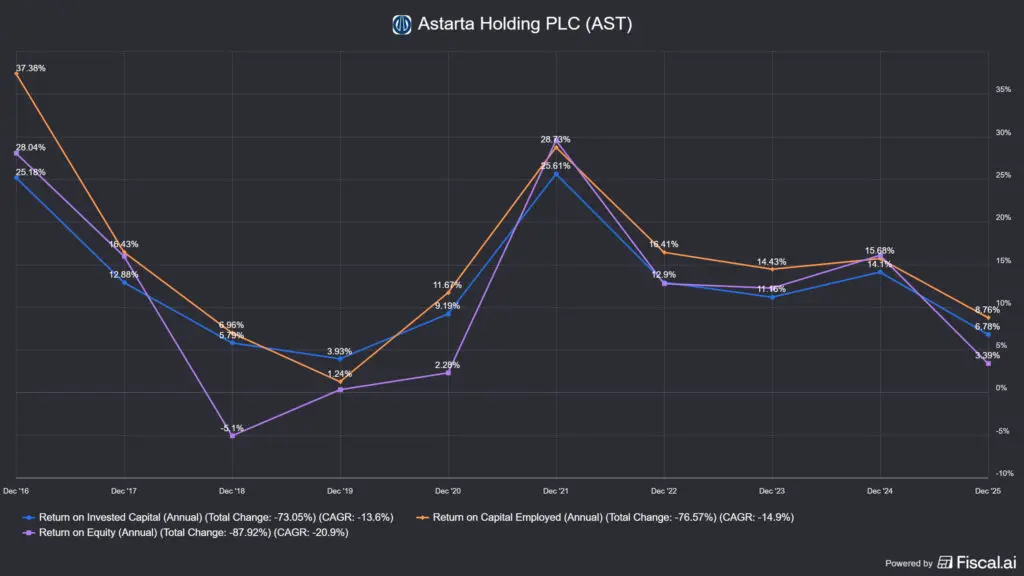
📌 In practice: Astarta is the most “value play” of all the stocks examined: minimal valuation, proven management, ESG profile and IFC background. Cyclicality (sugar prices, soybean prices) and geopolitical risk are completely real, but if one thinks in a 3-5 year peace negotiation scenario, Astarta could be one of the direct beneficiaries of the Ukrainian reconstruction story with its dominance of the domestic sugar and soybean markets and export diversification. However, like all commodity stocks, it is also terribly cyclical and exposed to many influences, such as weather, which are very difficult to predict.
Astarta is for the most patient investor. It won't double in a quarter, but if the Ukrainian agricultural sector gets on a rebuilding path, a 0,6x P/S, IFC-backed, founder-led agri-holding has serious upside potential. My problem here is the same as with MHP: it's hard to create value in the long term (but Astarta may be an exception in this respect), so I would almost certainly get out of it after the rebound, if I took a position in it at all, because it's not a name worth holding for the long term. When sizing your positions, you should think conservatively due to cyclicality and war risk.

3. 💻 +1 Secret Tip: EPAM Systems (NYSE: EPAM), the Beaten Engineering Giant
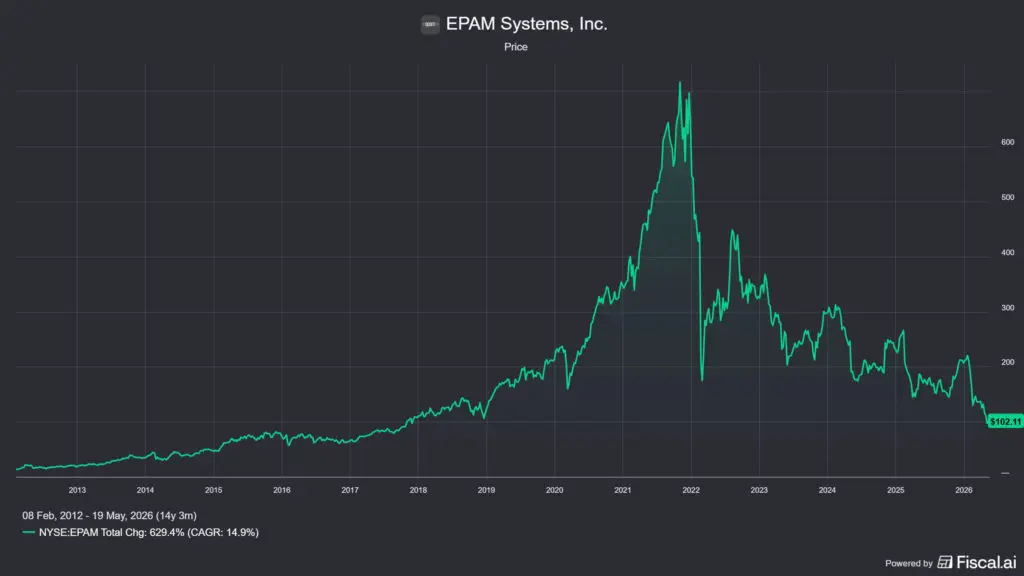
EPAM Systems is not formally a Ukrainian stock, it is a Pennsylvania-based, NYSE-listed, USD-denominated paper. But its Belarusian-Ukrainian-founded engineering culture, its concentrated shipping base in Eastern Europe until the 2022 collapse, and its persistently depressed price, attributable to geopolitical reasons, make it relevant on this list. Until November 2021, EPAM was one of the best compounder stocks on the market: it rose nearly 6000% in the ten years after its 2012 IPO. Then, after February 24, 2022, it lost nearly 72% of its value in a single month. The exchange rate has not corrected back since then, although business has largely continued.
The essence of the company's operation: Forbes Global 2000 large companies entrust it with the design, development and implementation of software on their behalf. It is not a simple code factory, it classifies itself as "Product Development Services", and this is reflected in margins, customer loyalty and switching costs. Among the 345+ Forbes Global 2000 clients are Goldman Sachs, Adidas, Johnson & Johnson, they are not switching to a mass supplier in Bangalore.
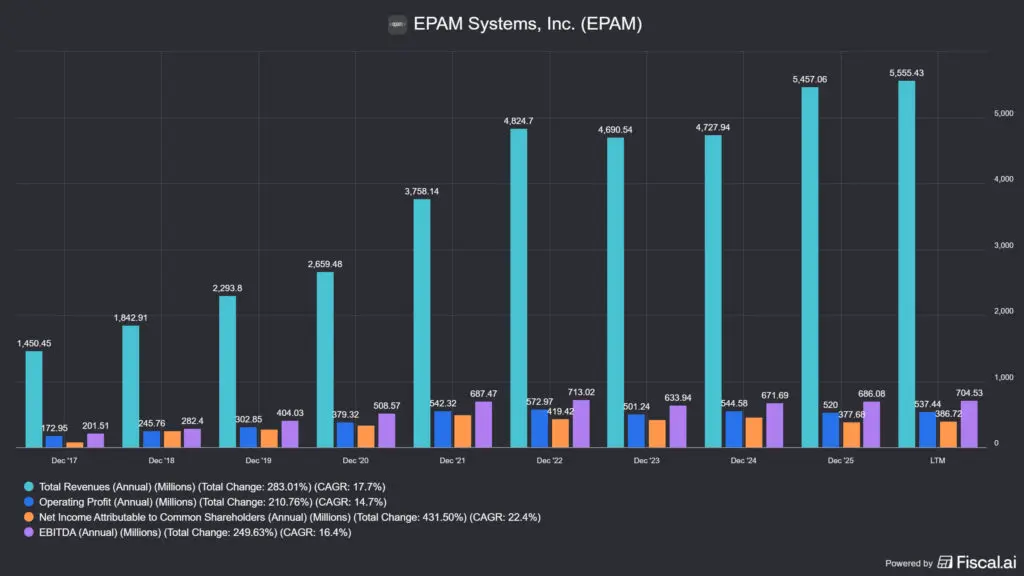
2025 revenue is $5.4 billion (+15.4%), of which ~5% is organic growth. The balance sheet is extremely strong: over $1 billion in net cash, minimal debt, ~$544 million in annual free cash flow. Valuations are surprisingly low: forward P/E is ~8.8x, forward EV/EBITDA is ~4.7x, EV/Sales is ~0.8x, which are historically extremely low for a $4.7 billion IT engineering company.
🐂 Bulls say
Engineering culture and 30 years of customer relationships cannot be copied quickly, this is a lasting competitive advantage that the current price does not reflect at all. The more than 1 billion USD can be used for net cash buybacks and smaller acquisitions. The analyst target price consensus is ~187–211 USD (but never believe them), with ~66–88% upside potential compared to the current price of ~112 USD. Which of course does not mean much, but this is still the market consensus. The EPAM AI/Run and EPAM DIAL platforms are quite well positioned in the field of enterprise AI implementation. Those 345 Forbes Global 2000 customers will probably choose the company for such a transition.
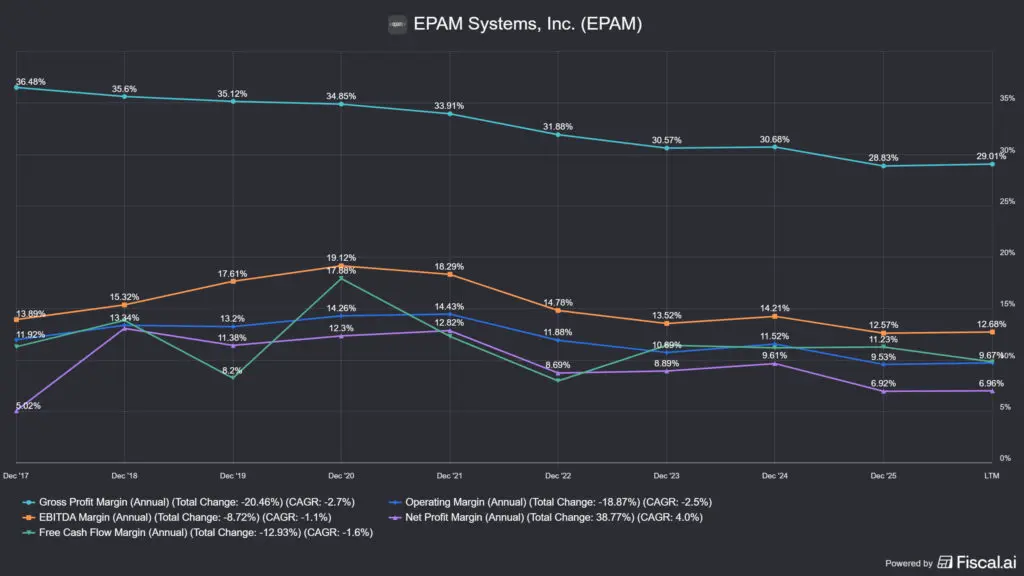
Organic growth has slowed worryingly: only 3-6% organic growth is expected by 2026, while operating margin has decreased from 14% to 9.5% since 2021. ROIC fell from 41% to ~13.8%, integration costs from NEORIS and First Derivative acquisitions are hurting capital efficiency. AI disruption is a two-way risk: if AI reduces the demand for human engineering hours quickly enough, EPAM's revenue model could be structurally damaged. The change of leadership (Arkadiy Dobkin resigned and was replaced by Balázs Fejes, of Hungarian origin) is also a risk.
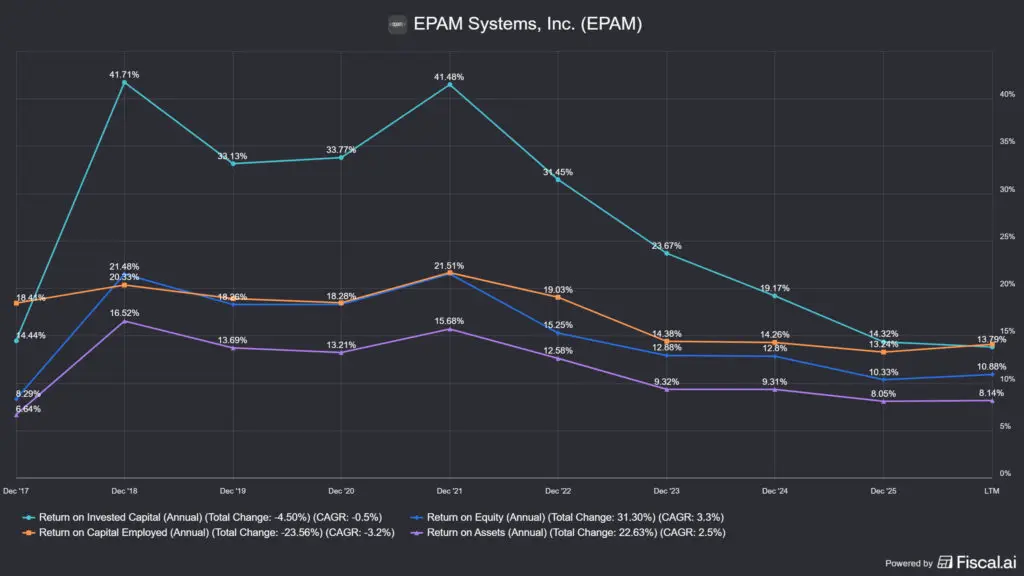
📌 In practice: In the case of EPAM, the investment thesis is not only that a It's not about whether an otherwise high-quality IT engineering company is being crushed by a geopolitical event, but whether AI has broken the company's business or not. The supplier base has now become global (India, Latin America, Central Europe), the Ukrainian exposure has decreased, but the exchange rate still carries this risk premium. If the AI-native transition takes off and organic growth returns to above 8-10%, the re-evaluation could be huge, if it ever returns. The question is whether the problem is structural, which is very difficult to decide at the moment. I think the fact that all metrics have been falling for years doesn't bode well for the future. There is a playful site for testing companies' AI exposure: Death by Clawd.
I'll cut to the chase with the verdict on Death by Clawd: Not dying, but shrinking, 5+ years of painful margin compression:"Dearly beloved, we gather here not to bury EPAM, but to acknowledge that their $3.5 billion body-shop empire faces an existential question: what happens when the bodies are optional? They survived offshore competition, COVID, and the Russia exit, but surviving a world where their clients can generate 60% of the boilerplate code themselves? That's the real digital transformation nobody put on the roadmap.”"
📝 Top 3 Ukrainian stocks: summary
The Ukrainian market holds some real compounder candidates for investors willing to take geopolitical risk: not to ignore it, but not to overweight it either. The common denominator of the four stocks presented above is that each has proven to remain viable during the four years of war, each is trading at a low valuation, and each has substantial skin in the game on the part of management.
Kyivstar is the most resilient model: monopolistic network, digital platform, zero debt, and can also be purchased through the parent company (VEON) if someone likes the holding structure. MHP is the most convincing representative of real economy exposure: vertical integration, European diversification, proven export logic. Astarta is an interesting piece: the valuation is at rock bottom, but the IFC background indicates that the best institutional investors are still in it. If the war ends and the Ukrainian agricultural sector gets on the reconstruction path, then I think this stock will be among the first to rise in price. EPAM, on the other hand, is the only liquid, USD-based, NYSE-traded stock on the list, and if organic growth returns, the revaluation could be huge.
It is important to emphasize: None of the companies featured here are easy to buy, and holding them will be even harder. Geopolitical risk is real and requires ongoing attention. What if the Russians win the war and still occupy Ukraine? What if the conflict drags on for years? Then the valuation will not change. The question is always whether the priced-in pessimism adequately compensates for the real risks. This question must be answered individually by each investor based on their own time horizon, risk tolerance, and position sizing principles.
If you would like to read our other articles, you can find interesting articles organized into the following categories:
🤑If you are interested in what brokers we use, read our articles below:
(I.e.Interactive Brokers broker account analysis – Professional for professionals
📈LightYear Broker Account Analysis - Simplicity and cheapness go hand in hand
❓ FAQ – Frequently Asked Questions
Is it worth buying Ukrainian stocks now?
Investing in Ukrainian stocks is not a value-based decision in the traditional sense, but rather a geopolitical option purchase on fundamental grounds. Kyivstar, MHP, Astarta and EPAM Systems have all proven to remain viable during three years of war, and all trade at historically low valuations. The question is not whether it is risky, because it clearly is, but whether the priced-in pessimism is sufficient compensation for the real risks. For those whose answer is yes based on their own time horizon and risk tolerance, the Ukrainian stock market could offer asymmetric return potential, especially in the event of a ceasefire or peace talks.
Where to buy Ukrainian stocks: is it available on IBKR or Lightyear?
Most listed Ukrainian stocks are available through the Interactive Brokers (IBKR) platform, as IBKR provides broad access to the Nasdaq, New York (NYSE), London (LSE) and Warsaw (WSE) stock exchanges. Kyivstar (NASDAQ: KYIV) and EPAM Systems (NYSE: EPAM) are also listed on the USD market, making them the easiest to buy. MHP (LSE: MHPC) and Astarta (WSE: AST) are also available on IBKR, although their liquidity may be lower and spreads may be higher. Currently, the most convenient options for trading on Lightyear are Nasdaq and NYSE-listed stocks, with Kyivstar being traded on EPAM and VEON.
What is VEON and what does it have to do with Kyivstar?
VEON (NASDAQ: VEON) is a global telecommunications holding company serving nearly 150 million mobile subscribers in Pakistan, Ukraine, Kazakhstan, Bangladesh and Uzbekistan. Kyivstar is a subsidiary of VEON, the leading mobile operator in Ukraine, which received a standalone Nasdaq listing in December 2025 (NASDAQ: KYIV). Those looking to bet on Kyivstar directly can do so using the ticker KYIV; those looking to play the digital operator thesis in the broader market can get exposure to Kyivstar through the ticker VEON, in return for taking on the risk of JazzCash in Pakistan, and the subsidiaries in Kazakhstan and Bangladesh.
Are MHP and Astarta safe if the war continues?
The vast majority of MHP and Astarta’s production capacities are concentrated in the central-western regions of Ukraine, in the Vinnytsia, Khmelnytskyi, Poltava and Kirovohrad regions, which have suffered significantly less direct military impact than the eastern and southern regions of the country. MHP’s poultry farms and Astarta’s sugar factories are therefore more territorially protected than if they were closer to the hotbeds of conflict. At the same time, missile attacks on energy infrastructure affect the entire country, which increases operating costs for both companies, which are being addressed with generator and alternative energy-based solutions, and the higher costs are already built into the current financial figures.
Is EPAM Systems really a Ukrainian stock?
EPAM Systems is not formally a Ukrainian stock, it is a NYSE-listed, USD-based paper based in Pennsylvania. Its Belarusian-Ukrainian engineering culture, its pre-war delivery base concentrated in Eastern Europe, and the price drop following the Russian invasion in 2022 that has not fully recovered since then make the Ukrainian stock relevant from an investment perspective. The stock is trading nearly 84% lower than its peak, while the business has become global. Diversifying its delivery base towards India, Latin America, and Central Europe. EPAM is therefore more of a “geopolitically punished global IT compounder” category than a classic Ukrainian stock, but the two concepts are difficult to separate in this case.
Legal and liability statement: this article is an informative analysis only and does not constitute investment advice in any form. Investment decisions are the sole responsibility of the investor and should always be made after considering the individual financial situation, risk tolerance and investment objectives. The data found at the time of writing reflect the current state; market conditions and company fundamentals may change.