

As you can see in the first part, a vintage car as an investment is not the most profitable genre in the world. The costs of an average car from its new age to its minimum depreciation are so high that it is almost impossible for the process to ever become profitable, you simply cannot make a profit on it. You have probably already guessed that if you buy it used, for a fraction of the price of a new one, in good condition, the math can be completely different. There are also value-adding factors that are usually already apparent by the time you make the purchase, and they can even make the topic of cars as an investment profitable.
Haven't read the first part? You can find it here:
Return enhancers for vintage car investment
Before I get into the factors that drive up the price of cars, there are a few things you should know. These are actually trivial pieces of wisdom that would work for any other investment or profession:
- 🔧 expertise: If you are skilled in car repair, it is a huge advantage because you don't have to pay for other people's labor (but the opportunity cost of your time must also be factored into the equation).
- 📊 market knowledge: One of the most important skills is knowing the market, the pitfalls, knowing how buying and selling works, and I could list more.
- 🤝 relationship capital: If you move in circles where many vintage cars are found, you can gain a knowledge advantage.
If you don't have these, you are at a huge disadvantage, it's good to be aware of this before reading further.

Vintage car as an investment: depreciation to increase in value
In the previous "car as an investment" article, I already talked about how a car loses a significant portion of its new price due to depreciation.
💡Its value decreases by approximately 40% in the first 5 years and reaches its lowest point after 20-25 years. Generally, after 30 years, vehicles are considered vintage cars in most countries, thus a kind of sentimental factor also develops around it.
During this time, you can already tell if there is hype around the car, if it has developed a rarity factor, if most of it has been broken/rebuilt, as you will see below. If you find the bottom and buy here, then, like on the stock market, the upward price movements can be realized as a profit. Hagerty, one of America's largest vintage car insurers, has a rule of thumb that the bottom comes after 20-25 years for most models, So in 2026, the price of cars from 2001-2006 will be at its lowest point, plus or minus a few years.
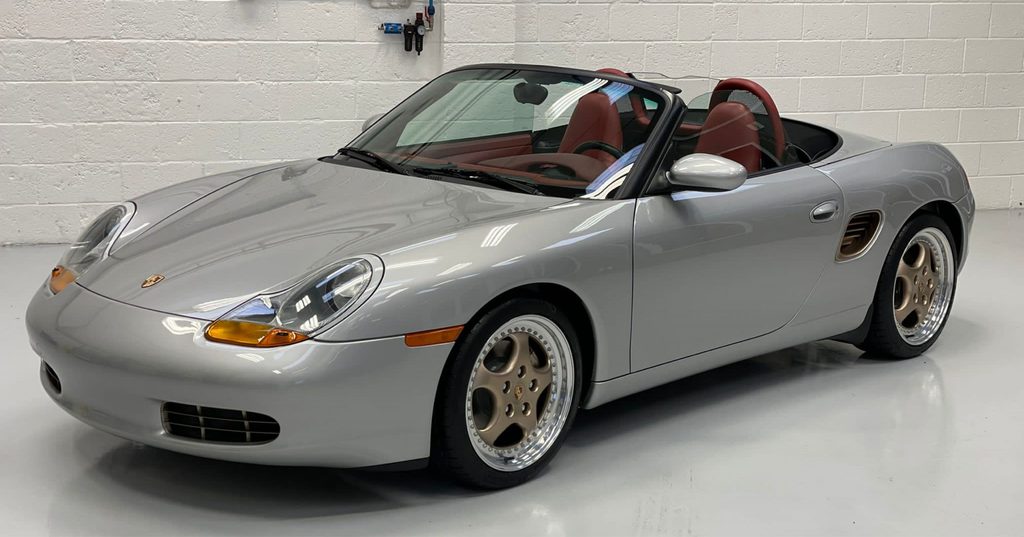
In light of the above, I looked for a model, the first generation Porsche Boxster 986, and then created a graph showing the price movement, adjusted for inflation. The problem with the methodology is that it includes the COVID effect, which has significantly increased the price of cars. Since the Boxster was released in the fall of 1996 (model year 1997), it covers about 30 years, so I think the data can be used as an approximation. As data, I took the ads for the 53 Porsche Boxster 986 base model with manual transmission out of the 93 advertised on the Autoscout24 website, including the 5-15% bargain value, at a median value of 10%:
Porsche Boxster 986: the value curve from 1997 to 2026
In thousand euros, based on the German new price (76,500 DM = 39,114 EUR). Each point is relative to the new price in its own market, at nominal value.
Sources: Hagerty Valuation Tools and Hagerty Media (USA), Classic & Sports Car, driving.co.uk, Hagerty UK (UK), Elferspot (EU 2020, 2025), AutoScout24, 93 ads, October 2026 (EU 2026). 2026 point is an estimate based on ad prices, assuming bargaining. No data for the period 1998-2015, trend line is an own estimate. Not investment advice.
The car was first released in the 1997 model year for 76,500 marks, or about 39,000 euros. In the two decades that followed, its value fell to 12–25 percent of the new price. It reached its lowest point between 2016 and 2020, 20–23 years after its introduction. This fits exactly with the rule of thumb of the vintage car market. The turnaround was not brought about by the age of the individual cars, but by the perception of the model. When the 996 911 and the old Porsches started to become more expensive, the 986 also “came into fashion”, and the price of the entire generation started to rise at the same time.
In 2026, the estimated value from European advertisements is approximately 16–17 thousand euros, or roughly 40–45 percent of the new price. This is a real increase, roughly twofold, compared to the low point. However, someone who bought it new in 1997 and sells it today has lost more than half of its price in nominal terms, and even more in real terms. So the curve has not turned in favor of the original owner, but of the person who bought at the bottom.
💡And it has a good chance of generating a profit only before deducting the costs of maintenance, storage, taxes and fees, and insurance.
Two further lessons deserve attention. The variance is huge: the same model changes hands for anywhere from 15 euros to over 30 euros, depending on condition and mileage, so the "average price" says little about the value of a specific car. The markets are not the same either: Italian listings are about 14 percent more expensive than other European ones, and American values have already declined in 2025. So the story of the 986 is not about the car being a good investment, but about how a well-timed purchase of a beloved hobby car can bring back part of the purchase price, and even more, if you're lucky.

Rarity factor
Rarity affects the price of vintage cars in two ways. One is the number of units produced, For example, a total of 349 Ferrari F50s were made. If more people want to buy the car than this, it creates demand pressure and drives up prices, just like on the stock market.
The other is the number of surviving vehicles: Most mass-produced cars rot or break down and end up as spare parts, so good-condition examples of a mass-produced model may be rare in 30 years.
💡From the above, it follows that low numbers and a rapidly dying stock are a truly winning combination.
Special models of the basic models – such as the Porsche Boxster Spyder or Porsche 911 GT3 RS – are produced in limited numbers by default and inevitably some models are removed from the market, for example, due to total loss or other damage. As time goes by, even fewer of the low numbers remain, which increases the price.
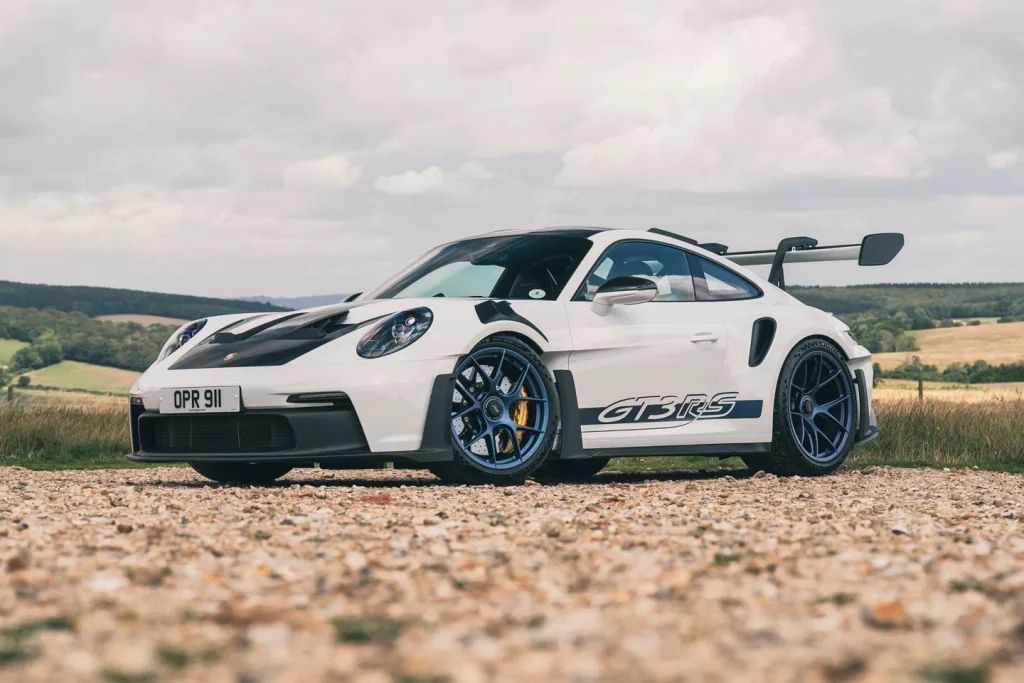
I continued to use the Porsche Boxster 986 as a reference, so I looked up the number of units produced between 1996 and 2005:
- 🏭 Porsche Boxster and Boxster S and 50 Jahre 550 Spyder: 72,762 pieces;
- 🏁 Of which the 50 Jahre 550 Spyder: 1953 pcs.
This doesn't seem like much compared to the millions of mass-produced cars, but I can't even say the Porsche Boxster is rare. In fact, 175,262 units of the bigger brother, the Porsche 911 996 generation, were produced, and more were sold in essentially every subsequent generation, if you consider all model variants.
💡In contrast, a Ferrari produces 10-15,000 entry-level models, and a few hundred of the very special models.
An important thought for this: in the Kering analysis, I wrote about the luxury industry, which includes Ferrari, Bugatti, and Lamborghini, but not Porsche, except for a couple of extremely rough models, such as the 911 GT1 Strassenversion (1997) made for homologation purposes or the small-series 968 Turbo S (1993–1994).
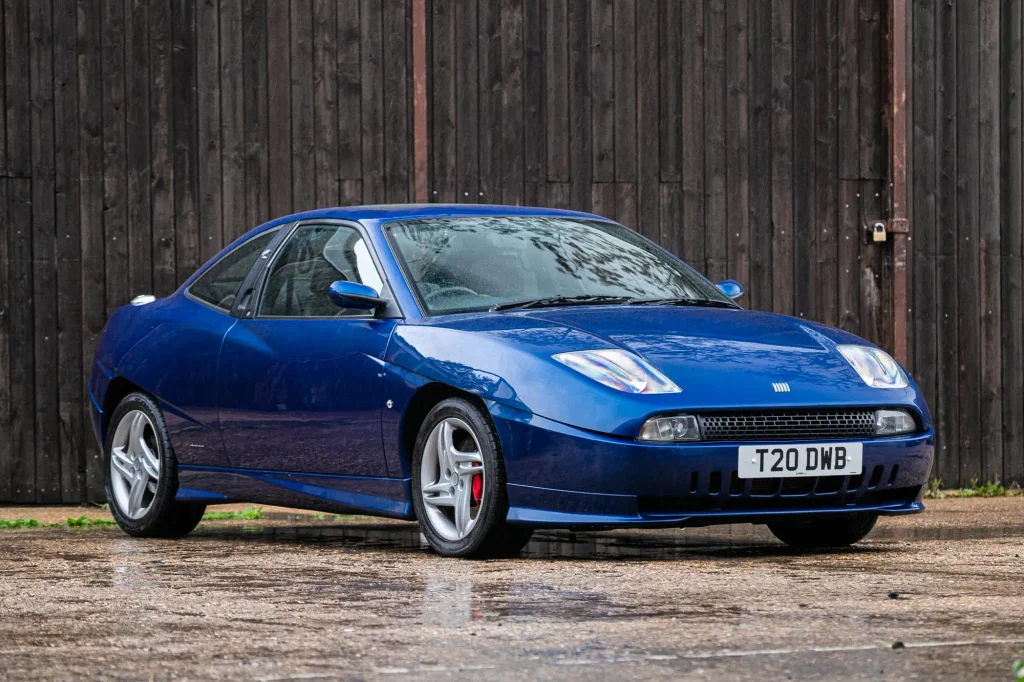
From the above, it may seem that frequency is inversely correlated with price, but this is not true at all. There are much smaller, less well-known cars that are much rarer than Porsches. Two examples from around Fiat:
- 🚗 Fiat Coupé (1993–2000): 72,762 pieces;
- 🌬️ Fiat Barchetta (1995–2005): 57,521 pcs.
Going back to Ferrari for a moment, their cars are produced in such small numbers that for many of their models, you pay more for a used car than the new list price.
💡The reason for this is that they intentionally generate demand pressure, so that many more people want to buy a Ferrari than actually have it, which is one of the company's competitive advantages.
This is a typical feature of the luxury industry, the same is true for Rolex watches or Hermès bags. So, if you're incredibly rich, you can actually choose from a wide range of non-entry-level Ferrari models that will increase in value as soon as you drive them out of the factory gate. Not all models are like this – for example, the Ferrari California is not – but this is not such a rare case for the brand.

Special models (a form of rarity factor)
Sportier versions (M, AMG, RS, GTI, Type R) and homologation models hold and increase their value, while the basic version of the same model is rare. The manual transmission has become a value-adding factor in its own right among vintage cars in the 2020s, because it is disappearing from new cars, and instead most models are equipped with automatic transmissions.
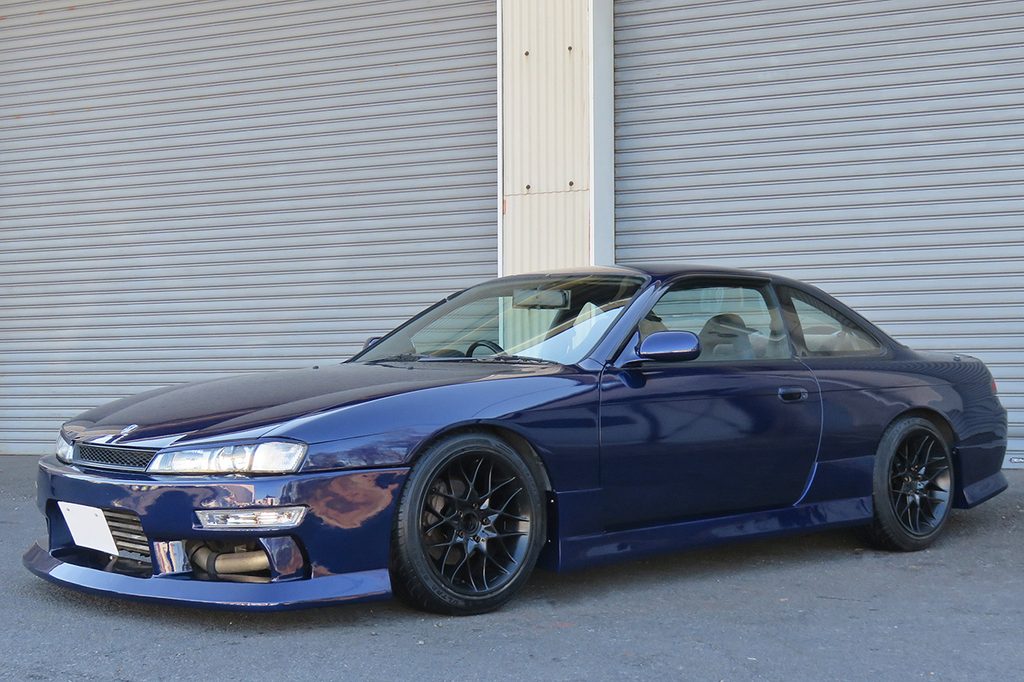
It is also a value-adding factor if a model did not have a domestic market version or had the steering wheel on the other side. For example, Japanese domestic market models – JDM, Japanese Domestic Market – do not have left-hand drive versions, which is why many people avoid these variants. Special models actually play on the rarity factor.
Porsche Boxster 986: which version holds its value the best?
In thousands of euros. Labels show percentage of new price. Nominal euros, not adjusted for inflation.
Sources: German new prices (Boxster 76,500 DM; 50 Jahre 550 Spyder 59,192 EUR; the regular Boxster S's new price of around 50,200 EUR is a back-calculated estimate), AutoScout24, October 2026 (Boxster: 18 ads excluding Italy; Boxster S: 34 ads; 550 Spyder: 6 ads). Not investment advice.
Let's stay with the aforementioned Porsche Boxster, there was essentially only one special edition, the “50 Jahre 550 Spyder”, of which a total of 1953 were made. Let's see how the price of the model has changed since its introduction and whether it has outperformed the non-extra models. The answer: yes. But what was the low point? Based on auction data and adjusted for inflation, it is approx. 14,000 EUR.
Porsche Boxster S “50 Jahre 550 Spyder”: depreciation and rebound, 2004–2026
In thousand euros, adjusted for inflation (2026 euros) and nominal. Special edition, 1953 pieces.
2007 and 2018: UK data (Porsche Club GB forum, The Market auction), as a ratio of UK new price to German new price. 2026: average of six AutoScout24 ads. Inflation: German consumer price index. No measured data between the dots. Not investment advice.
So, the inflation-adjusted price of 92,600 EUR in 2004 fell by 85% before reaching a low of 14,000 EUR in 2018, as can be seen from the price of a copy sold at auction. From there, it rose by 170% to its average price of 37,812 EUR in 2026! (2.7x), and I think that's the point: here's the increase in value you were looking for.
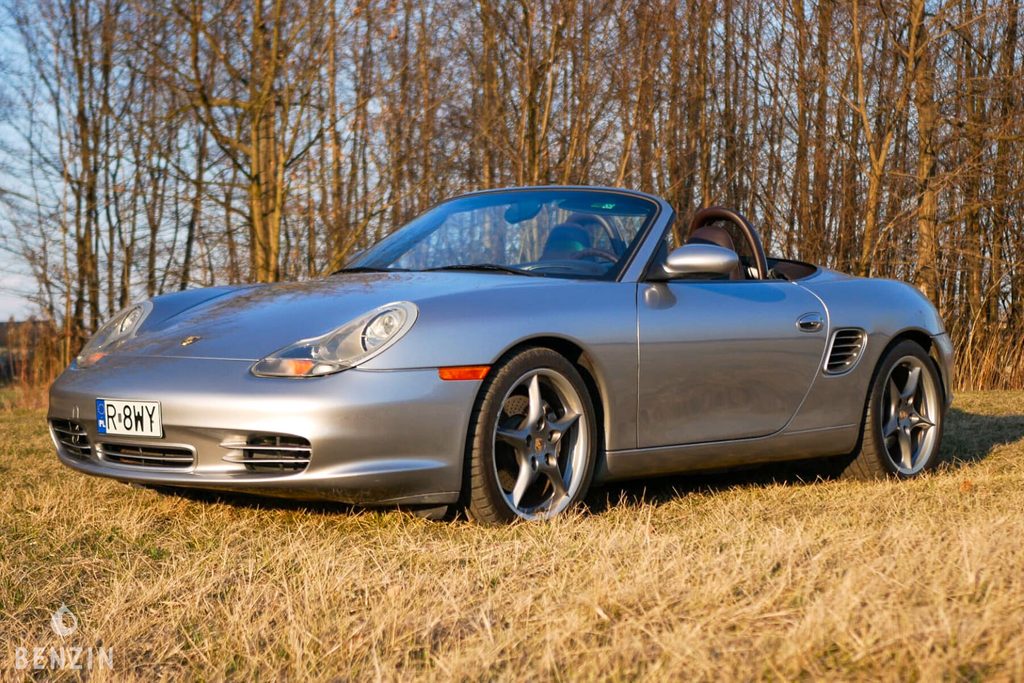
Note: of course, for the 170% increase – which means a gross increase before costs of EUR 23,812 – you would have had to keep the car for 8 years, service it, refuel it, and pay taxes and fees afterwards, so this would probably have burned through the increase in value, but this math will probably break even on owning a vintage car.
Fan element: the cult car effect
Demand is often based on generational influences: when people first have the money, they buy the cars that were hanging on the wall of their childhood bedroom as posters. This nostalgia effectThat's why Hagerty's 2026 list also shows price increases for vintage cars from the 90s and 2000s.
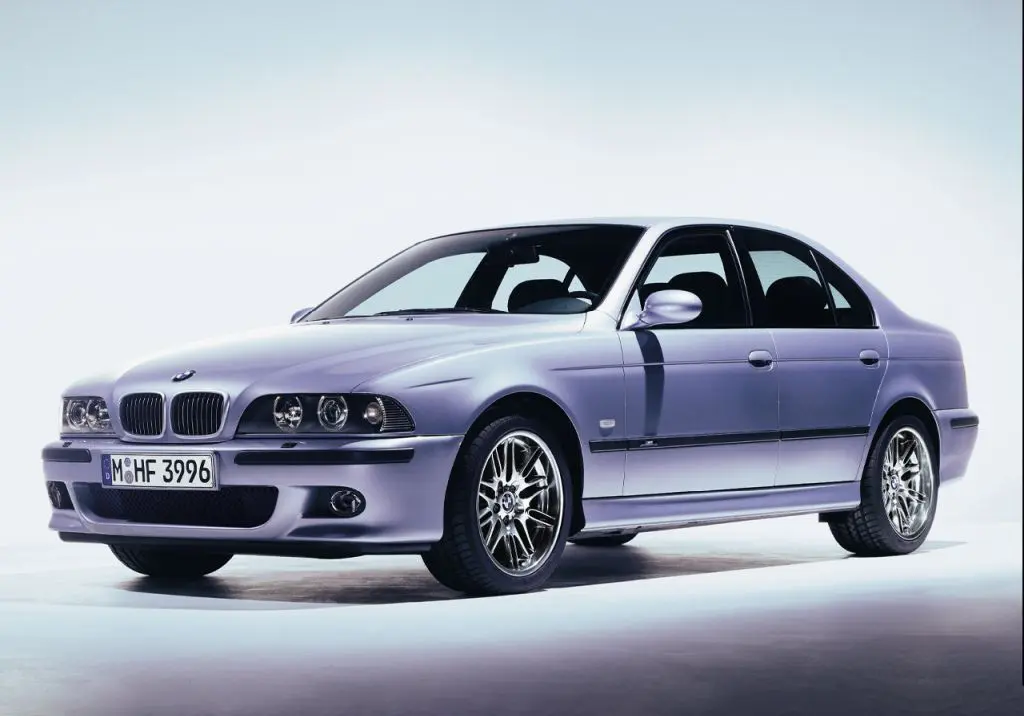
Nearly 58 percent of interest in the BMW M5 Series comes from people under 40. So there is also an age factor in the customer base, People under the age of 30 don't really buy "hobby cars" because they don't have the money for them. The same is true for people over the age of 70, when they can no longer enjoy driving due to health problems, so I wouldn't be too far off the mark if I put the age of the buying public between 30 and 70.
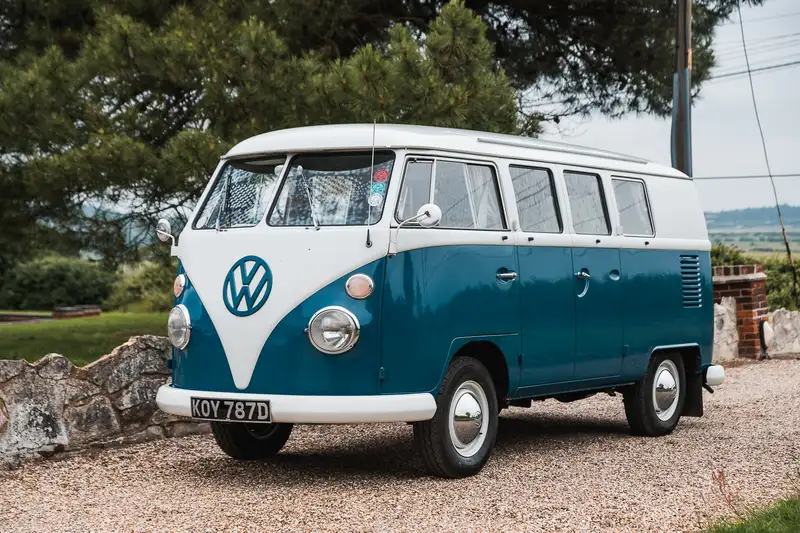
The fan effect also works in reverse: As the fan generation ages, demand dries up. In the second quarter of 2026, the average price of a Jeep CJ-7 fell 22 percent, and the VW Type 2 – the “Woodstock hippie bus” – fell 16 percent, as younger generations no longer know or have an emotional attachment to them.
A few examples of the cult car effect, which is essentially a faster rate of value growth from a higher low. The fan community supports the low point, so the price of the vehicle does not drop as much, so the subsequent increase in value is usually smaller. The logic is the same as in the previous example, only here some enthusiasts are "hooked" by the vehicle and are therefore willing to pay more than for an average car. A few examples of this:
- 🏎️ Honda S2000: There are fewer and fewer examples in good condition. It is a benchmark for driving experience among roadsters, the model produced from 1999 is twice the price of a contemporary Porsche Boxster.
- 🏆 Honda NSX (NA1/NA2): one of the best examples, probably even more so than the S2000, because fewer were made and it was special as an aluminum supercar even when it was new. Many consider it one of the best cars in the world.
- 🎬 Toyota Supra Mk4 (A80) Turbo: perhaps the most extreme case of Japanese cult cars, partly due to its cinematic fame. The 2JZ is a legendary engine, most car enthusiasts know this engine code by heart (which the Fast and Furious series helped a lot with).
- ???? Mazda RX-7 (FD) and Nissan Skyline GT-R (R32–R34): for GT-Rs, the US 25-year import rule causes waves of imports as each vintage can enter the US. But the Skyline is also a legend, whichever market you look at.
- 🇩🇪 BMW M3 (E30, later E46): The E30 is already a classic, the E46 has just started to become more expensive.
- 🔥 European hot hatches and rally cars: VW Golf GTI Mk1/Mk2, Peugeot 205 GTI, Lancia Delta Integrale, Ford Escort RS Cosworth. These are closer to the Hungarian reader, and the “childhood poster” effect is clearly visible on them.
- (I.e. Mazda MX-5 (NA): good as a counterexample. A cult car, but so many of them were made that the price of average copies increases very moderately, and 3 more generations were made, which are also excellent. But time is working against it, because it is a real rust pile. As the saying goes: “How do you know it's a Mazda? Because the aluminum roof on it is rotting.”
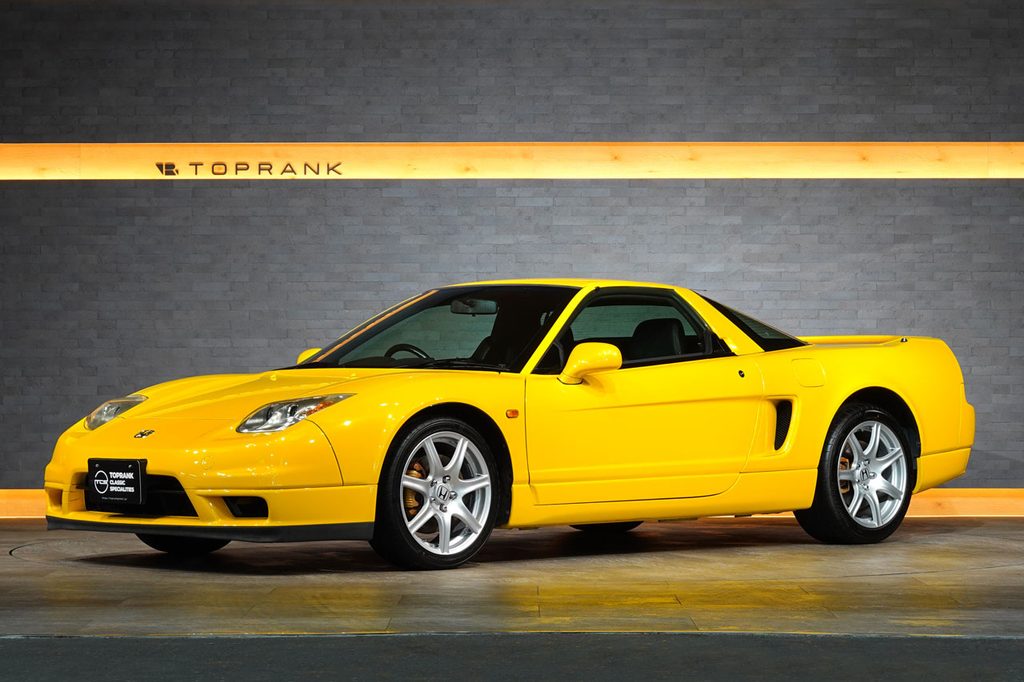
From the list above, the small-production Honda NSX is perhaps the best example:
Honda NSX (NA1): depreciation and rebound, 1990–2026
In thousand euros, adjusted for inflation (2026 euros) and nominally. A total of 271 units were imported into Germany over 15 years.
Sources: auto motor und sport (German new price, at least 135,000 DM), classic.com (July 2016, UK sale, £25,313), AutoScout24, 4 NA1 ads (October 2026). With a 10% bargain, today's value is approx. EUR 83,200, which is approx. 2.1× in real terms compared to the low point. Inflation: German consumer price index. No measured data between the dots. Not investment advice.
The picture shows that the inflation-adjusted price of EUR 146,000 in 1990 fell by 73% in real terms before reaching a low of EUR 39,300 in 2016, which I know from the price of a copy sold at auction. From there, it increased 2.4X to the average price of EUR 92,450 in 2026, not including the 10% bargain at the time of sale, which is a very nice result.
Honda NSX (NC1): this is how the second generation holds its value, 2016–2026
In thousands of euros. European data adjusted for inflation and in nominal terms, alongside the development of the US market in proportion to the new US price.
Sources: autoplenum/Auto Bild (German new price), Bring a Trailer via classic.com (April 2022, 2021 car, $178,000 compared to $157,500 new price), SlashGear (ca. 2025, 2017 car, $120,000-$130,000), AutoScout24, 4 ads (October 2026). US points are the ratio of US new price to German new price. There is no measured data between the points. Not investment advice.
The result of the above is that the second series, NC1 NSX, holds its price extremely well due to its cult car effect as the first one, as it already has the legend factor. The NC1 was released in 2016, and in 10 years the price has only fallen by 15%, which means brutal value retention.
💡Lesson learned: cult car status and fandom often stabilize the price, so the bottom is "not deep enough" to achieve significant returns over the long term.
Factory condition
The documented history, factory condition, original equipment and full service history are a significant part of the collector's price. The Shelby Daytona Coupe's record is partly due to the fact that it was Carroll Shelby's own car; the white 250 GTO, of which only one exists in this color (funny addition: the world's only white Fiat Barchetta is owned by a Hungarian) and so on.
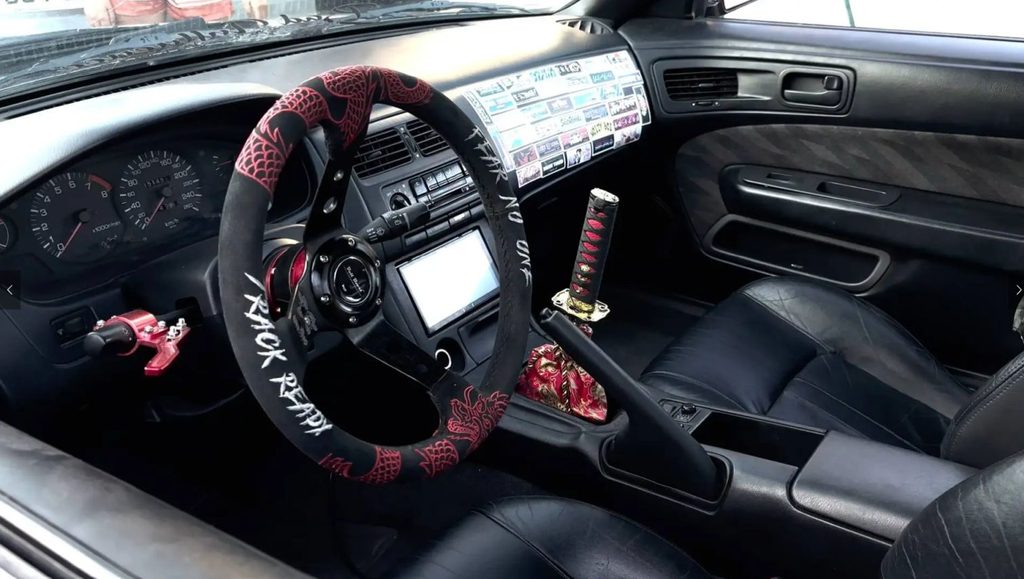
To give more realistic examples, certain models have been sucked into the tuning or drift culture and most of the vehicles have simply been rebuilt. Such types in Europe include the following:
- 🌀 Nissan Silvia S14 (200SX),
- 🔧 VW Corrado VR6,
- 🇮🇹 Fiat Coupé 20V Turbo,
- 💨 lots of BMW models (they became drift cars).
💡That is, conversions generally reduce the value of cars, not increase them, especially when the number of units is low.
Just because you like the modification doesn't mean that others will, and it's very difficult to achieve factory quality and reliability with retrofits, while retrofitting is often more expensive than buying a factory-made model. In fact, conversions also increase the rarity factor, as they reduce the number of cars in factory condition, plus tuning shops often end up screwed.
Unfortunately, I cannot confirm the above with statistical data, because you have to browse advertising texts and look at pictures, but the average price of custom builds is often lower than that of cars left in factory condition.
Vintage car as an investment: how to find targets?
I'll briefly summarize what I've said so far to make it easier for you to find targets. If you don't have a multi-million dollar fortune, basically look for cars that:
- 🏁 not an average car: sports car, coupe, SUV,
- 🕰️ vintage car: old enough to be classified as a veteran, or a youngtimer close to it (in some countries there are two classifications, 25+ years for a youngtimer, 30+ years for an oldtimer),
- (I.e. The price is at its lowest point: It is 15–25 years old and its price has now fallen by 60–80% (you will never know the exact number because you do not know where the price will turn),
- 💎 relatively rare: Speckó models, special editions, anniversary editions of a few thousand pieces are the most common,
- ❤️ cult car status: It's worth joining forums and Facebooking to see the hype build up.
- ✨ original condition: You should add stainless, non-tuned cars to your collection, in good technical condition.
You can collect data from major car portals, and since there is often a large variance between the average prices of individual markets, it is worth checking out market-specific sites as well:
Large general marketplaces
- 🇩🇪 mobile.de: Germany, the largest supply in Europe.
- ???????? AutoScout24: several countries (DE, IT, NL, BE, AT, ES, FR), with a separate page for each country.
- 🇫🇷 Leboncoin / La Centrale: France.
- 🇮🇹 Subito.it: Italy, many private advertisers, useful for Italian models.
- 🇳🇱 Marketplace / Gaspedaal.nl: Netherlands.
- ???????? willhaben.at: Austria is close and has a good offer.
- 🇬🇧 Autotrader.co.uk: United Kingdom, but with right-hand drive cars.
- 🇵🇱 Otomoto: Poland.
- 🇨🇿 Sauto.cz / Bazos.cz: Czech Republic.
- 🇸🇪 The block: Sweden, where there are many well-maintained, rust-free cars.
- (I.e. Usedcar.hu: Hungarian data.
You can also check out Facebook Marketplace, eBay and Kleinanzeigen in Germany, which is also owned by Adevinta, and other local platforms. Of course, there are thousands more, but these are the biggest ones. There are also vintage car price comparison sites, which are also worth trying. Then there are portals specialized in vintage cars:
Sites specializing in classic and youngtimer cars
- 🕰️ Classic Trader: German, specifically for vintage and youngtimer cars.
- 💎 Classic Driver: for the premium and collector segment.
- 🇬🇧 Car & Classic: British, but it also has many continental advertisements.
- 🏎️ Elferspot: exclusively Porsches (including Boxster), strong in Europe.
- 🔨 Collecting Cars, Catawiki: online auctions, also from Europe.
- ???????? Bring a Trailer: mainly American, but a very good price comparison base.
- 🏛️ RM Sotheby's, Bonhams, Artcurial: auction houses in the upper segment, where the closed prices are also public.
Collecting all the data is quite a lot of work, I recommend that you use the help of AI and create a database from it, because then you can make selections from the data you have pulled in based on several criteria. But if you don't want to go into the topic that much, you can just ask Claude to help you.obile.de and analyze the data from Autoscout24, that already gives a good approximation.
Vintage car as an investment: the limitations of previous calculations
A few thoughts on the data described so far. One is that in order for the result to be at least partially relevant, I had to consider a relatively large number of models, but there were tendentially fewer of the more expensive cars made. And few of these are sold, so the variance in value and condition is very large, making it difficult to form an average. The number of vehicles below is probably still large enough for you to do your own calculation and achieve a larger increase in value:
| # | Model | Production | Quantity |
|---|---|---|---|
| 1 | Porsche 993 Carrera coupe | 1993–1998 | approx. 10,300 pcs |
| 2 | Porsche Turbo 996 | 2000–2005 | 14,114 pcs |
| 3 | BMW E39 M5estimation | 1998–2003 | approx. 10,300 pcs |
| 4 | BMW E30 M3estimation | 1986–1991 | approx. 10,300 pcs |
| 5 | Porsche 993 Carrera convertible | 1994–1998 | approx. 10,300 pcs |
| 6 | Porsche 993 Carrera 4 | 1994–1998 | 14,114 pcs |
| 7 | Lamborghini Gallardoestimation | 2003–2013 | approx. 10,300 pcs |
| 8 | Nissan Skyline GT-R R34estimation | 1999–2002 | approx. 10,300 pcs |
| 9 | Mercedes-Benz 500Eestimation | 1990–1995 | approx. 10,300 pcs |
| 10 | Ferrari F355estimation | 1994–1999 | approx. 10,300 pcs |
Larger, more expensive collector's models. Porsche data is from factory and enthusiast records; rows labeled "estimate" are for informational purposes only. 993 Carrera 4 row includes all body styles. Not investment advice.
The other is that some costs are independent of how much the vintage car cost - e.g. garage maintenance - and others are not. The comprehensive, operating and alternative costs are largely dependent on the purchase price. This is shown in the table below:
| Item | Category | What does it depend on? |
|---|---|---|
| Garage | Fix | Same place; for an expensive car, the most you can get is an alarm or better locks |
| Highway sticker | Fix | By category |
| Periodic technical examination | Fix | Fees are largely independent of type |
| Authenticity test | Fix | Fees are largely independent of type |
| OT exam and museum qualification | Fix | Fixed fee |
| Administrative fees (registration, registration, license plate) | Fix | Fixed fee |
| Winterization supplies (drip filler, moisture absorber, tarpaulin) | Fix | The factory tarpaulin is brand-dependent, but is a one-time item |
| Casco and agreed value insurance | Value-based | The value of the car |
| Opportunity cost | Value-based | Amount of money tied up in the car |
| Buying and selling costs (auction commission, dealer margin) | Value-based | Percentage of sales price |
| Personal income tax upon sale | Value-based | Amount of profit |
| Valuation | Value-based | Partly the value of the car; an expensive car needs to be updated more often |
| Shipping | Value-based | An expensive car requires a closed trailer |
| Capital gains tax | Type-dependent | Power (kW) and age |
| Vehicle tax | Type-dependent | Power (kW) and age; can be exempted with OT license plate |
| Compulsory insurance (KGFB) | Type-dependent | The leader, bonus-malus and performance |
| Service and parts | Type-dependent | The brand and type |
| Tire | Type-dependent | Size and performance category |
| Fuel | Type-dependent | Consumption and mileage |
Fix: It's about the same for expensive and cheap cars. Value-based: increases in proportion to the value of the car. Depending on the type: It depends not on the price, but on the type, performance or use, but is typically higher for expensive cars. Not investment advice.
Of course, my article is not intended to calculate exactly which models are profitable and which are not. I am just trying to provide guidance for further research, but you will have to do the calculations for each model yourself.
Vintage car as an investment: summary
The two articles on vintage cars as investments highlight how difficult it is to make a profit on any vehicle. It is important to note that this is not the usual auto flipping, or car trading, but a much more specialized, long-only type of “car holding”, similar to investment products. However, the average person is certainly not able to do this with their average car, because the costs eat up the profit, but even premium vehicles can be brought to a maximum breakeven.
However, the math is different for extremely expensive vintage luxury cars, so if you're a billionaire, you can consider these vehicles as works of art. I believe that finding, purchasing, properly storing, and maintaining these models is well beyond the resources of the average investor.
Overall, I think that despite the high-profile articles in the newspapers about how much a star earned for a model in their collection, this is more of an exception than a rule, so it's not really worth worrying about.
🤑If you are interested in other investments and are looking for a broker for this, read our analyses on this topic:
🏛️Interactive Brokers Broker Account Analysis – Professional for Professionals
📈Lightyear Brokerage Account Analysis - Simplicity and Cheapness Go Hand in Hand
✅XTB broker analysis 2026: this is what the platform knows in 2026
Frequently Asked Questions: vintage car as an investment
Answers to the most common questions
Are you thinking about buying a vintage or youngtimer car as an investment? Here you will find concise answers to the most frequently asked questions about vintage cars as an investment: when does a car's value bottom out, how rarity, special edition and cult car status affect the price, what kind of car is worth looking for, and which costs increase with the price of the car.
Click on any question and the answer will open. These are intentionally short summaries: if you are interested in the details, I will expand on them in more detail in the appropriate sections of the article. Important: prices and market data reflect the time of writing.
Does a vintage car work as an investment?
It can work, but especially if you buy the car not new, but near the bottom of its depreciation, in good condition, and the rarity, cult car status and factory condition speak in favor of the type. In the analyzed examples, there was a 2–2.7-fold increase in real value from the bottom, but this is significantly reduced by the costs of maintaining it for many years (service, insurance, storage, taxes), so for the average investor this is more of a break-even hobby than a sure return. Assembly skills, market knowledge and network capital are a big advantage.
When does a car reach its lowest point in depreciation?
According to Hagerty, one of the largest U.S. collector car insurers, the rule of thumb is that most models will bottom out after 20 to 25 years, which is roughly 2026, around the 2001-2006 model year, plus or minus a few years. The Porsche Boxster 986 bottomed out between 2016 and 2020, 20 to 23 years after its introduction. The turnaround is typically driven not by the age of the individual cars, but by a change in the perception of the model.
How much has the Porsche Boxster 986 lost and gained in value?
The 1997 model year was released for 76,500 marks, or about 39,000 euros. Over the course of two decades, its price fell to 12–25% of the new price, and in 2026, based on European advertisements, with a 10% discount, it will be worth about 16–17,000 euros, which is 40–45% of the new price and roughly double the price since the low point. Those who bought it new still lost more than half of the price in real terms; those who bought at the low point managed to win.
How does rarity affect the price of vintage cars?
In two forms: through the number of units produced and the number that survives. The combination of low production numbers and rapidly perishing stock is the strongest price driver. 164,874 units of the Porsche Boxster 986 were produced, which is not uncommon, while only 1953 of the special edition “50 Jahre 550 Spyder” were produced. In terms of number of units, a Fiat Coupé (72,762 units) or Barchetta (57,521 units) are rarer than the Boxster, and Ferrari deliberately keeps the number produced below demand.
Is it worth buying a special edition model?
Based on the examples, special editions hold their value the best. The basic Boxster 986 model is now worth about 47% of its new price, the Boxster S about 55%, and the “50 Jahre 550 Spyder” about 64% based on advertised prices. The inflation-adjusted new price of the special edition, €92,600, fell to about €14,000 in 2018, or 85%, and from there it rose to an average price of €37,812 in 2026, or about 2.7 times. However, this would require keeping and maintaining the car for 8 years, which could take away most of the profit.
What is the cult car effect?
Nostalgia-driven demand: People typically buy cars between the ages of 30 and 70 that were on posters on their walls as children. The fan community supports the bottom, so these cars fall less, but the subsequent increase may be smaller. The inflation-adjusted price of the Honda NSX (NA1) fell by 73% between 1990 and 2016, and then increased by about 2.4 times by 2026, and the second-generation NC1 lost only about 20% in real terms over 10 years. The effect also works in reverse: due to the aging fan generation, the average price of the Jeep CJ-7 fell by 22% in the second quarter of 2026, and the VW Type 2 fell by 16%.
Does tuning or rebuilding increase the value of a car?
Usually not, but it reduces it. Collectors pay for the factory condition, documented history and original equipment, and restoration is often more expensive than a factory-condition example. In Europe, for example, the Nissan Silvia S14 (200SX), the VW Corrado VR6, the Fiat Coupé 20V Turbo and many BMW models have been largely rebuilt, which also increases the rarity of the remaining factory examples.
What kind of car is worth looking for as an investment?
If you are interested in a vintage car as an investment, look for one that is not your average car (sports car, coupe, SUV), is old enough to be a vintage or youngtimer, is near its low point (15–25 years old and its price has dropped by 60–80%), is relatively rare (a special edition or special model of a few thousand units), has cult car status, and is in original, rust-free, untuned condition.
Where is it worth collecting data on the prices of vintage cars?
On large marketplaces (mobile.de, AutoScout24, Leboncoin, Subito.it, Marktplaats, willhaben.at, Autotrader.co.uk, Otomoto, Sauto.cz, Blocket, Használtautó.hu), on sites specializing in classic cars (Classic Trader, Classic Driver, Car & Classic, Elferspot), and on auction platforms (Collecting Cars, Catawiki, Bring a Trailer, RM Sotheby's, Bonhams, Artcurial), where the final prices are also public. The price difference between countries can be large: for example, Italian ads for the Boxster 986 are about 14% more expensive than other European ones.
Which cost is independent of how much the car cost?
Fixed costs, such as garage, highway sticker, technical and originality inspection, OT inspection and administrative fees. Casco and agreed value insurance, opportunity cost, purchase commission and personal income tax increase in proportion to the value. Property acquisition tax, vehicle tax, compulsory insurance, service and fuel depend on the type and performance and are typically higher for expensive cars.
Legal and liability statement (aka. disclaimer): My articles contain personal opinions, I write them solely for my own entertainment and that of my readers. The articles published here do NOT in any way exhaust the topic of investment advice. What is written here is for informational purposes only and should NOT be construed as an offer. You are SOLELY responsible for the decisions you make.